

There are over a dozen AI image tools available right now, and honestly, most of them blur together after a while. Some produce stunning visuals but charge per image. Others are free but slap watermarks on everything.
If you're trying to pick one for actual work — whether that's marketing assets, social media posts, or creative projects — the options can feel overwhelming fast.
That's exactly why this article exists. This list covers the 10 best AI image generators worth your attention in 2026, compared across quality, pricing, ease of use, and commercial rights — so you can stop experimenting blindly and start creating with confidence.
The Architecture Behind the AI Image Generators (How Text-to-Image AI Actually Works)
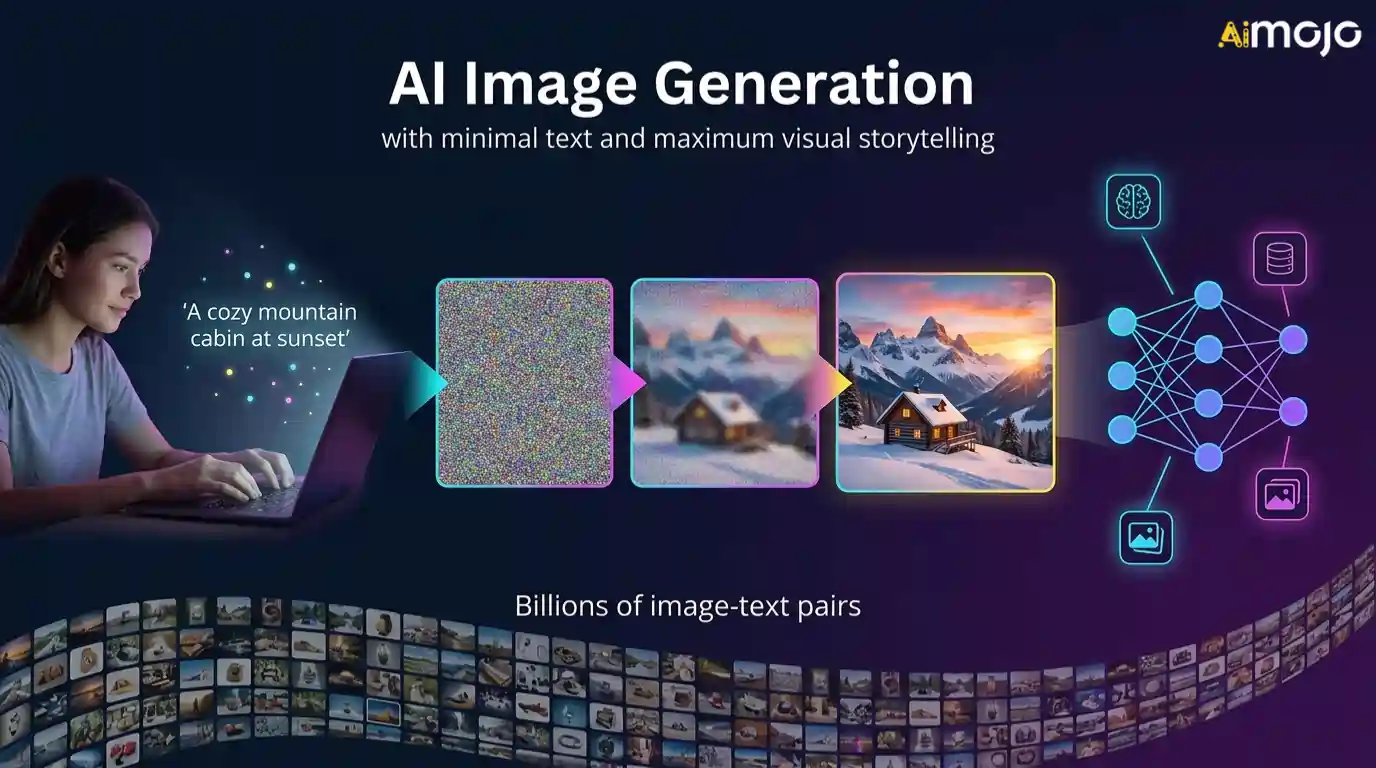
Before going into the specific tools, it helps to understand what happens behind the scenes when you hit “generate.” Modern text-to-image AI doesn't just search the web for existing pictures and piece them together like a digital collage.
Instead, most leading platforms rely on latent diffusion models. These neural networks are trained on billions of image-text pairs to learn visual concepts. When you enter a prompt, the system starts with a field of random visual noise and progressively refines it into a clear, completely original image based on its semantic understanding of your words.
Knowing how these underlying generation models interpret data makes it much easier to evaluate which platform will accurately translate your specific creative vision.
Highest-Rated AI Image Generators for Creative Projects
| Best AI Image Generators | Best For | Key Strength |
|---|---|---|
| OpenArt.ai | Custom styles | Model training control |
| Imagine.art | Social visuals | Mobile-friendly creation |
| Akool | Product images | Marketing-ready outputs |
| TopView.ai | Ad videos | Image-to-video automation |
| NightCafe Studio | Creative hobbyists | Multiple AI models |
| KlingAI | Cinematic shots | Photorealistic rendering |
| DeepFiction.ai | Story worlds | Character consistency |
| Deepmode AI | Technical users | Advanced workflow control |
| Dall-E Free | Casual users | Free text-to-image |
| Leonardo.ai | Game assets | Detailed concept art |
1. OpenArt AI
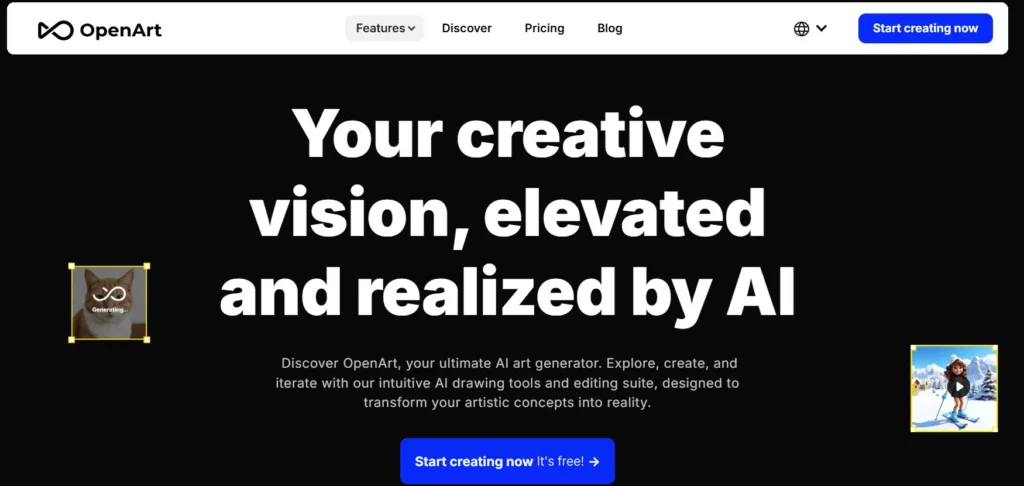
OpenArt.ai solves the difficult challenge of finding an AI picture generator that balances creative freedom with precise control for digital artists, offering a versatile platform built around Stable Diffusion models. It allows users to train custom micro-models for highly specific visual styles and character consistency.
Ideal for concept artists, marketing teams, and hobbyists, the platform provides advanced features like image-to-image translation and inpainting. By focusing on workflow efficiency and customisation, OpenArt allows creators to generate copyright-safe AI images and photorealistic assets tailored perfectly to their unique brand guidelines or storytelling needs.
OpenArt.ai Pros and Cons
Why Choose OpenArt.ai?
OpenArt provides reliable custom model training, making it highly useful for professional artists needing strict visual consistency.
2. Imagine.art

Mobile-first creators often struggle to find artificial intelligence graphic design tools that deliver high-resolution outputs on the go. Imagine.art steps in as an accessible text-to-image AI, transforming simple text prompts into polished digital artwork, marketing banners, and social media visuals across multiple platforms.
Designed primarily for social media managers and independent creators, this tool excels at artistic stylisation and rapid rendering. With integrated upscaling capabilities and varied aspect ratios, it serves as an excellent AI photo creator for those who need fast, aesthetically pleasing generative AI visuals without navigating complex technical interfaces.
Imagine.art Pros and Cons
Why Choose Imagine.art?
Imagine.art delivers quick, visually striking results, offering reliable mobile accessibility for social media content creators everywhere.
3. Akool

Akool operates as a comprehensive AI art generator and marketing suite for e-commerce brands that frequently need high-quality product imagery but lack the budget for continuous studio photoshoots. It specialises in realistic product staging, face swapping, and avatar generation for professional commercial use.
This platform is tailored specifically for digital marketers, advertising agencies, and online retailers seeking enterprise-grade outputs.
By integrating seamlessly into commercial workflows, Akool simplifies the creation of copyright-safe AI images and engaging promotional materials, allowing businesses to scale their visual content production while maintaining strict brand consistency.
Akool Pros and Cons
Why Choose Akool?
Akool offers robust marketing-focused tools, making it exceptionally reliable for e-commerce agencies requiring scalable, professional visuals.
4. TopView.ai

TopView.ai functions as a dynamic AI photo creator and video generation tool for marketers looking to bridge the gap between static imagery and video content. It excels at turning standard image assets into engaging, motion-rich media designed perfectly for modern advertising channels.
Built for digital advertisers and content strategists, the platform simplifies the transition from text-to-image prompts to short-form video content.
It is an ideal solution for generating high-converting social media advertisements, offering a streamlined workflow that transforms basic artificial intelligence graphic design into captivating, ready-to-publish visual campaigns with minimal technical effort.
TopView.ai Pros and Cons
Why Choose TopView.ai?
TopView bridges image and video creation seamlessly, providing a highly useful solution for modern social media advertisers.
5. NightCafe Studio

NightCafe Studio aggregates top generative AI visual models for digital artists who want to experiment with multiple algorithms without managing complex local software installations. It successfully combines leading models like Stable Diffusion and DALL-E into one accessible, community-driven web application.
Targeting AI art enthusiasts and collaborative creators, the platform heavily gamifies the creation process with daily challenges and community voting.
It stands out as a versatile text-to-image AI, allowing users to earn free daily credits while producing everything from photorealistic AI art to highly stylised digital paintings within a supportive online environment.
NightCafe Studio Pros and Cons
Why Choose NightCafe Studio?
NightCafe combines multiple algorithms with community engagement, offering a reliable, fun environment for artistic exploration and learning.
6. KlingAI
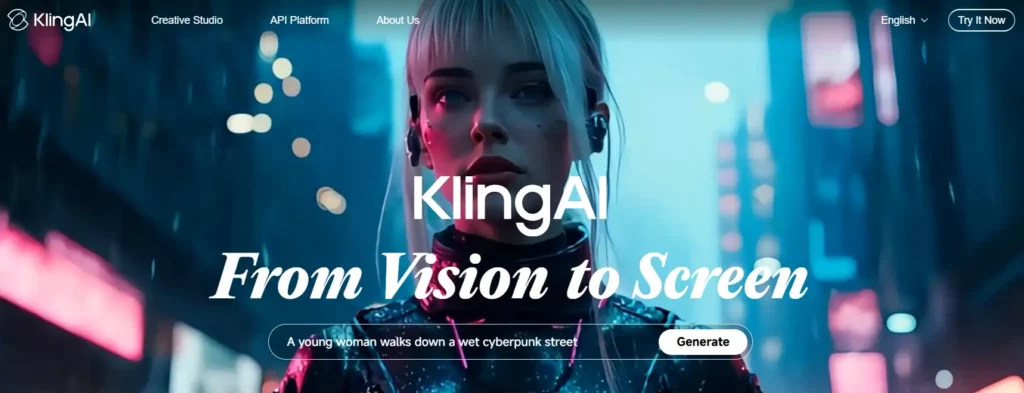
Generating visuals that closely mimic cinematic photography requires sophisticated neural network architectures. KlingAI uses advanced text-to-image prompts to deliver breathtakingly realistic AI generated photography, focusing heavily on accurate lighting, intricate textures, and cinematic depth of field.
This tool is exceptionally valuable for filmmakers, concept artists, and visual storytellers needing high-fidelity storyboards or environmental concepts.
By prioritising photorealism and spatial coherence, KlingAI reduces the friction of visualising complex scenes, empowering creative professionals to draft stunning, lifelike imagery that communicates their directorial vision with remarkable clarity and precision.

Kling AI Delivers Stunning Cinematic Photorealism Exclusive
KlingAI Pros and Cons
Why Choose KlingAI?
KlingAI excels at cinematic photorealism, serving as a highly reliable tool for professional visual storytellers and filmmakers.
7. DeepFiction.ai
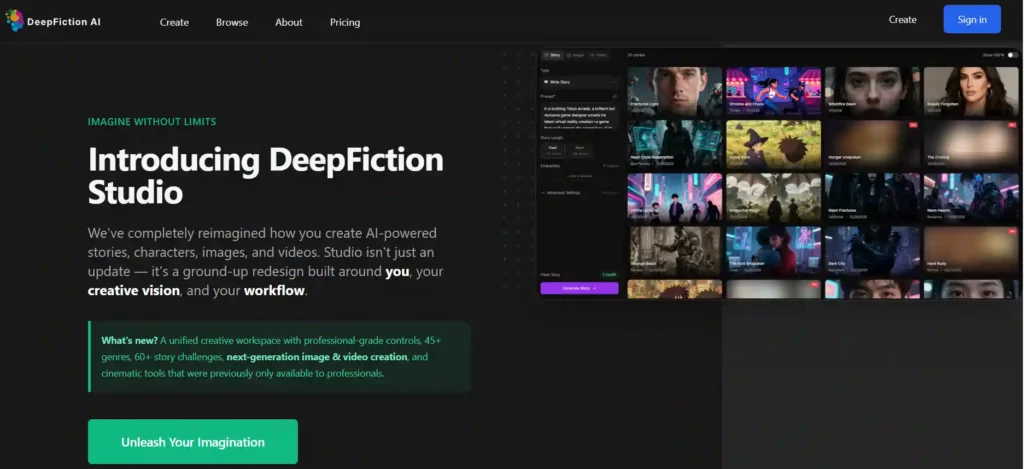
DeepFiction.ai serves as a specialised AI picture generator explicitly built for storytellers, authors, and narrative designers who often struggle to visualise their written characters and fictional settings accurately. It seamlessly translates character descriptions and world-building text into consistent, immersive illustrations.
Catering to novelists, role-players, and comic creators, the platform focuses heavily on narrative continuity and character preservation across multiple image generations. It functions as a unique artificial intelligence graphic design partner, enabling writers to produce copyright-safe AI images that perfectly match their lore, enhancing reader immersion without requiring traditional illustration skills.
DeepFiction.ai Pros and Cons
Why Choose DeepFiction.ai?
DeepFiction offers unparalleled character consistency, making it an incredibly useful visual companion for dedicated authors and storytellers.
8. Deepmode AI

Deepmode AI provides a highly technical AI image generation models environment for professionals seeking deeply customisable AI workflows who often find standard web interfaces too restrictive. It offers granular control over node-based workflows, image processing pipelines, and advanced latent diffusion parameters.
Designed for technical artists, developers, and AI researchers, this platform prioritises precision over simplicity. By allowing users to tweak every aspect of the generative AI visuals process, Deepmode serves as an elite text-to-image AI sandbox, perfect for teams looking to integrate bespoke visual generation systems directly into demanding creative pipelines.
Deepmode AI Pros and Cons
Why Choose Deepmode AI?
Deepmode delivers granular technical control, making it a reliable choice for advanced developers needing bespoke generation workflows.
9. Dall-E

Dall-E acts as an accessible gateway for users who want to experience top-tier generative capabilities without committing to expensive monthly subscriptions. It allows everyday users to generate high-quality AI art using OpenAI’s renowned text-to-image AI technology entirely free of charge.
Perfect for students, bloggers, and casual creators, the interface relies on straightforward text-to-image prompts to produce imaginative and highly coherent visuals.
It removes financial barriers to entry, serving as a practical AI photo creator that instantly turns conceptual ideas into polished images, making artificial intelligence graphic design accessible to absolutely anyone.
Dall-E Pros and Cons
Why Choose Dall-E?
Dall-E Free offers reliable, zero-cost access to powerful image generation, perfect for casual users and students alike.
10. Leonardo.ai
Leonardo.ai is a powerhouse AI art generator that excels in helping game developers and graphic designers who frequently need to generate assets that adhere strictly to specific artistic styles. It offers pre-trained micro-models that cater to everything from isometric game design to photorealistic AI art.
Targeting professional creatives and studio pipelines, the platform offers unprecedented control through its interactive canvas and prompt adherence tools. It is widely considered one of the best AI image generators for serious projects, enabling creators to efficiently produce copyright-safe AI images, textures, and concept art with remarkable speed.
Leonardo.ai Pros and Cons
Why Choose Leonardo.ai?
Leonardo provides exceptional artistic control and asset consistency, making it highly useful for professional game developers globally.
Evaluating the Free AI Image Generators vs. Premium Latent Diffusion Models

Choosing between a free AI image generator and a premium subscription depends entirely on your project's scope. While free tools are excellent for casual brainstorming, paid platforms provide the precision required for professional workloads.
When comparing basic tools against premium latent diffusion models, the differences usually come down to:
If you just need occasional visuals, open-access text-to-image AI works perfectly, but scaling a business usually requires investing in a dedicated, high-fidelity platform.
Start Designing Eye-Catching Visuals with AI Today
When it comes down to it, there isn’t a single perfect tool that magically solves every creative problem. The right AI image generator just depends on what you actually need it to do. If you are building realistic mockups for an online store, your requirements will naturally look very different than someone generating fantasy characters for a novel or storyboarding a cinematic video.
Start by testing a few free models to see how their interfaces feel and how well they understand your specific prompts. Once you find a workflow that clicks, the technology stops feeling overwhelming and simply becomes another reliable part of your creative toolkit.
AiMojo Recommends:



 BONUS: Get our $200 “AI Mastery Toolkit” FREE when you sign up!