


Staring at a depleted credit balance while your content calendar sits empty is a nightmare for any digital creator. While APOB excels at face-swap tech, relying on it exclusively often becomes a bottleneck for channels demanding daily video output. You need a workflow that balances high-fidelity realism with sustainable pricing.
This guide explores the 6 Best APOB AI Alternatives capable of handling professional workloads. We move past the hype to evaluate rendering speeds, lip-sync accuracy, and cost efficiency, helping you secure a robust solution that keeps your AI influencer active and your production seamless.
The Consistency Crisis: Why Creators Are Seeking APOB AI Alternatives

While APOB offers impressive initial results, many professional creators eventually hit a wall: character drift. This phenomenon occurs when an AI model struggles to reproduce identical facial features across different lighting conditions, angles, or video lengths, making it nearly impossible to build a recognizable brand identity. For influencers and marketers scaling their content, this inconsistency isn't just a technical glitch; it's a branding failure.
Creators specifically seek APOB AI alternatives to solve these critical technical bottlenecks:
Solving these reliability issues is the primary driver for users switching to more robust, enterprise-grade platforms.
Best APOB AI Alternative Tools for Creators and Marketers
| Best APOB AI Alternatives | Key Strength | Best Use Case |
|---|---|---|
| OpenArt AI | Consistent character lock | Narrative Instagram series |
| SugarLab AI | Unfiltered roleplay chat | Interactive virtual partners |
| TopView AI | Viral ad automation | E-commerce video ads |
| Higgsfield AI | Mobile motion capture | Social media creators |
| Kling AI | 1080p cinematic video | High-end visual storytelling |
| InVideo.io | Text-to-video editing | Faceless YouTube channels |
| Ryla AI | Trained face-model consistency | Long-running persona feeds |
1. OpenArt AI
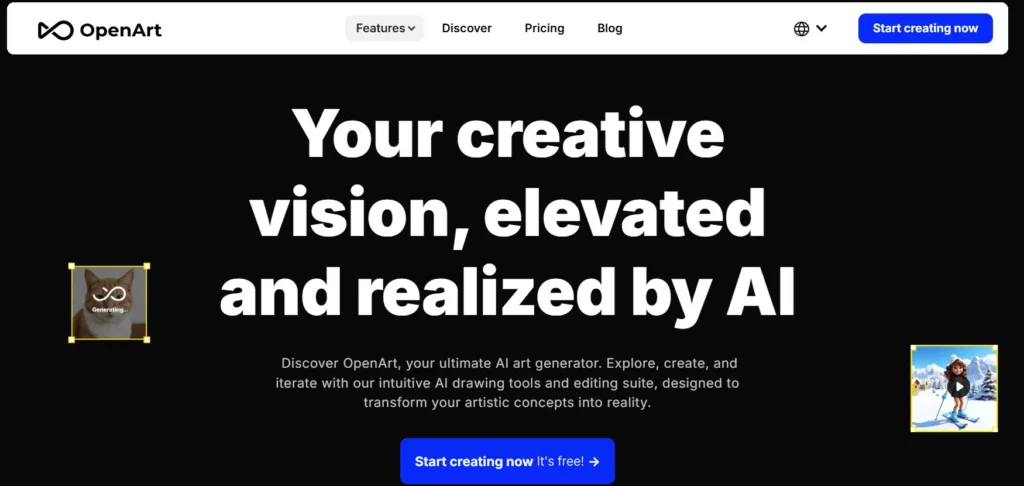
While many creators know OpenArt for its static image capabilities, its recent “Character 2.0” update has made it a formidable APOB AI alternative for consistent influencer creation.
The platform now allows you to train a custom facial model from a single photo, ensuring your digital persona retains the exact same identity across thousands of different poses, outfits, and lighting scenarios.
Beyond just generation, OpenArt provides a comprehensive creative suite that bridges the gap between static art and video. Users can utilise advanced control nets to dictate specific poses or camera angles, which is often a struggle with basic face-swapping apps.
OpenArt.ai Key features
Best for: Creators who need absolute facial consistency across a narrative Instagram or comic book series without technical complexity.
2. SugarLab AI

Coming in at the #2 spot on our list, SugarLab stands out as an unfiltered APOB AI alternative built for unrestricted roleplay and character interaction. Unlike traditional marketing-focused AI tools with strict content limits, SugarLab prioritizes deeply customizable AI companions capable of engaging in open-ended chat and video scenarios without constant safety interruptions.
The platform functions as a “virtual partner factory,” allowing users to tweak personality traits, voice types, and visual styles to create a truly unique digital companion.
It is particularly popular among users seeking a more personal, interactive experience where the AI character remembers context and builds a rapport over time, rather than just delivering a one-off video message.

SugarLab AI Key Festures:
Best for: Users seeking a private, unrestricted character AI experience with memory-retention capabilities for long-term interaction.
3. TopView AI

TopView is the marketing-focused APOB AI alternative built to convert raw links into viral-ready video ads. Instead of manually scripting and editing, you simply paste a product URL, and the AI autonomously selects clips, writes a script, and generates a realistic avatar to narrate the selling points. This automation drastically reduces the time needed to test creative concepts.
For affiliate marketers and e-commerce brands, TopView solves the “face gap” by providing a library of diverse, commercially safe AI avatars. These digital presenters can deliver perfect pitches in over 20 languages, allowing you to scale your campaigns globally without hiring multiple actors or filming a single second of footage yourself.
TopView AI Key Features:
Best for: E-commerce marketers who need to mass-produce high-converting video ads without filming or editing skills.
4. Higgsfield AI
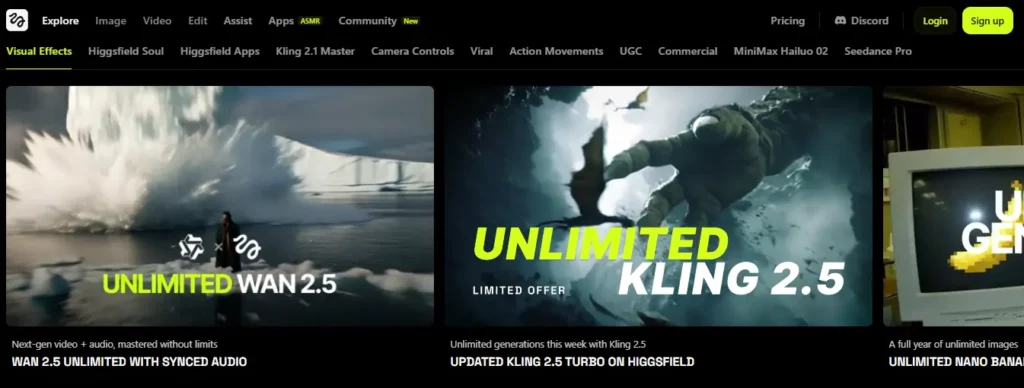
Higgsfield’s mobile-first “Diffuse” app is the creator economy’s answer to stiff, corporate AI video tools. It puts professional-grade animation power in your pocket, allowing you to take a simple selfie and transform it into a fully animated character that moves with lifelike fluidity.
It excels at understanding physical motion, ensuring your character doesn't just float but actually interacts with their environment.
As a robust APOB AI alternative, Higgsfield stands out with its specific focus on cinematic quality and motion coherence. The “Lipsync Studio” and precise face-swapping features are engineered for social media formats, helping TikTok and Reels creators maintain high production value even when working from a smartphone.
Higgsfield AI Key Features:
Best for: Social media creators who need a powerful, mobile-based tool to create viral character content on the go.
5. Kling AI
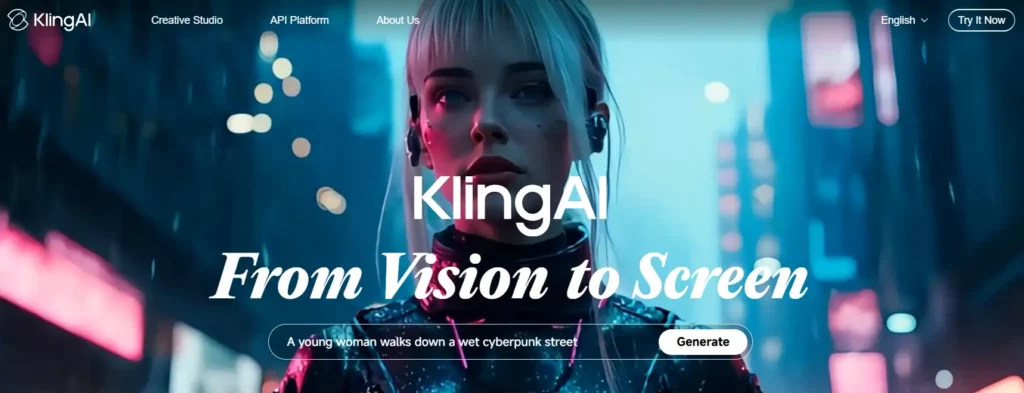
Kling AI represents the next generation of “Sora-class” video models, offering a global APOB AI alternative that pushes the boundaries of realism. Its “Unified Video Generation” model doesn't just swap faces; it generates entire scenes with cinematic 1080p quality, complex lighting, and physics-compliant movement that older tools simply cannot match.
For technical users, the “Kling O1” model offers unprecedented control through natural language editing. You can prompt the AI to “re-light the scene” or “change the camera angle” after the video is generated, giving you director-level control over your virtual influencers. It’s a powerhouse for creating high-end faceless channel content or realistic B-roll.

Kling AI 10% Off Cinematic Video Power Exclusive
Kling AI Key Features:
Best for: Videographers and high-end content creators who demand broadcast-quality realism and granular control over video physics.
6. InVideo.io
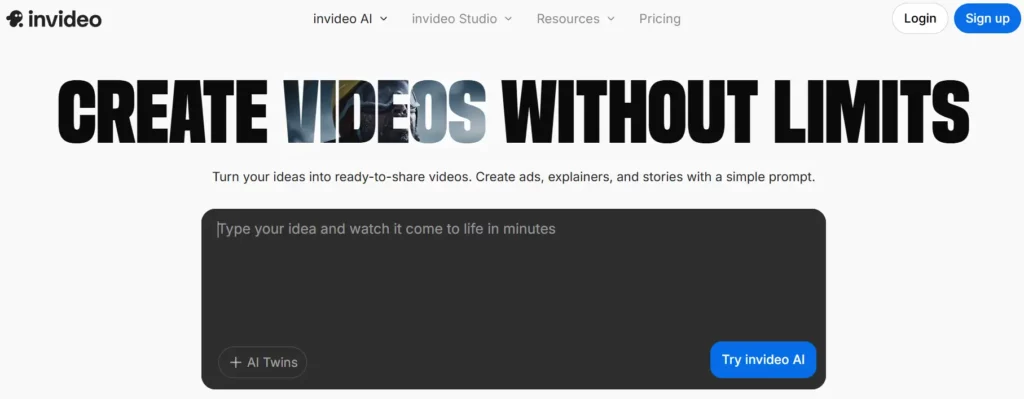
InVideo serves as the ultimate storyboard-to-video engine for creators who prefer a director's role over an editor's. As an APOB AI alternative, it shifts the focus from “face swapping” to “narrative building,” allowing you to generate complete documentaries, explainers, or marketing videos from a single text prompt.
The platform’s real strength lies in its “Magic Box” editing, which allows you to iterate on your video just by typing. If you don't like the tone of the voice or the background clip, you simply type “make it more dramatic” or “change the setting to a modern office,” and the AI executes the edit instantly, streamlining the workflow for faceless YouTube channels.
InVideo.io Key Features:
Best for: Faceless YouTube channel owners who need to automate the entire production pipeline from script to final edit.
7. Ryla AI
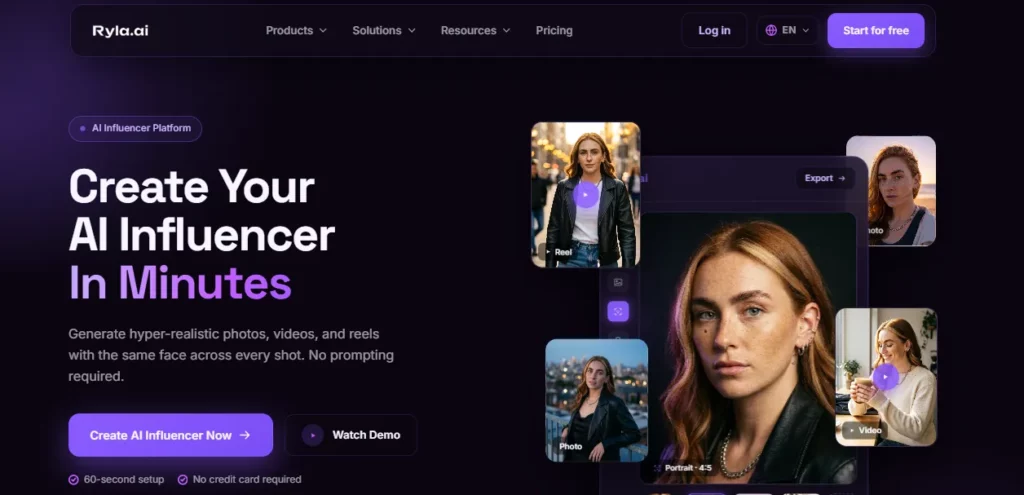
Ryla AI is the APOB AI alternative that treats character drift as a training problem rather than a prompting problem, and it fits creators or small agencies running one recurring persona — a fashion feed, a fitness page, a faceless brand channel — where image number 400 still has to look like image number one.
The difference is where the identity is stored. Prompt-led persona tools re-describe the character on every generation and hope it holds, which is exactly how a face slides from render to render. Ryla trains a custom face model (LoRA) on uploaded reference photos and locks each subsequent output to that trained model. Stills, image-to-video reels, lip-synced talking heads and face swaps all draw on the same identity, which is why it holds through an outfit change, a new location and a switch from photo to video.
One qualification matters more than any feature list: LoRA training is Pro-tier only. Free and Basic users pick a preset face and get consistency in the loose sense of “similar-looking”. Anyone evaluating Ryla to fix drift is evaluating the $99.99 plan, not the $34.99 one.
The rest of the workflow is deliberately short — build the character, choose a template from the reels, fashion, lifestyle, UGC ads, fitness and travel sets rather than writing a prompt, generate stills, convert one into a 3 to 15 second MP4 at 9:16, 1:1 or 16:9 in 30 to 90 seconds, add a script and a library or cloned voice for lip-sync, then export and post manually. There is no scheduler and no publishing integration.
Basic buys 10,000 credits for $34.99, which Ryla describes as roughly 300 images or 10 videos — about twelve cents a still or $3.50 a clip, from one shared pool, not two allowances. Pro's 25,000 credits at $99.99 come to roughly 600 images or 20 videos, so cost per asset rises, not falls; the extra buys 4K, face-model training and the adult opt-in.
Credits roll over while the subscription is active, billing is monthly only, and Ryla publishes no per-generation credit table, so exact costs appear only at the generate button. The platform launched on 20 March 2026, so there is no independent review base to weigh any of it against yet.
Ryla AI Key Features:
Best for: Creators who need one persona to stay recognisable across hundreds of assets and are prepared to pay for the Pro tier, where the trained face model actually lives.
Evaluation Matrix: How We Benchmarked These APOB AI Alternatives

To ensure this comparison goes beyond surface-level features, we developed a strict “Performance-to-Cost” testing framework. Marketing claims often hide technical limitations, so we tested each APOB AI alternative against the real-world demands of high-volume content production.
Our benchmarking methodology focuses on four non-negotiable metrics:
This data-driven approach guarantees that our recommendations prioritize tools that deliver professional ROI, not just viral hype.
Making the Right Choice Beyond APOB AI
Character consistency isn't a luxury—it’s the foundation of trust between your audience and your digital brand. Each APOB AI alternative in this guide addresses a different bottleneck, from identity stability to video quality and workflow control.
The right choice depends on whether you prioritise speed, budget, or production quality. Test two platforms side by side with the same character prompt, track render times and facial drift, then commit to the option that removes your biggest friction.
AiMojo Recommends:


 BONUS: Get our $200 “AI Mastery Toolkit” FREE when you sign up!