


Getting that iconic “vertigo effect”—where the background warps while the subject remains locked in place—historically required a dolly track, a zoom lens, and perfect timing. For most independent editors, trying to replicate this manually often just leads to shaky, unusable footage.
Technology has finally caught up to this complex cinematic technique, making expensive gear unnecessary. With the Top 6 AI Dolly Zoom Video Creators, you can now bypass the hardware entirely. These tools let you apply that disorienting, dramatic depth to your projects using purely digital motion, saving you from the frustration of manual setups.
The Cinematic Physics Behind AI Dolly Zoom Video Creators

Traditionally, the dolly zoom relies on a precise physical contradiction: moving the camera backward while simultaneously zooming the lens forward. This mechanical push-and-pull keeps the subject's size constant while radically compressing the background perspective.
AI Dolly Zoom Video Creators replicate this optical phenomenon digitally by manipulating depth maps rather than physical glass. These tools analyze the image's Z-axis, separating the foreground subject from its environment.
The AI then algorithmically scales the background to simulate a changing field of view (FOV), creating that signature vertigo effect without any camera movement. This process demands high-fidelity edge detection to ensure the subject remains anchored while the world around them warps convincingly.
No Camera? No Problem – AI Dolly Zoom Video Creators
| Top AI Dolly Zoom Video Creators | Cinematic Core Strength | Best Target Audience |
|---|---|---|
| Kling AI | Precise spatial mapping | Technical indie filmmakers |
| CapCut | Instant automated warping | Social media creators |
| OpenArt | Granular motion controls | Digital concept artists |
| Higgsfield | Mobile inverse zoom | Mobile video marketers |
| Vidu AI | Stable rapid processing | Commercial VFX artists |
| Runway Gen-3 Alpha | Photorealistic depth estimation | Professional broadcast agencies |
1. Kling AI
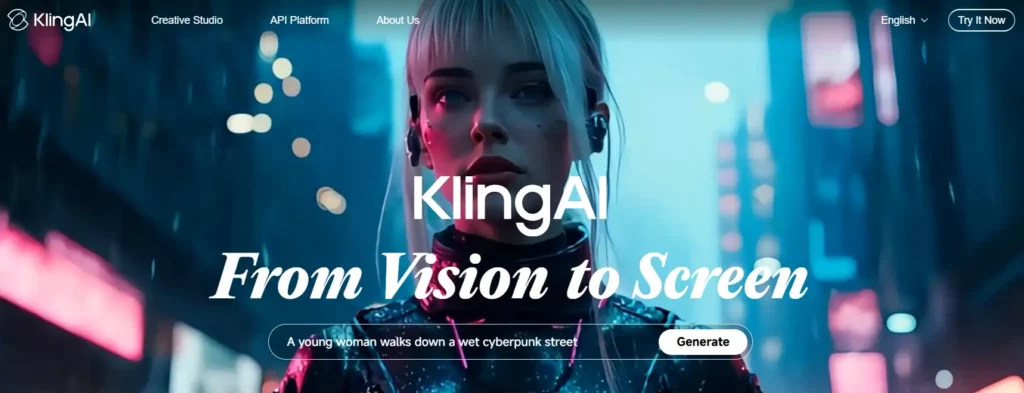
Kling AI understands that simulating complex camera physics digitally requires a model capable of parsing deep spatial relationships. Kling AI handles this technical challenge by offering robust text-to-video and image-to-video rendering capabilities. As one of the more advanced AI Dolly Zoom Video Creators available, it enables editors to input static images and dictate precise Z-axis camera movements.
For filmmakers looking to generate a vertigo effect without a physical rig, Kling AI processes these prompts with high-fidelity background separation. The resulting footage provides a professional-grade cinematic shift, making it highly useful for adding narrative tension to independent short films and digital campaigns.

Kling AI Discount: 10% Off AI Dolly Zoom Videos Exclusive
Kling AI Key Features:
Best for:
Best for independent filmmakers and technical editors requiring precise, realistic spatial distortion and high-fidelity video rendering for narrative-driven cinematic projects.
2. CapCut

CapCut recognises that editors frequently need quick, accessible methods to apply dynamic transitions to social media content without handling complex rendering software. CapCut natively integrates automated spatial distortion tools, allowing users to apply a Hitchcock-style zoom directly to static images or video clips.
The platform relies on automated depth estimation to stretch the background while keeping the primary subject anchored. This functionality is particularly valuable for mobile creators building high-retention hooks for platforms like TikTok and Instagram Reels.
CapCut Key Features:
Best for:
Best for social media managers and content creators needing fast, reliable, and user-friendly mobile editing tools to produce high-engagement vertical videos.
3. OpenArt
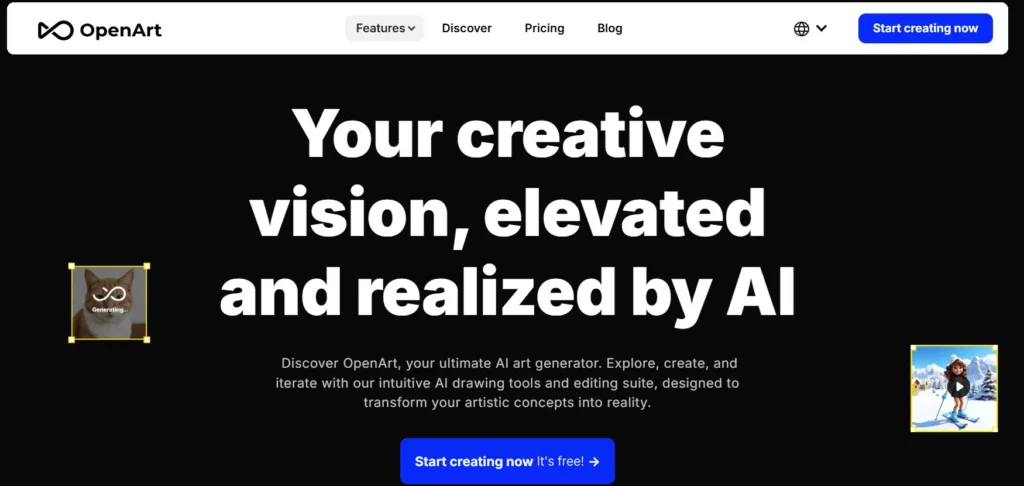
Coming in at the third position on our list of AI Dolly Zoom Video Creators, OpenArt addresses a key challenge: turning highly stylized digital artwork into motion video while preserving visual consistency. The platform is built for creators who want their AI-generated still images to transition smoothly into dynamic, cinematic animations without losing artistic integrity.
By offering granular parameter adjustments, users can dial in the exact intensity of the field of view compression. This technical control proves highly beneficial for concept artists and digital illustrators adding dramatic movement to their portfolio pieces.
OpenArt Key Features:
Best for:
Best for digital artists and illustrators seeking reliable animation controls to add dramatic, cinematic movement to their static AI-generated artwork.
4. Higgsfield
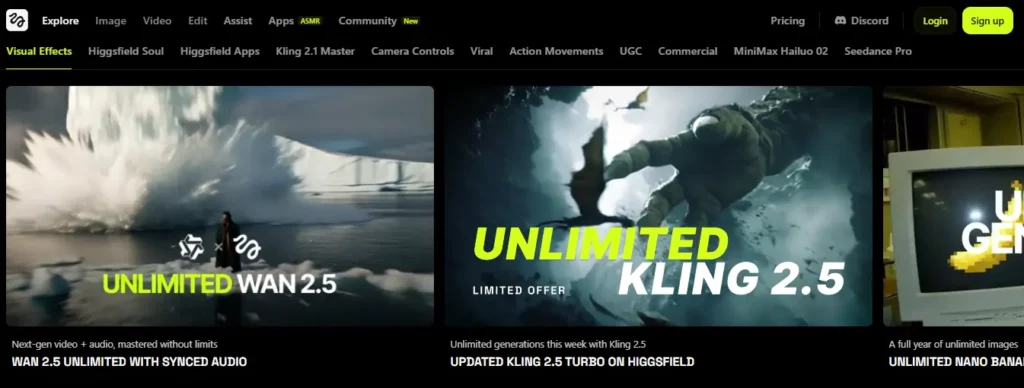
Higgsfield targets the fact that achieving complex cinematic movements usually requires desktop-grade software, which limits on-the-go content production. Higgsfield addresses this by offering a mobile-first generative AI application designed specifically for dynamic video motion.
The system isolates the subject and applies an inverse zoom to the background, mimicking a physical lens push-and-pull. This streamlined approach allows mobile videographers and digital marketers to quickly produce professional-tier tension shots directly from their handheld devices.
Higgsfield Key Features:
Best for:
Best for mobile-first content creators and social marketers requiring reliable, high-end motion templates to generate cinematic sequences without desktop software.
5. Vidu AI

Vidu AI focuses on the problem that generating continuous, coherent video with consistent physics is a major hurdle in current generative media. Vidu tackles this by utilising a highly efficient architecture capable of rendering complex camera movements in a single pass.
The model excels at maintaining temporal consistency, ensuring the background warp does not degrade into visual noise. This stability is crucial for commercial producers and visual effects artists who need reliable, clean footage for professional integration.
Vidu AI Key Features:
Best for:
Best for commercial video producers and visual effects artists demanding rapid, temporally consistent rendering for complex digital camera movement integration.
6. Runway Gen-3 Alpha

Rounding out our list of AI Dolly Zoom Video Creators, Runway Gen-3 Alpha stands out for delivering professional-grade virtual production with exceptional control over digital camera parameters. From adjusting focal length to fine-tuning tracking speed, the platform gives creators precise command over every cinematic detail.
The system’s deep understanding of photorealistic depth of field ensures that the vertigo effect looks optically authentic rather than artificially stretched. This technical superiority makes it an essential asset for advanced filmmakers and advertising agencies producing high-end visual campaigns.
Runway Gen-3 Alpha Key Features:
Best for:
Best for professional filmmakers and advertising agencies requiring absolute technical control and photorealistic rendering for broadcast-quality digital cinematography workflows.
High-Tension Use Cases for AI Dolly Zoom Video Creators in Modern Filmmaking

The dolly zoom has always been a tool of psychological disruption — used deliberately to signal dread, revelation, or emotional collapse. In the hands of modern creators, AI Dolly Zoom Video Creators are bringing these same high-impact moments to projects that once lacked the budget for them.
Where these tools deliver the most cinematic impact:
What separates AI-generated dolly zooms from raw editing tricks is the precision of subject isolation the subject stays grounded while the spatial environment reacts around them, which is exactly what makes this technique so psychologically effective across every genre.
The Future of Dolly Zoom Videos with AI
Mastering the vertigo effect used to mean renting expensive gear and spending hours trying to get the timing exactly right. That barrier simply doesn't exist anymore. With the current generation of AI Dolly Zoom Video Creators, achieving that disorienting, cinematic depth shift is entirely digital and far more accessible.
The technology has evolved to handle the complex spatial mapping and background warping for you. You no longer need to fight with physical camera physics or shaky tracking rails. Instead, you can focus on where this effect works best—adding tension and visual impact to the story you are trying to tell.
AiMojo Recommends:



 BONUS: Get our $200 “AI Mastery Toolkit” FREE when you sign up!