

If you’re serious about data-driven decision-making, you know that ETL tools (Extract, Transform, Load) are the backbone of any modern analytics workflow.
With data scattered across SaaS apps, databases, and cloud platforms, picking the right ETL solution can mean the difference between clean, actionable insights and a tangled mess of spreadsheets.
In this expert guide, we break down the 10 best ETL tools for 2026, highlighting their unique strengths, real-world use cases, and why they’re trusted by AI engineers, SaaS teams, and data scientists worldwide.

Whether you’re building AI pipelines, wrangling marketing data, or scaling your ML stack, these tools will help you streamline, automate, and scale your data integration like a pro.
Why ETL Tools Matter: Beyond Just Moving Data
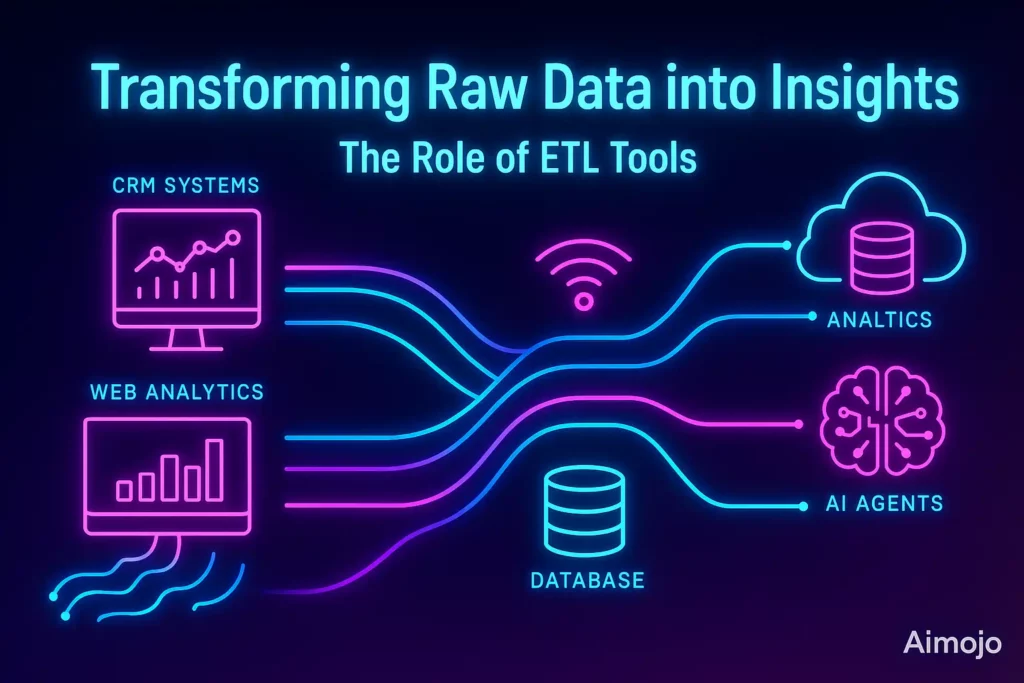
Today’s businesses generate petabytes of data from every corner—think CRM systems, web analytics, IoT sensors, and even AI agents. But raw data is useless unless it’s centralised, cleaned, and transformed into formats your teams can actually use. That’s where ETL tools shine:
If you’re managing data at scale or building anything with AI, ETL isn’t optional—it’s essential.
1. Integrate.io
👍Best for: Cloud-first teams needing simple, scalable data pipelines.
Integrate.io is a cloud-based ETL powerhouse designed for teams that want to connect dozens (100+) of data sources—from MongoDB and MySQL to Amazon Redshift and Google Cloud—without writing code. Its drag-and-drop interface means even non-coders can build robust data flows, while features like field-level encryption and scalability make it a favourite for enterprises with strict security needs.
Perfect for e-commerce, SaaS, and marketing teams needing a single source of truth for customer analytics, or for AI engineers prepping data for LLM fine-tuning.
2. Talend
👍Best for: Open-source enthusiasts and enterprises needing flexibility.
Talend is a legend in the ETL space, offering both a robust open-source platform and a commercial suite packed with advanced features. It’s been a consistent “Leader” in Gartner’s Magic Quadrant for Data Integration Tools, thanks to its 900+ connectors, visual job designer, and support for both on-premises and cloud data sources.
Ideal for teams migrating legacy data to the cloud, building AI/ML data lakes, or orchestrating complex, multi-step transformations. Also a top pick for Python and Java devs who want to extend ETL with custom code.
3. IBM DataStage
👍Best for: Large enterprises and finance/healthcare with heavy compliance needs.
IBM DataStage is a heavyweight ETL tool built for mission-critical workloads. It’s trusted by banks, insurers, and Fortune 500s to move, clean, and transform massive data volumes across complex, regulated environments. Its parallel processing engine and client-server architecture mean it can handle anything from batch jobs to real-time data feeds.
Perfect for financial institutions, healthcare, and enterprises needing bulletproof data pipelines with full audit trails and compliance.
4. Oracle Data Integrator (ODI)
👍Best for: Oracle shops and hybrid cloud environments.
ODI is Oracle’s flagship ETL/ELT tool, optimised for both on-prem and cloud data integration. Unlike traditional ETL, ODI leverages the target database’s processing power (ELT), delivering blazing speed for large-scale transformations. It’s tightly integrated with Oracle Cloud and supports parallel execution for big data loads.
Best for enterprises running Oracle E-Business Suite, Hyperion, or multi-cloud data lakes, especially where performance and scalability are non-negotiable.
5. Fivetran
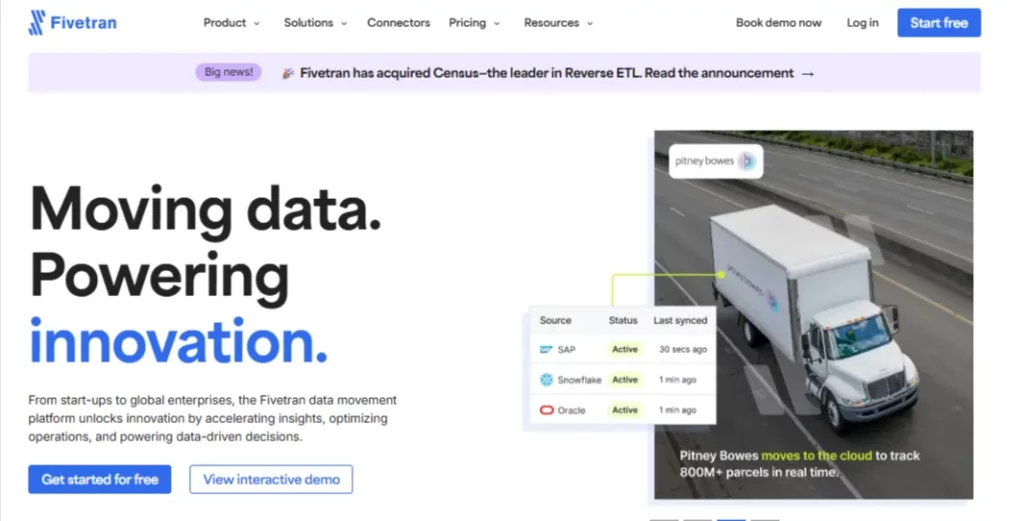
👍Best for: Teams wanting hands-off, automated data syncing.
Fivetran is all about zero-maintenance data pipelines. Its ELT model extracts data from 300+ sources, loads it into your warehouse (Snowflake, BigQuery, Redshift, etc.), and handles schema changes automatically. No more breaking pipelines every time your SaaS vendor updates their API.
Great for marketing, sales ops, and BI teams who want fresh data in their warehouse without babysitting ETL jobs. Also popular for AI teams feeding LLMs with up-to-date business data.
6. Apache NiFi
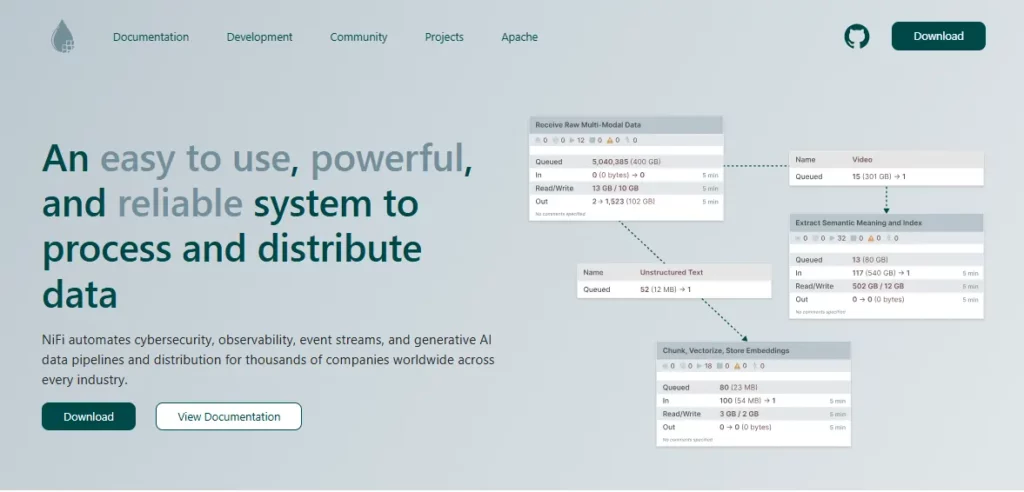
👍Best for: Real-time, event-driven data flows and IoT.
Apache NiFi is an open-source ETL tool built for automated, real-time data flows. Its web-based, drag-and-drop UI makes it easy to design complex pipelines, while its scalable, fault-tolerant architecture is ideal for streaming data from sensors, logs, and APIs. NiFi supports custom processors in Java, Groovy, or Python, making it highly extensible.
Top pick for IoT, security analytics, and organisations needing real-time data ingestion, transformation, and routing across hybrid environments.
7. Matillion
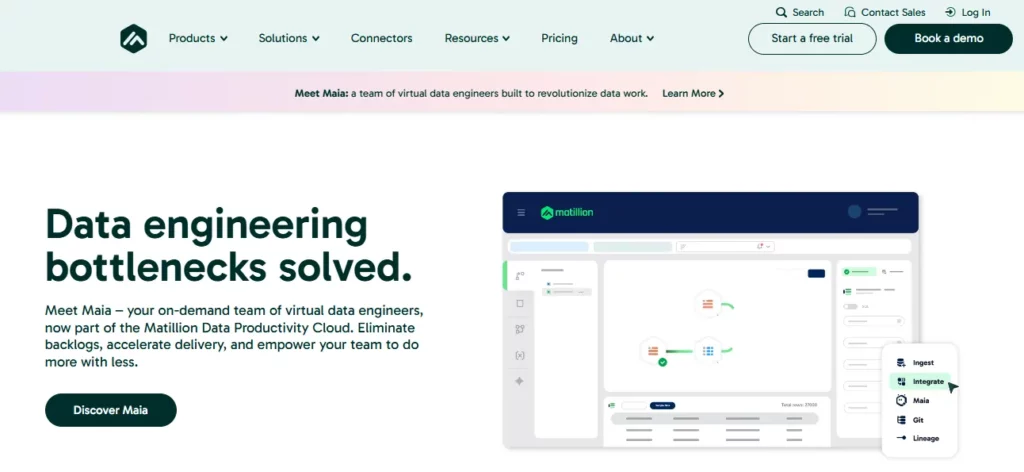
👍Best for: Cloud data warehouse users (Snowflake, BigQuery, Redshift, Databricks).
Matillion is purpose-built for the cloud, with a slick, browser-based UI and push-down ELT technology that leverages your data warehouse’s compute power. It’s fast to set up, easy to use, and supports version control, collaboration, and 80+ connectors out of the box.
Ideal for teams standardising analytics on Snowflake, Redshift, or BigQuery, especially those building AI/ML pipelines or needing to iterate quickly on data models.
8. Estuary Flow
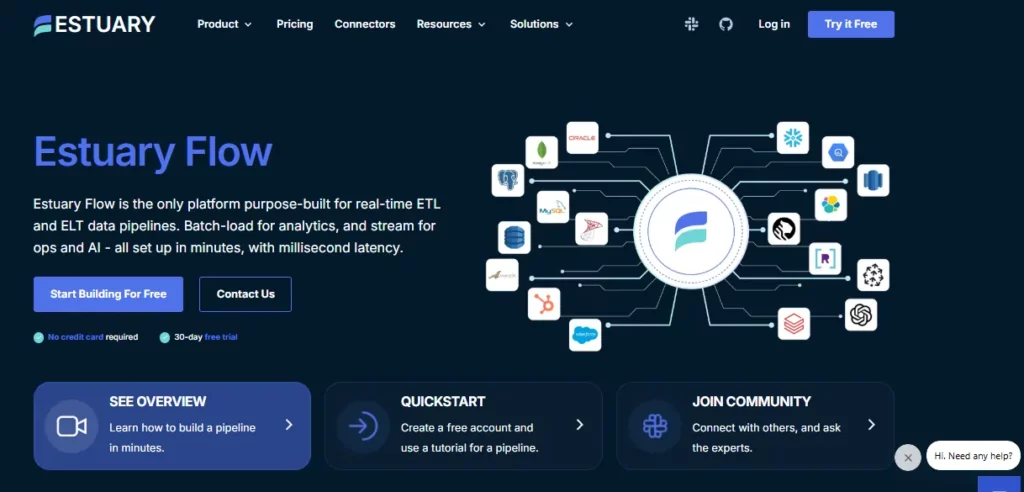
👍Best for: Real-time, streaming ETL at scale.
Estuary Flow is a next-gen ETL platform built for real-time, streaming data. It supports both batch and Change Data Capture (CDC), with sub-100ms latency and exactly-once delivery. Its no-code connectors and elastic streaming compute make it a standout for teams needing instant, reliable data movement across cloud, SaaS, and analytics platforms.
Perfect for fintech, e-commerce, and AI teams needing live dashboards, fraud detection, or feeding real-time ML models.
9. Luigi
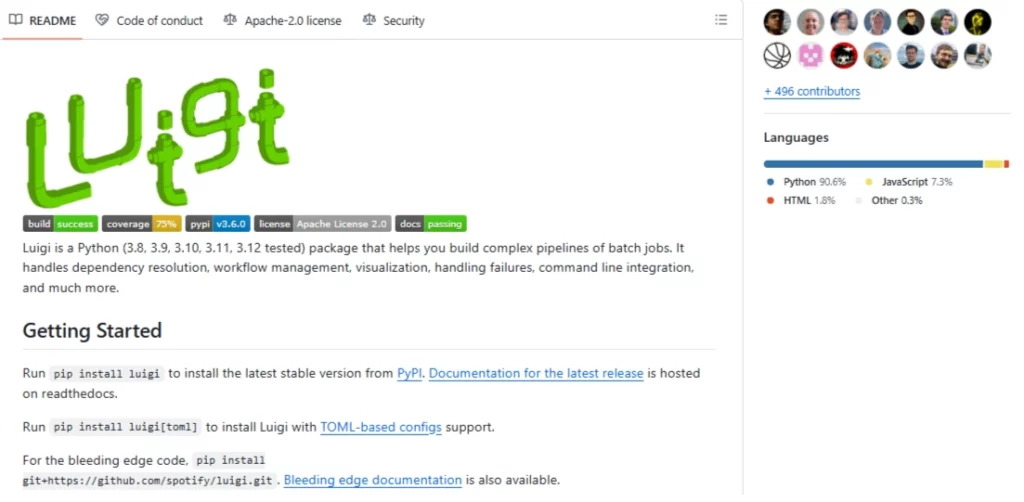
👍Best for: Python devs building complex, batch-oriented data pipelines.
Developed by Spotify, Luigi is a Python-based ETL framework for building multi-step, dependency-driven workflows. It’s a favourite for data engineers who want fine-grained control, failure recovery, and visualisation of complex job dependencies. If you’re chaining together lots of batch jobs or ML tasks, Luigi is a solid choice.
Great for ML engineers, data scientists, and analytics teams building reproducible, multi-stage pipelines—think model training, data preprocessing, and nightly batch jobs.
10. RudderStack
👍Best for: Event-driven analytics and customer data pipelines
RudderStack is a modern data integration platform with both traditional ETL and event streaming capabilities. Its SDKs let you capture behavioural events from web, mobile, and server apps, route them to your warehouse, and then sync insights back to your marketing or product tools. It also supports reverse ETL for operationalising data.
Perfect for growth, product, and marketing teams needing unified customer profiles, real-time analytics, and the ability to sync insights across the martech stack.
Quick Comparison Table
| Tool | Best For | Unique Perk | Cloud Support | Open Source | Real-Time |
|---|---|---|---|---|---|
| Integrate.io | Cloud ETL, no-code teams | Field-level encryption | Yes | No | Yes |
| Talend | Open-source, flexible integration | 900+ connectors, governance | Yes | Yes | Yes |
| IBM DataStage | Enterprise, compliance-heavy orgs | Parallel processing engine | Yes | No | Yes |
| Oracle Data Integrator | Oracle-centric, hybrid cloud | ELT for high-speed processing | Yes | No | Yes |
| Fivetran | Automated, hands-off ETL | Schema evolution, 300+ sources | Yes | No | No |
| Apache NiFi | Real-time, event-driven pipelines | Visual flow, custom processors | Yes | Yes | Yes |
| Matillion | Cloud data warehouses | Push-down ELT, browser UI | Yes | No | Yes |
| Estuary Flow | Real-time streaming at scale | Sub-100ms latency, CDC | Yes | No | Yes |
| Luigi | Python-based, complex workflows | Dependency management | Yes | Yes | No |
| RudderStack | Event analytics, reverse ETL | SDK event capture, identity | Yes | Yes | Yes |
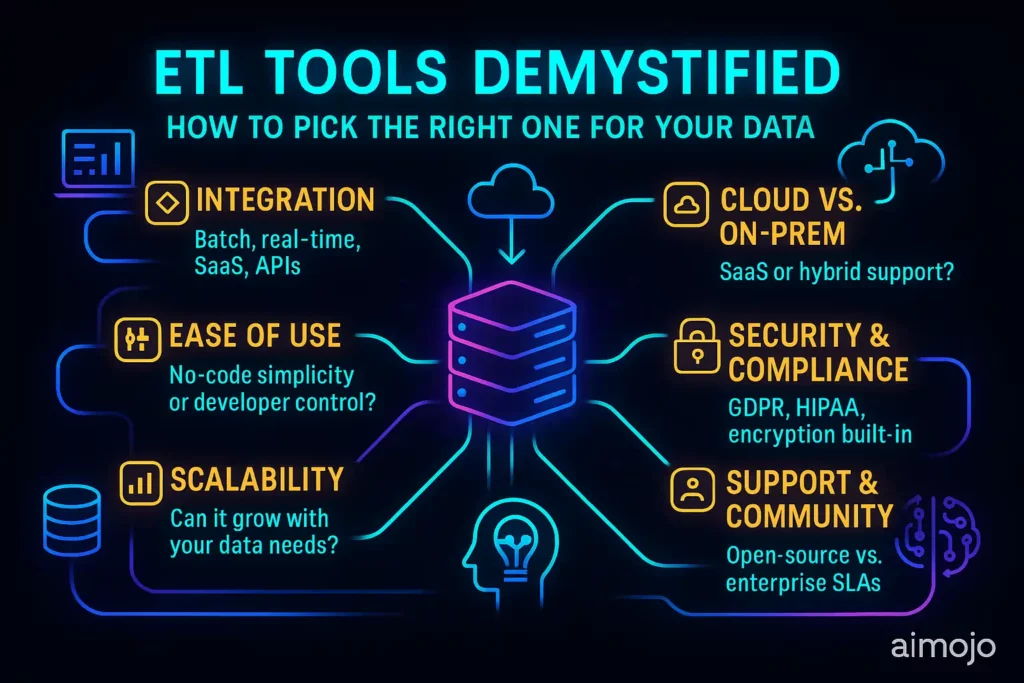
Choosing the Right ETL Tool: What to Look For
When picking your ETL weapon of choice, keep these factors in mind:
ETL in the Age of AI: Why It’s More Important Than Ever
With the explosion of AI workflows, LLMs, and GenAI tools, the demand for clean, well-governed data is at an all-time high.
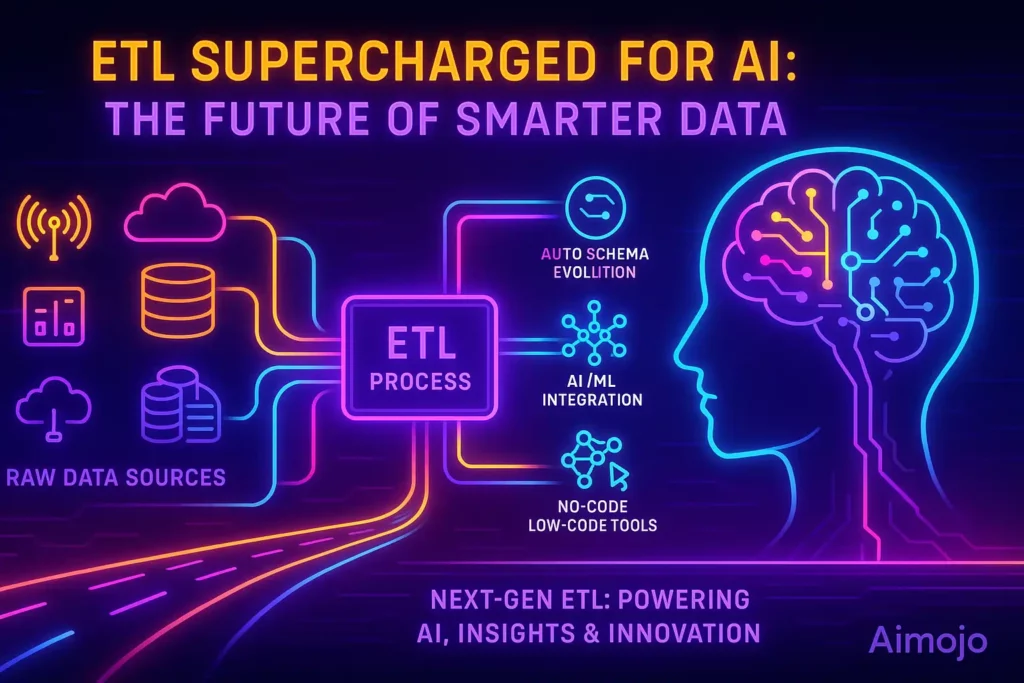
ETL tools aren’t just about moving data—they’re about empowering AI agents, machine learning models, and analytics teams to make smarter, faster decisions.
The best ETL tools now offer:
AiMojo Recommends:
Final Thoughts
The ETL space is more exciting—and more critical—than ever. Whether you’re a data engineer, AI enthusiast, SaaS founder, or marketing pro, the right ETL tool will save you hours, reduce errors, and Reveal the full potential of your data.
From cloud-native giants like Integrate.io and Matillion to open-source favourites like Talend and Luigi, there’s a solution for every workflow and budget.



 BONUS: Get our $200 “AI Mastery Toolkit” FREE when you sign up!