

AI adoption is no longer optional for enterprise growth and efficiency. As organizations face increased pressure to streamline operations, enhance productivity, and stay competitive, artificial intelligence is becoming an indispensable part of enterprise strategy.
In 2026, AI tools are expected to be deeply integrated into every facet of business—from customer service to analytics, content creation to automation. The following list highlights 10 AI-powered solutions that every enterprise should consider leveraging to thrive in a rapidly evolving digital economy.
Why AI Tools Are Critical for Enterprise Success in 2026
Enterprises operate on a scale that demands precision, speed, and adaptability. AI tools help address these demands by:
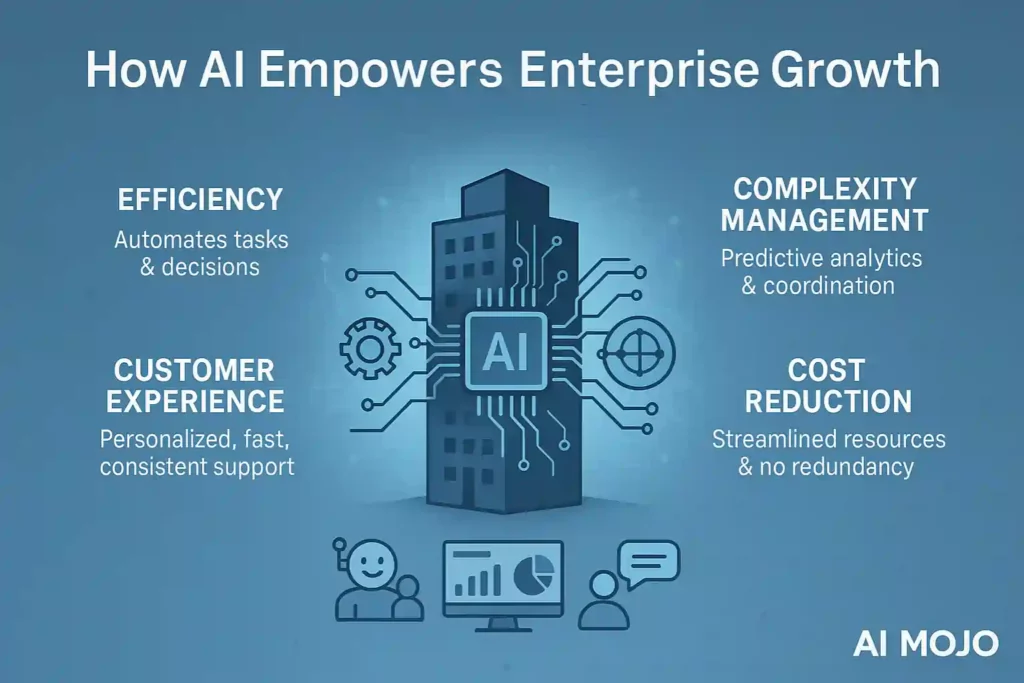
In 2026, enterprises that embrace AI will not only remain competitive but also unlock new avenues for innovation and growth.
AI’s Impact on the Modern Enterprise
The 10 Essential Enterprise AI Tools (2026)
Enterprises in 2026 face mounting demands to work faster, smarter, and more securely across global teams. Fortunately, a wide range of AI tools has emerged to meet these needs—from automating workflows and analyzing data to improving communication and generating content. The following tools are among the most impactful, scalable, and enterprise-ready options available today.
| Enterprise AI Tools | Key Business Use | Unique Parameter | Notable Metric / Feature |
|---|---|---|---|
| ChatGPT Enterprise | Secure, enterprise-grade assistant; automates communication, content, support | SOC 2 compliance, advanced admin controls | Used by 80% of Fortune 500s for support and training |
| Jasper AI | On-brand marketing content generation | Customisable brand voice, multilingual | Cuts creative production cycles by 50% |
| Runway ML | Video editing and generation for training, comms | Text-to-video, green screen, object detection | Doubles video content efficiency across teams |
| Tomedes Audio-to-Text | Instant transcription for meetings/interviews | Multi-language, no sign-up required | Speeds up documentation 5X |
| Salesforce Einstein | CRM insights, sales analytics, case prediction | Native to Salesforce, real-time recommendations | 284% ROI over 3 years according to Forrester |
| Notion AI | Smart writing, planning, knowledge management | AI-powered summaries, cross-department sync | Reduces duplicated work by 40% |
| Grammarly Business | Polished enterprise communication at scale | Central user controls, style guides | Cuts grammar errors by 93% in client comms |
| Eye2.ai | LLM output comparison, content QA | Compare GPT-4, Gemini, Claude, more | Reduces misinformation risk in outputs |
| n8n | AI-powered workflow automation for technical and security-conscious teams | Hybrid development environment combining a visual UI with a full code editor | Backed by 118k+ GitHub stars and a 200k+ member developer community |
| Cerebro | Content, data, and code creation/translation | Multi-LLM support, hybrid/cloud-ready | Enables SAP AI coding, secure deployments anywhere |
1. ChatGPT Enterprise
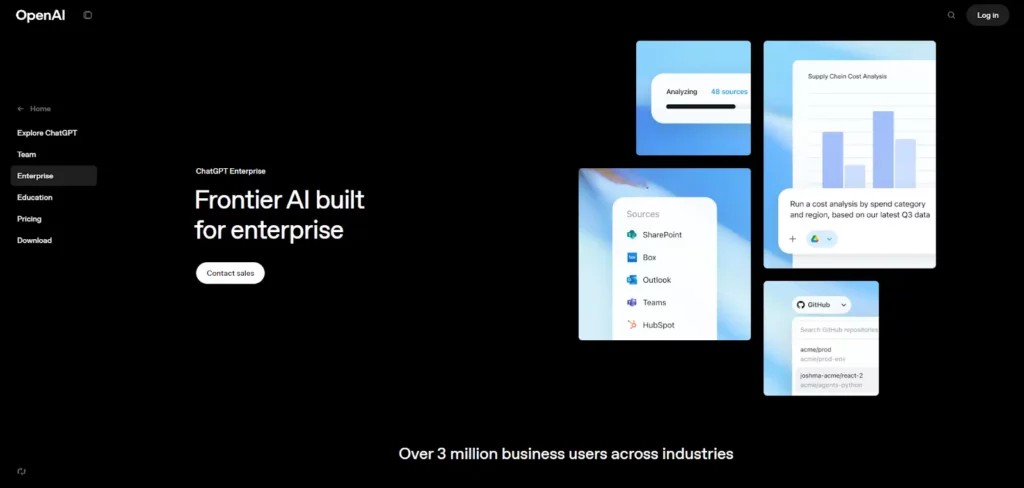
ChatGPT Enterprise is a scalable AI assistant designed for secure enterprise communication. It supports knowledge retrieval, content generation, and customer service automation across departments with high accuracy and speed.
This platform offers advanced context retention, enterprise-grade admin controls, and SOC 2 compliance, making it ideal for sensitive environments. With integration capabilities and dedicated support, it enhances productivity across use cases such as help desk automation, meeting summarization, and employee training.
Key Features & Parameters:
Standout Stats:
Best for:
Customer support automation, meeting summarisation, employee onboarding, knowledgebase FAQs.
2. Jasper AI
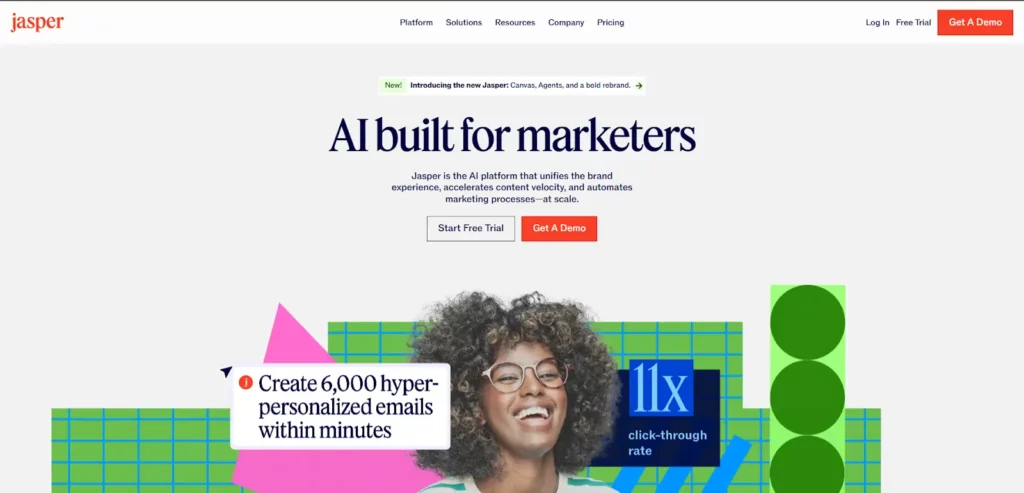
Jasper AI is a content generation platform optimized for enterprise marketing teams. It enables rapid production of high-quality marketing copy, including landing pages, product descriptions, social posts, and emails.
Enterprises can train Jasper on brand voice and tone, ensuring content consistency across teams and channels. Supporting multiple languages and third-party integrations, Jasper reduces creative bottlenecks while scaling global campaigns efficiently.
Key Features & Parameters:
Standout Stats:
Best for:
SEO content, campaign localization, social media pipelines, brand consistency at scale.
3. Runway ML
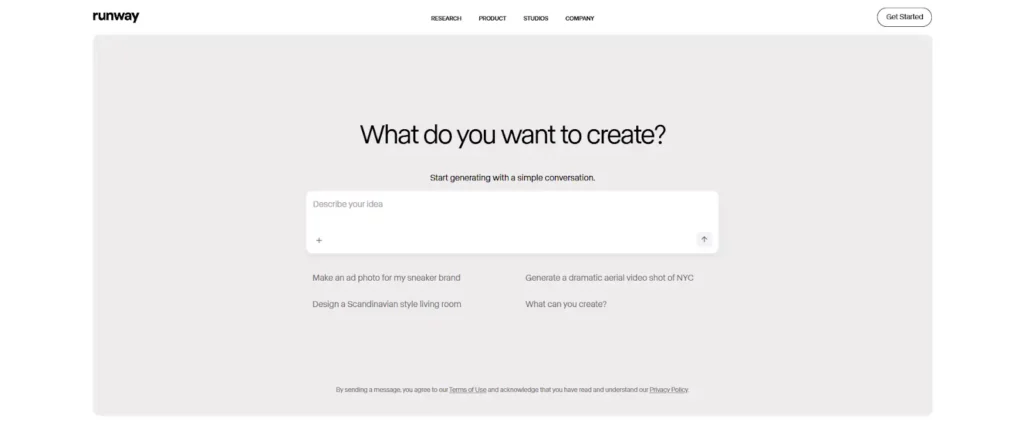
Runway ML is a next-generation AI platform for video content creation and editing. It provides intuitive tools for real-time green screen removal, text-to-video generation, and object detection—no advanced editing experience needed.
Designed for internal training, social media, and corporate communication, Runway helps enterprise teams quickly produce professional videos with minimal resources, increasing visual engagement across digital touchpoints.
Key Features & Parameters:
Standout Stats:
Best for:
Training materials, promo videos, internal comms, rapid content marketing.
4. Tomedes Audio to Text
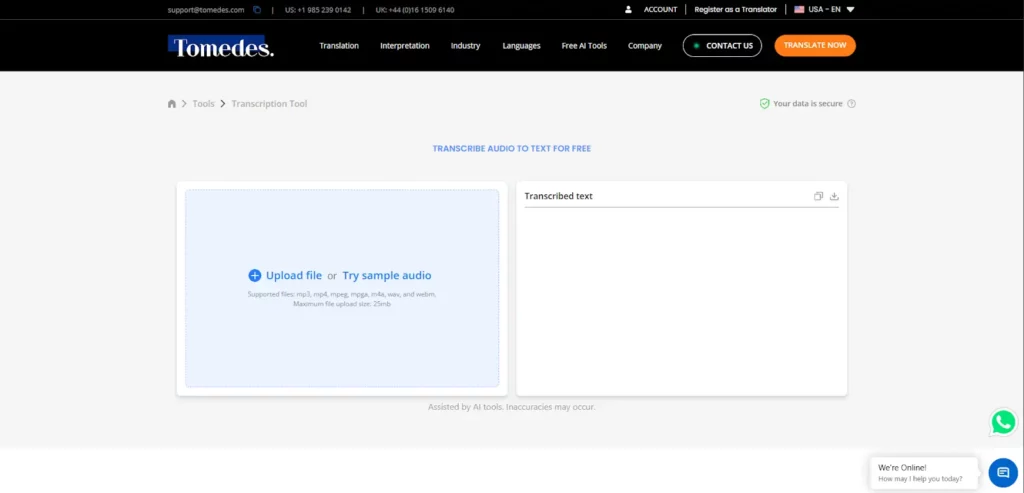
The audio-to-text tool by Tomedes provides fast, accurate transcription of spoken content into text, ideal for meetings, calls, and interviews. It’s free to use, requires no sign-up, and supports multiple languages.
By transforming audio into searchable, shareable content, it boosts documentation efficiency, improves accessibility, and enables teams to extract actionable insights from everyday conversations across the organization.
Key Features & Parameters:
Standout Stats:
Best for:
Meeting documentation, compliance transcriptions, searchable archives, accessibility support.
5. Salesforce Einstein
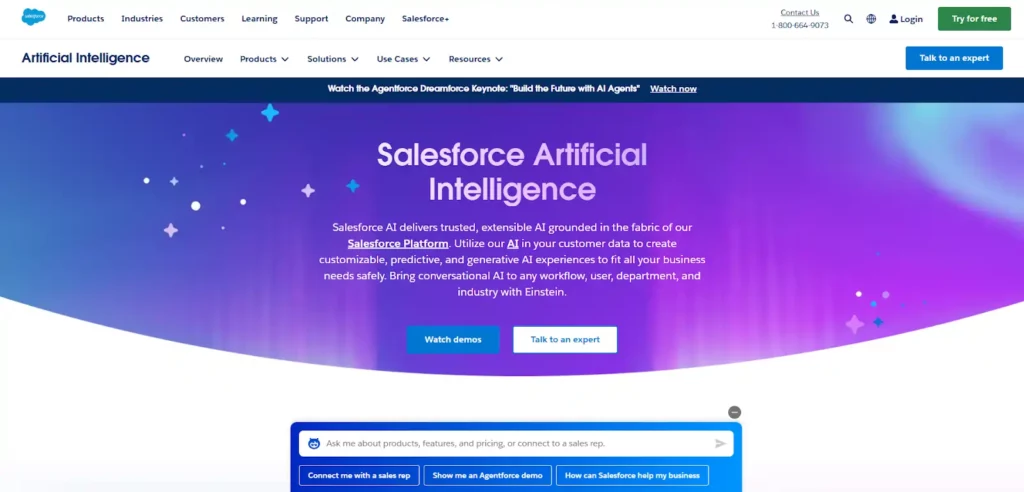
Salesforce Einstein brings AI-powered insights directly into the Salesforce ecosystem. It uses machine learning to analyze CRM data, helping teams forecast sales, personalize outreach, and automate repetitive tasks.
With native integration and real-time recommendations, Einstein enhances decision-making for sales, marketing, and service teams, driving pipeline growth and improving customer retention.
Key Features & Parameters:
Standout Stats:
Best for:
Pipeline management, sales forecasting, campaign automation, customer journey scoring.
6. Notion AI
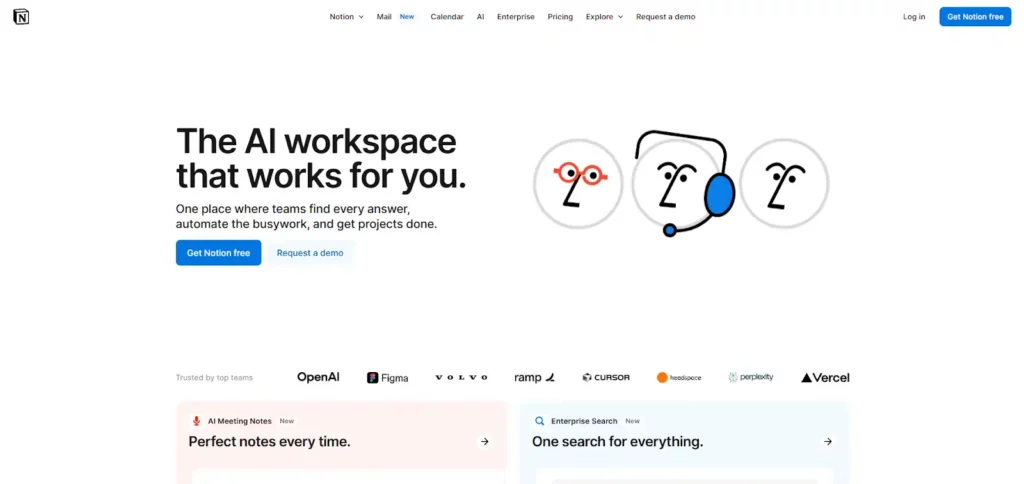
Notion AI enhances enterprise collaboration by transforming Notion into an intelligent assistant for writing, planning, and documentation. It helps teams summarize content, generate ideas, and translate notes with minimal manual input.
By automating knowledge creation and organization, Notion AI reduces duplication, improves project clarity, and supports faster decision-making across departments.
Key Features & Parameters
Standout Stats:
Best for:
Enterprises seeking to accelerate knowledge creation and streamline project management with AI.
7. Grammarly Business
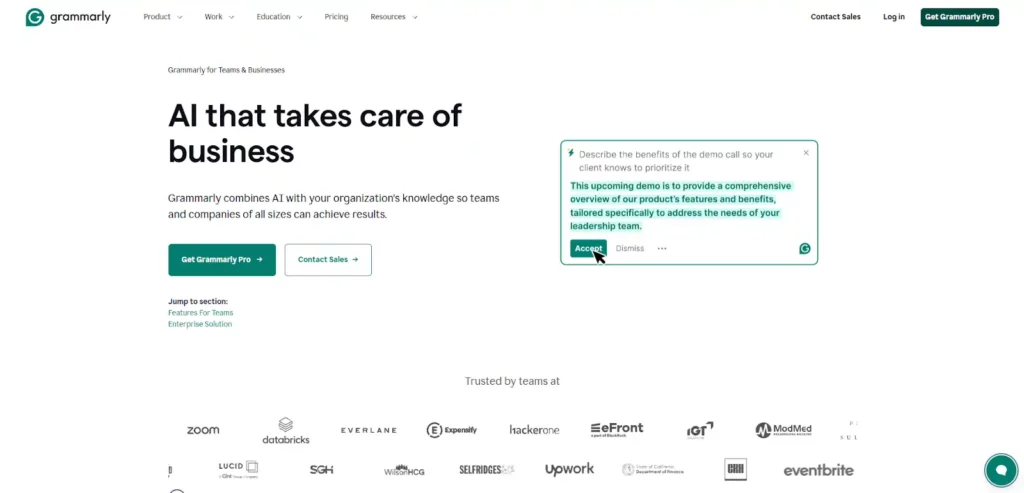
Grammarly Business ensures effective communication across enterprise teams with AI-driven grammar, tone, and clarity suggestions. It integrates seamlessly with email clients, browsers, and document platforms.
With centralized controls and reporting features, enterprises can maintain brand consistency and reduce communication errors, especially in client-facing roles, proposals, and internal documentation.
Key Features & Parameters:
Standout Stats:
Best for:
Client comms, proposal writing, internal documentation, branding checks.
8. Eye2.ai
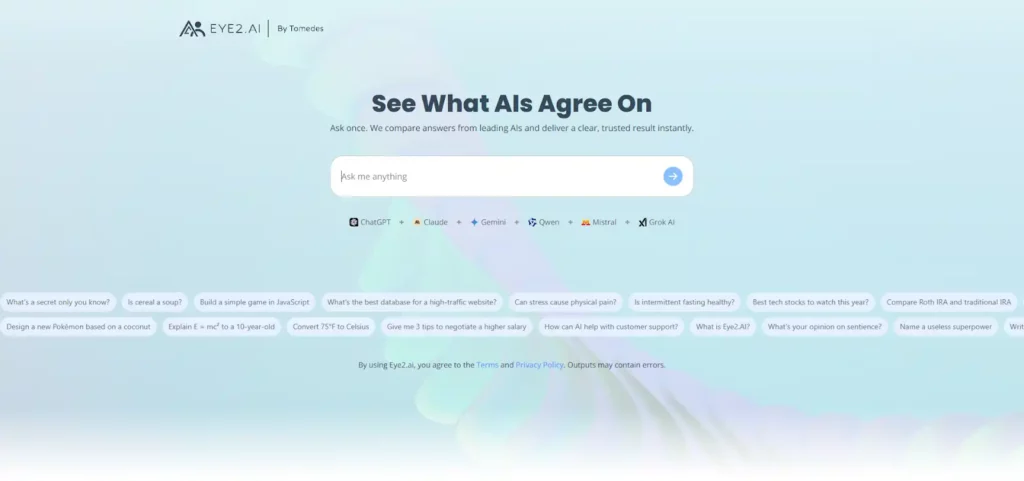
Eye2.ai enables enterprises to compare outputs from leading large language models such as GPT-4, Claude, Gemini, and more. By reviewing results side-by-side, users can assess accuracy, tone, and relevance.
This tool is valuable for teams validating AI-generated content, researching sensitive topics, or building internal QA workflows. It enhances AI transparency and reduces the risk of misinformation.
Key Features & Parameters:
Standout Stats:
Best for:
Enterprise AI QA, model benchmarking, compliant content production, research validation.
9. n8n
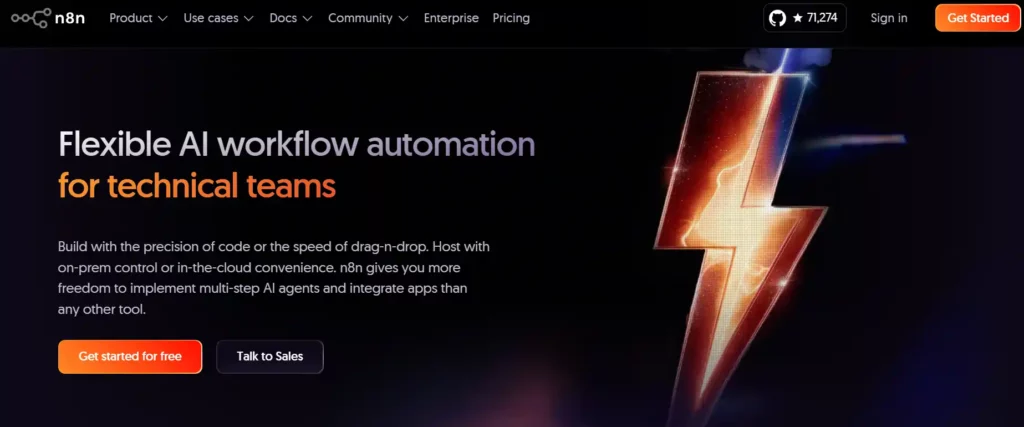
n8n offers flexible AI workflow automation designed for technical teams. Build with the precision of code or the speed of a visual UI, providing unparalleled freedom. It empowers enterprises to create multi-step AI agents and integrate any LLM.
With a focus on security, n8n can be fully self-hosted on-premise, ensuring complete data control. This source-available platform gives technical users the power to build, test, and deploy sophisticated automations reliably and at scale.
Key Features & Parameters:
Standout Stats:
Best for:
Enterprises and technical teams requiring deep customization and data control for AI automation.
10. Cerebro
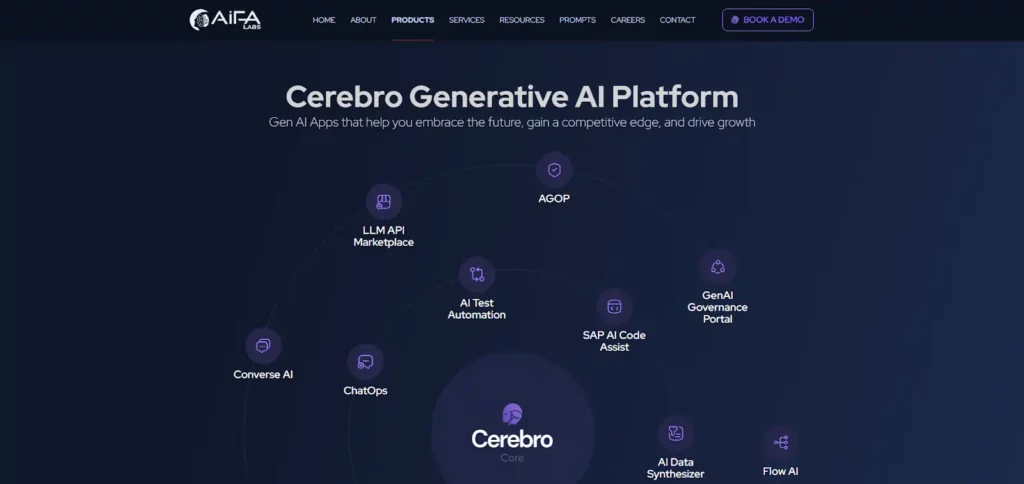
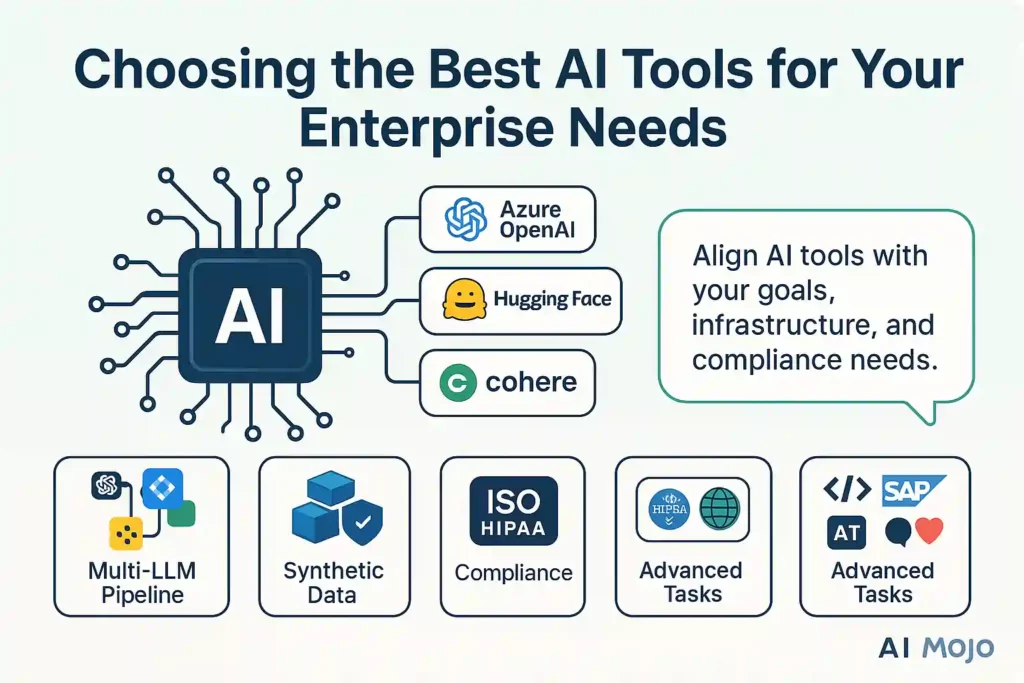
Cerebro by AiFA Labs offers cutting-edge features that modern companies need to compete, supporting diverse enterprise use cases such as content creation, software design and development, language translation, synthetic data generation, summarization, sentiment analysis, question-answering tasks, and even SAP AI-assisted code generation.
Key Features & Parameters:
- Multi-LLM Pipeline: Enables selection among Azure OpenAI, Hugging Face, Bedrock, Cohere.
- Deployment Flexibility: Choose cloud, on-premises, or edge.
- Synthetic Data: Generate training data sets for testing or privacy.
- Compliance: Meets ISO/IEC 27001, HIPAA, GDPR, industry security frameworks.
- Advanced Tasks: Handles code QA, SAP AI code, multilingual text, and sentiment analysis.
Standout Stats:
- Market Impact: Part of projected $632B AI enterprise spend by 2028.
- Scale: Custom deployments for enterprises with >10,000 employees.
Best for:
It allows enterprises to choose their preferred large language models (LLMs), including Azure OpenAI, Amazon Bedrock, Google, Hugging Face, and Cohere. Whether deployed in the cloud, on the edge, or within a secure data center, Cerebro adapts to meet various IT and compliance requirements while enhancing enterprise productivity across functions.
How to Select the Right AI Tools for Your Enterprise
With so many AI solutions available, choosing the right tools for your enterprise requires careful consideration. The ideal tool should not only solve a specific problem but also align with your organization’s infrastructure, scale, and compliance requirements. Here are key factors to guide your selection process.
Global data handling, regulated industries, technical content, cross-department automation.
Evaluate Use Case Alignment
Begin by assessing your enterprise’s specific pain points. Are you facing challenges with slow customer support response times, bottlenecks in content creation, or inefficient data reporting? Is cross-functional communication fragmented or lacking structure? These questions help clarify which areas are most in need of intelligent automation or enhancement.
Once you’ve identified these needs, match them with tools tailored to solve those issues. For example, ChatGPT Enterprise can handle customer service automation, while Jasper and Notion AI can assist with faster and more consistent content production across teams.
Ensure Enterprise-Grade Standards
When selecting AI tools, prioritize those built with enterprise-grade security and compliance frameworks. Look for solutions that offer certifications such as SOC 2 or ISO/IEC 27001, and ensure they meet data protection regulations like GDPR or HIPAA where applicable. Service-level agreements (SLAs) should also guarantee high availability and data reliability.
Scalability is equally critical. Whether serving a team of 50 or a workforce of 5,000, the tool must support user management, access control, and centralized governance to ensure smooth implementation and long-term adoption.
Consider Integration Capabilities
An effective enterprise AI tool must fit seamlessly into your existing tech stack. Start by checking for compatibility with core platforms such as CRMs (e.g., Salesforce or HubSpot), ERP systems, and content management platforms. Tools that offer open APIs, robust webhook support, and integration plugins for tools like Google Workspace or Microsoft 365 will offer the greatest flexibility.
AiMojo Recommends:
Wrapping Up on Essential Enterprise AI Tools for 2026
AI stands as a core driver for business growth, blending machine smarts with human know-how to fuel progress. By 2026, expect 80% of firms to tap AI for instant insights, pushing global outlay beyond $300 billion. It's all about crafting tough strategies that mix forecast analytics, smart automation, and sound practices to tackle market changes.
Kick off with team training on AI essentials to promote fair use and amp up gains, like 60% boosts in storage ops. Roll out trial runs to collect info, tweak plans, and grow wins. Build a setup where AI sparks fresh ideas, sparking advances in areas from logistics tweaks to custom ads.
Ultimately, treating AI as a key partner ramps up output, slashes expenses by millions, and sets your firm ahead. With 78% uptake now and forecasts hitting $1.85 trillion by 2030, quick adopters will lead. Grab these chances today to excel in 2026 and turn hurdles into lasting wins.

 BONUS: Get our $200 “AI Mastery Toolkit” FREE when you sign up!