

You want a digital face that speaks your script, looks human enough that nobody pauses to squint at the mouth, and doesn't burn your whole content budget by the 9th of the month. Simple ask.
Then you line up APOB vs HeyGen vs Synthesia side by side and suddenly you're reading three completely different sales pitches — one selling AI influencers, one selling video production at scale, one selling compliance-grade corporate training. Same category on paper. Wildly different machines underneath.
So here's the unglamorous truth: the “best talking avatar generator” doesn't exist. The best one for your output type absolutely does. And picking wrong costs you more in wasted render credits than the subscription itself.
This breakdown skips the feature-grid theatre. We're going after credit math, lip-sync behaviour, avatar consistency, export ceilings, and the specific moment each platform starts working against you.
Quick context on the numbers: pricing and credit rates in this space change roughly every quarter. Everything below reflects publicly listed plans as of late 2026 — always confirm on the live pricing page before you put a card down, especially on annual billing where plan cards and FAQ totals sometimes disagree.
The 30-Second Verdict (For People Who Don't Read Past The Fold)
| Your situation | Pick this | Why it wins |
|---|---|---|
| Faceless TikTok / Reels / Shorts, daily posting | APOB | Cheapest per clip, character stays locked across hundreds of generations |
| UGC-style ads, sales videos, localization into 30+ languages | HeyGen | Best photoreal avatars, strongest dubbing and translation pipeline |
| Corporate training, onboarding, SOP videos, SCORM into an LMS | Synthesia | Built for governance, brand control and audit-ready workflows |
| Zero budget, testing the waters | APOB free tier | 80 credits refresh daily, no card needed |
| You need a talking clone of your own face | HeyGen | Digital twin quality is a tier above the other two |
One-line summary: APOB is a persona factory, HeyGen is a video production engine, Synthesia is an internal comms system. Buy the category you're actually in.
How We Judged These Three
Fair comparison needs a fixed test, so here's the bar each platform had to clear:
No platform paid for placement here, and none of the three is a universal winner. Where a tool falls apart, it's written down.
Meet The Three Platforms (Without The Brochure Voice)
APOB AI — The AI Influencer Machine

Built by Atoms To Bits Labs, APOB is the odd one out in this lineup, and that's exactly why it keeps showing up in the conversation.
It doesn't start with a stock avatar library. It starts with character creation — you design a persona from attribute controls (age, ethnicity, hair, wardrobe, body type) or train one from a reference photo, then the face-lock system keeps that same person recognisable across every image and video you generate afterwards.
The talking avatar feature sits on top of that persona pipeline: generate the portrait, animate it, add a voice, get lip sync. Supporting tools include image-to-video, video face swap, camera movement controls, clothes editing and a ReVideo function for swapping models or styles inside existing footage. Videos stretch up to around 10 minutes with audio, which is unusual at this price point.

HeyGen — The Production Workhorse
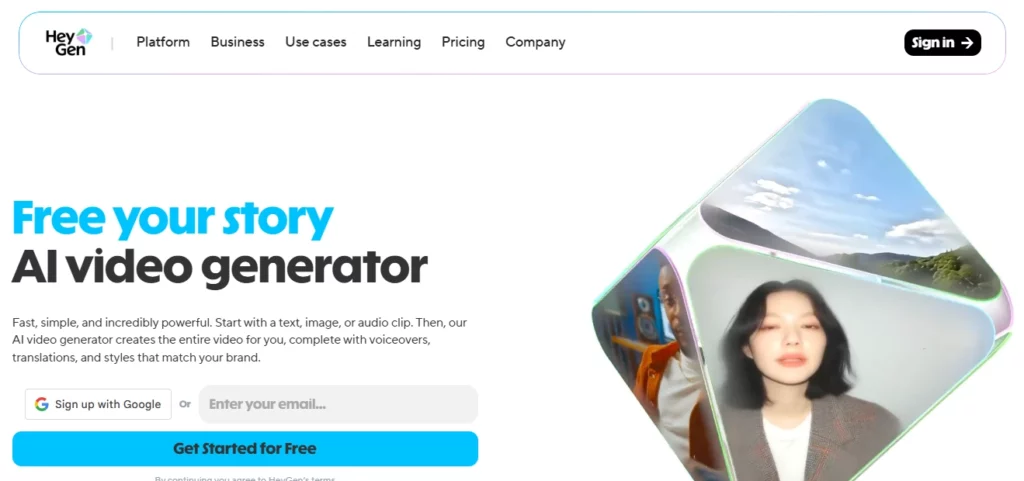
HeyGen is the one most people picture when they hear “talking avatar.” Huge stock avatar catalogue, custom video avatars built from a short recording, voice cloning, an avatar model ladder (older Avatar III versus the photoreal Avatar IV/V generations), video translation with lip-sync matching, LiveAvatar for real-time interaction, and an API that plenty of teams wire into n8n, Zapier or their own backend.
Output quality on the newer avatar models is the strongest of the three. Body movement, gesture, and hand-to-face motion look like a person who genuinely recorded the clip. Reviewers consistently rate its avatar fidelity at the top of the category.
Synthesia — The Corporate Standard

Synthesia treats video like a document workflow. Script goes in, avatar presents it, brand kit enforces fonts and colours, teammates leave comments, and the finished asset exports into an LMS with SCORM packaging.
Language coverage runs past 120, the avatar roster is the largest here, and the Enterprise tier carries the SSO/SAML, permissions and audit controls procurement teams ask about.
Its avatars read as professional presenter, not TikTok personality. Posture is upright, gestures are controlled, delivery is newsreader-neutral. For an onboarding module, that's correct. For a scroll-stopping Reel, it's the wrong energy entirely.
Head-To-Head: The Spec Sheet That Matters
| Feature | APOB | HeyGen | Synthesia |
|---|---|---|---|
| Core identity | AI persona + video studio | Avatar video production suite | Enterprise video platform |
| Avatar source | Generated character or reference photo | Stock library, custom avatar from recording, photo avatar | Stock library, personal avatar from recording |
| Character consistency | Face-lock across generations | Locked per avatar asset | Locked per avatar asset |
| Lip sync engine | Persona-driven lip sync | Avatar III / IV / V ladder | Studio-grade viseme mapping |
| Voice options | Multilingual voice library, custom voices per plan | Voice cloning + large TTS library | 120+ language voice set, AI dubbing |
| Video length ceiling | Up to ~10 minutes | Up to 30–60 min depending on tier | Scales with credits |
| Vertical 9:16 output | Native focus | Supported | Supported |
| Face swap | Yes, image and video | Limited | No |
| Camera movement / cinematic clips | Yes | Partial | No |
| Live / real-time avatar | No | Yes (LiveAvatar) | No |
| API access | Limited | Full, separately billed | Creator tier and above |
| SCORM / LMS export | No | Business tier | Yes, Enterprise |
| SSO, SAML, audit controls | No | Business tier | Enterprise |
| Free tier | 80 credits daily | 1–3 watermarked clips monthly | Watermarked minutes monthly |
| Commercial rights | All paid plans, no watermark | Paid plans | Paid plans |
Notice the pattern? There's barely any real overlap in the bottom third of that table. These tools are competing for the same search term, not the same job.
The Lip Sync Test: Who Actually Looks Human?
This is where opinions get strong, so let's be specific about what separates them.
HeyGen's premium avatar models take it. Not close. Plosives land, the jaw opens on the right vowels, and the face carries micro-expressions between sentences instead of freezing. Hands move in ways that match the sentence rhythm. On a 1080p export viewed full-screen, most viewers won't flag it.
Synthesia comes second, and does it deliberately. Its avatars are extremely stable — no weird warping, no drifting collar, no melting ear on frame 340.
The trade-off is a slightly restrained delivery. It reads as someone presenting from a teleprompter, because that's the tone corporate video wants. On a training module, stability beats charisma.
APOB sits third on raw photorealism but first on personality. Its clips are tuned for vertical, fast-cut, thumb-stopping content where the avatar is moving, the camera is panning, and the viewer is two seconds from swiping.
At that viewing distance and duration, its lip sync holds up fine. Push it to a 4-minute talking head on a desktop monitor and the seams show — occasional expression stutter, the odd anatomy oddity on hands, and a need for regenerations to get the take you want.
Reality check nobody says out loud: viewing context matters more than benchmark quality. A clip watched for 6 seconds on a phone at 60% screen brightness forgives things a 10-minute desktop watch will not.
Pricing: Where Most People Get Ambushed
Headline prices are almost meaningless in this category because all three meter output differently. APOB meters credits per generation. HeyGen meters credits per minute, per avatar model. Synthesia meters minutes per month, full stop.
APOB pricing shape
| Plan | Monthly | Annual equivalent | Credits | Realistic output |
|---|---|---|---|---|
| Nano | Free | Free | 80/day | Watermarked tests, 1 trained model |
| Micro | ~$14.99 | ~$9 | ~6,000/mo | A single persona, several posts weekly |
| Macro | ~$29.99 | ~$20 | ~40,000/mo | Multi-platform daily posting, client work |
| Mega | ~$69.99 | ~$50 | ~100,000/mo | Agency volume, multiple persona brands |
Credit burn on the video side runs roughly 20–40 credits per talking avatar or image-to-video generation, with face swap billed per second of footage based on quality tier. Rough translation: a Macro plan supports a few hundred short clips a month. Credits don't roll over, and annual billing roughly halves the rate.
HeyGen pricing shape
| Plan | Price | Credits | Key ceiling |
|---|---|---|---|
| Free | $0 | Minimal | 1–3 watermarked one-minute videos, 720p |
| Creator | ~$29 (~$24 annual) | 600 | 1080p export, 1 voice clone, 1 seat |
| Pro | ~$49 | ~1,000 | 4K export, heavier solo output |
| Business | ~$149 + $20/seat | ~1,500 | Shared pool, SSO, SCORM, longer videos |
The important number: premium avatar renders cost around 20 credits per minute, while the older avatar model costs about 3. So a Creator plan's 600 credits buy roughly 30 minutes of premium video — around $0.97 per finished minute — or roughly 200 minutes on the older model.
Video translation runs about 5 credits per minute. Extra avatar slots are $29/month each, real-time avatar slots $49/month, and only Business-tier accounts can top up credits mid-cycle at around $5 per 100.
Pro move: draft and time your script on the cheap avatar model, then render only the final take on the premium one. That single habit can cut a month's credit burn by 80%.
Synthesia pricing shape
| Plan | Price | Video allowance | Notable gates |
|---|---|---|---|
| Free | $0 | ~3–10 min/mo | Watermark, 9 avatars, no download |
| Starter | ~$29 (~$18–22 annual) | ~10 min/mo | 125+ avatars, 3 personal avatars, logo removal |
| Creator | ~$89 (~$64–67 annual) | ~30 min/mo | 180+ avatars, 5 personal avatars, API, interactive video |
| Enterprise | Custom | Unlimited standard minutes | 240+ avatars, SSO/SAML, SCORM, unlimited personal avatars |
Credits convert at roughly 120 credits per minute, nothing rolls over, and overages on self-serve tiers get expensive. Custom avatar creation has historically carried a four-figure annual fee on certain configurations. Public marketplace listings put real Enterprise contracts in the tens of thousands per year.
Cost per finished minute, stacked
| Platform | Effective cost per minute of talking avatar video |
|---|---|
| APOB (Macro annual) | Cents per short clip — cheapest by a distance |
| HeyGen Creator (premium model) | ~$0.97 |
| HeyGen Creator (standard model) | ~$0.12–0.15 |
| Synthesia Starter | ~$2.20–2.90 |
| Synthesia Creator | ~$1.97–2.97 |
That spread is the entire argument. You're not paying for “AI video” — you're paying for where the render sits on the quality-versus-governance curve.
Workflow Walkthrough: What Actually Happens When You Sit Down To Make A Video
APOB, start to finish
- Create an account and take the free daily credits — no card required.
- Build a persona, either from the character generator or a reference image, then name and save the model.
- Generate portraits using preset style packs or manual control over wardrobe, environment and lighting.
- Send your best frame to video: image-to-video for motion, or talking avatar for speech.
- Paste your script or upload audio, choose a voice, and render the lip-synced clip.
- Layer camera movement or clothes editing if the clip needs more visual interest.
- Export watermark-free on any paid tier and post it vertically.
Time to first usable clip: 10–15 minutes, most of it spent regenerating the portrait you actually like.
HeyGen, start to finish
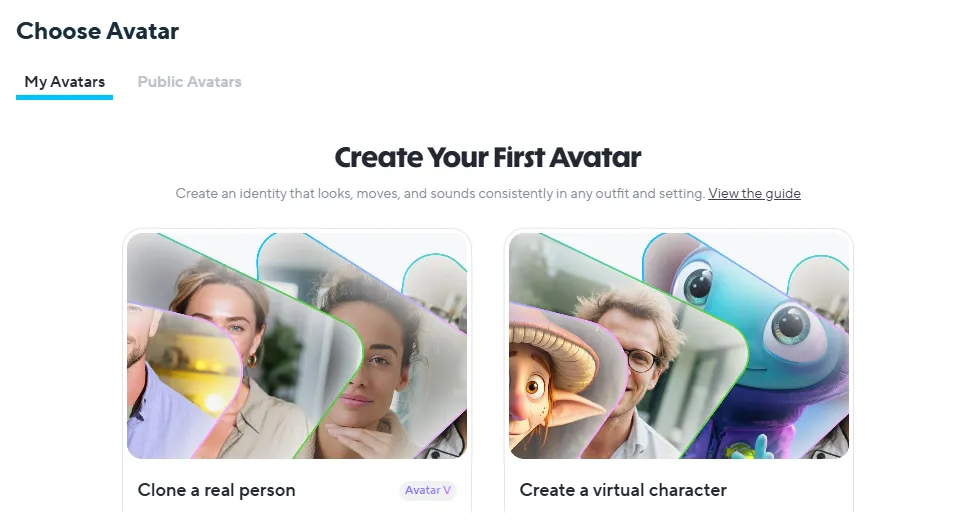
- Pick a stock avatar, or record a 2-minute consent video to build a custom one.
- Clone your voice from a short sample, or select from the text-to-speech library.
- Drop your script into the studio, add B-roll, captions, brand colours and a background.
- Preview on the cheap avatar model, adjust pacing and pauses.
- Render the final pass on the premium model.
- Run video translation if you need the same asset in more languages with matched lip movement.
Time to first usable clip: under 10 minutes with a stock avatar; a day or two if you're waiting on custom avatar processing.
Synthesia, start to finish
- Start from a template or import an existing slide deck.
- Choose a presenter avatar and set the scene layout.
- Write or paste the script, adjust pronunciation, and add pauses where the pacing needs air.
- Apply the brand kit so fonts, logo and colour palette lock automatically.
- Loop in reviewers for comments before the render burns minutes.
- Export to MP4 or package as SCORM for the LMS.
Time to first usable clip: 15–20 minutes, and the review step is the point — it exists so you don't spend minutes on a version legal hasn't approved.
Where Each One Breaks
APOB's weak spots: output consistency varies more than the marketing suggests, and you will regenerate. Hands and complex poses can misfire. There's no team workspace, no SCORM, no SSO — it's not built for procurement. Long-form desktop viewing exposes quality limits that vertical short-form hides.
HeyGen's weak spots: the credit model. The avatar quality everyone signs up for is the one that drains the pool at 20 credits a minute, and the lower tiers can't buy top-ups — you upgrade or wait for the reset. Seats on the team tier cost money without adding credits. API usage is billed entirely separately from your web subscription, which has caught more than one person mid-pipeline.
Synthesia's weak spots: price per minute, hard stop. Ten minutes a month on Starter is two five-minute explainers, and re-renders eat the same allowance. Unused credits vanish at cycle end. The features that push teams toward it — SCORM, SSO, multi-avatar scenes, unlimited personal avatars — sit behind a sales-led contract, and no amount of overage buying opens them up on lower tiers.
Matchups By Use Case
Three Budget Scenarios, Run Properly
Scenario — Solo creator, 60 short clips a month
APOB Macro at roughly $20/month annual covers this comfortably with credits left over. The same output on Synthesia Creator would blow through the 30-minute cap and land you in overage territory. HeyGen Creator handles it if you stay on the standard avatar model. Winner: APOB, by a mile on cost.
Scenario — Marketing team, 25 minutes of polished ad creative monthly
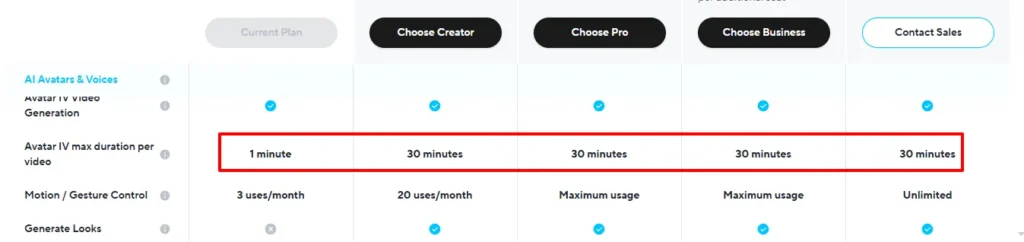
HeyGen Creator at $29 delivers roughly 30 premium minutes — just enough, with no headroom for re-renders. Pro at $49 is the safer call once revisions exist. Synthesia Creator at $89 gives 30 minutes with better brand governance but weaker ad energy. Winner: HeyGen.
Scenario — Five-person L&D team, 120 minutes of training monthly
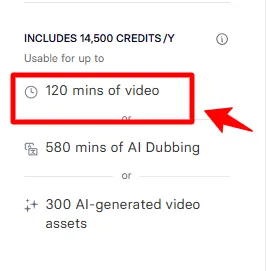
No self-serve tier on any platform survives this. Synthesia Enterprise is the honest answer, and you should budget in the tens of thousands annually. HeyGen Business is the cheaper alternative if SCORM and shared collaboration are enough. Winner: Synthesia, with a caveat — get the quote before you fall in love with the demo.
Legal, Rights And The Part Everyone Skips
E-E-A-T isn't just a ranking acronym, it's also why you shouldn't ship an avatar video without reading three things:
Two more practical notes: none of the three permits political impersonation or misleading content about real people, and all three run moderation on custom avatar submissions. Plan a day of buffer if you're building a clone close to a deadline.
The Decision Tree (Answer Four Questions, Get Your Answer)
- Is the person on screen a real, identifiable human from your company? Yes → HeyGen or Synthesia. No → keep going.
- Does this video go into an LMS or need audit controls? Yes → Synthesia. No → keep going.
- Is the output mostly vertical short-form under 60 seconds? Yes → APOB. No → keep going.
- Do you need the same asset in 5+ languages with matched mouth movement? Yes → HeyGen. No → APOB if budget rules, HeyGen if fidelity does.
The Underrated Play: Run Two, Not One
Plenty of creators stop treating this as a single-tool decision and get better margins for it. A common stack:
- APOB generates the persona, the b-roll style clips, the wardrobe variety and the high-frequency social output
- HeyGen handles the hero pieces — the ad the money sits behind, the localised version, the sales sequence
Combined that's roughly $50–70/month, which is still less than one Synthesia Creator seat, and it covers a far wider output range. If your work is entirely internal and compliance-bound, ignore this and go single-vendor with Synthesia — split workflows are a governance headache nobody wants.
FAQs: APOB vs HeyGen vs Synthesia
Which talking avatar tool is cheapest overall?
APOB, clearly, especially on annual billing where credit rates roughly halve. For per-minute video cost, HeyGen's standard avatar model is the cheapest way to produce long runtimes. Synthesia is the most expensive per minute on every self-serve tier.
Which one has the most realistic lip sync?
HeyGen's premium avatar generations. Mouth shapes track consonants accurately and the body language matches sentence rhythm. Synthesia is more stable but more restrained; APOB is optimised for short vertical viewing rather than close desktop inspection.
Can I make a talking avatar of my own face?
On HeyGen and Synthesia, yes — both build custom or personal avatars from a short consent recording, with slot limits by tier. APOB works differently: you train a persona from a reference image, which is closer to a stylised likeness than a true clone.
Does APOB work for business and corporate video?
For social-first brand content, product demos and affiliate promos, yes. For regulated training, HR onboarding or anything needing SCORM, SSO and approval workflows, no — that gap is where Synthesia lives.
Which is best for multilingual and dubbed content?
HeyGen for translating existing footage with lip-sync matching, billed at a few credits per minute. Synthesia for scripted content originating inside the platform, with the widest language and voice coverage of the three.
Do any of them offer a genuinely usable free plan?
APOB's free tier is the most generous — 80 credits refreshing daily, enough to actually build something, with a watermark. HeyGen and Synthesia free tiers are demos: a handful of watermarked minutes with no download on the Synthesia side.
Can AI avatar videos get monetised on YouTube?
Yes, as long as the content is original, adds value, and carries the required synthetic-media disclosure. Channels get demonetised for low-effort repetitive uploads, not for the avatar itself. Vary your scripts, write real hooks, and add original commentary.
What happens to unused credits?
APOB credits don't roll over. Synthesia credits don't roll over. HeyGen rolls credits into one extra cycle on monthly billing, and accumulates them until renewal on annual billing — the friendliest policy of the three.
Is there a free trial for HeyGen or Synthesia paid features?
Neither runs a standard time-limited trial of paid tiers. Both gate the good features behind the subscription, so test your script and pacing on the free plan, then buy one month before committing annually.
Which platform handles vertical 9:16 output best?
APOB, since short-form social is its native format and camera movement is built in. HeyGen supports vertical well. Synthesia supports it, but its avatar framing and presenter tone were designed with 16:9 in mind.
Final Verdict
Stop asking which tool is best and start asking which video you're making.
APOB is the pick if you're building an audience without showing your face and your economics depend on volume. Cheapest credits in the category, persona consistency that holds, commercial rights included, and enough video tooling to run a full content calendar solo. It won't pass a boardroom review, and it isn't trying to.
HeyGen is the pick if quality is the deliverable. The premium avatars are the most convincing talking heads available at self-serve pricing, the translation pipeline is genuinely useful, and the API opens up personalisation nobody else here matches. Just go in with the credit math done, because the plan name tells you almost nothing about how far you'll get.
Synthesia is the pick if your video has to survive review by three departments before it ships. You're paying for governance, brand enforcement, LMS delivery and the widest language roster — not for the render itself. Priced accordingly, and worth it exactly when those things are non-negotiable.
Cheapest way to settle it for good: spend one evening on APOB's free daily credits and HeyGen's free tier, render the same 30-second script in both, and watch them back on your phone the way your audience will. The answer stops being theoretical in about four minutes.
AiMojo Recommends:


 BONUS: Get our $200 “AI Mastery Toolkit” FREE when you sign up!