
Everyone and their manager is suddenly calling themselves an “AI professional.” But AI engineering is a specific, technical, high-paying role — and most people have no clue what it actually takes to get there.
In 2026, demand for skilled AI engineers is outpacing supply, salaries are aggressive, and companies are actively hiring without demanding a traditional CS degree.
The real question isn't about the opportunity — it's about building the right skills in the right order, without wasting months on the wrong things.
Here's everything, straight to the point.
What Does an AI Engineer Actually Do in 2026?
An AI engineer builds, deploys, and maintains AI-powered systems at production scale. This isn't just fine-tuning chatbots — it's a hands-on engineering role that bridges machine learning research and real working products.
Is AI Engineering Still Worth Pursuing in 2026?
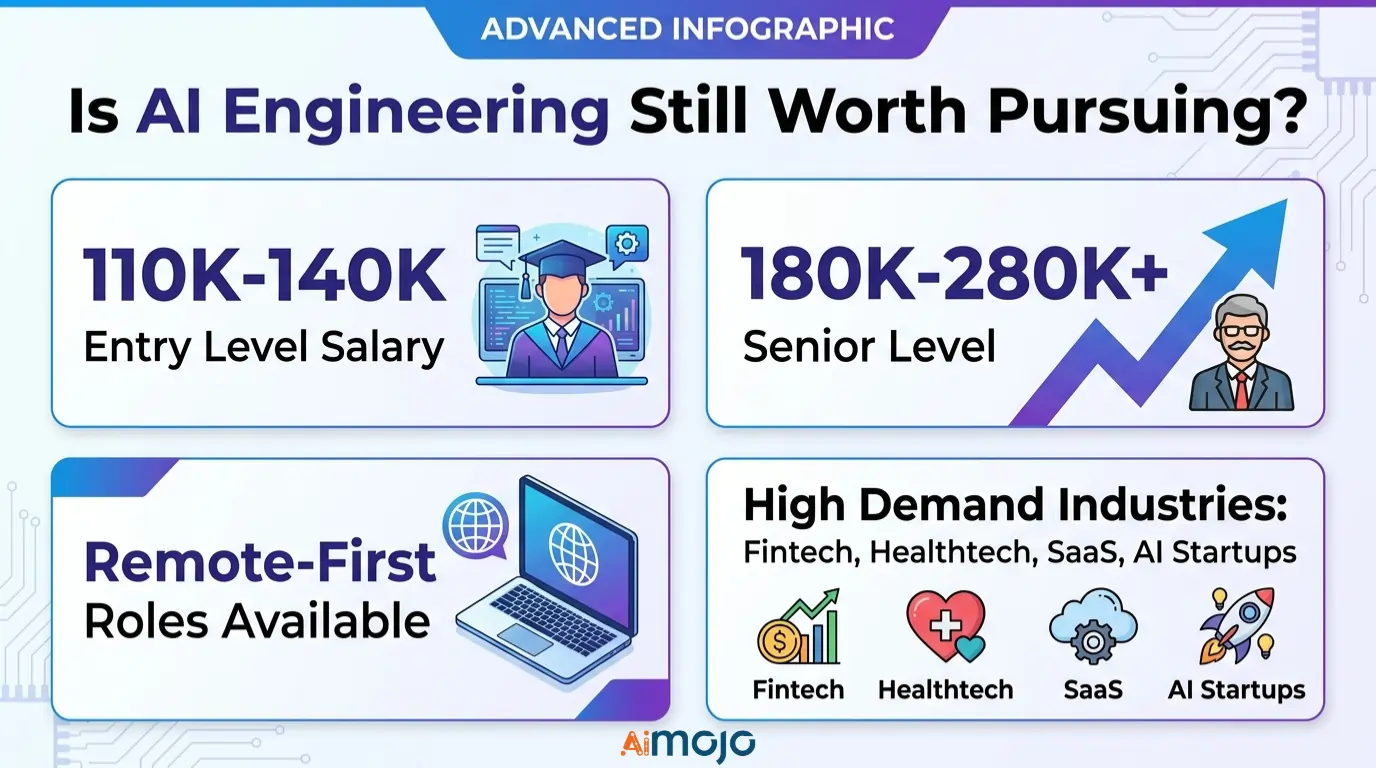
Demand hasn't slowed down. Healthcare, fintech, e-commerce, and SaaS companies are scaling AI engineering teams aggressively right now.
The Non-Negotiable Skills You Need First
Math & Statistics Foundations
You don't need a PhD, but you need a working grasp of linear algebra, probability, and calculus. Focus on the applied side — how gradients work, why matrix multiplication matters in neural networks, and how statistical distributions affect model behavior in training.
Python Proficiency
Python is non-negotiable. Get comfortable with:
Understanding Data
Raw data is almost always messy. SQL still matters for querying structured datasets. Get familiar with data pipelines, handling nulls and outliers, and feature distributions before they silently break your model downstream.
The 2026 AI Engineer Tech Stack
Core Frameworks
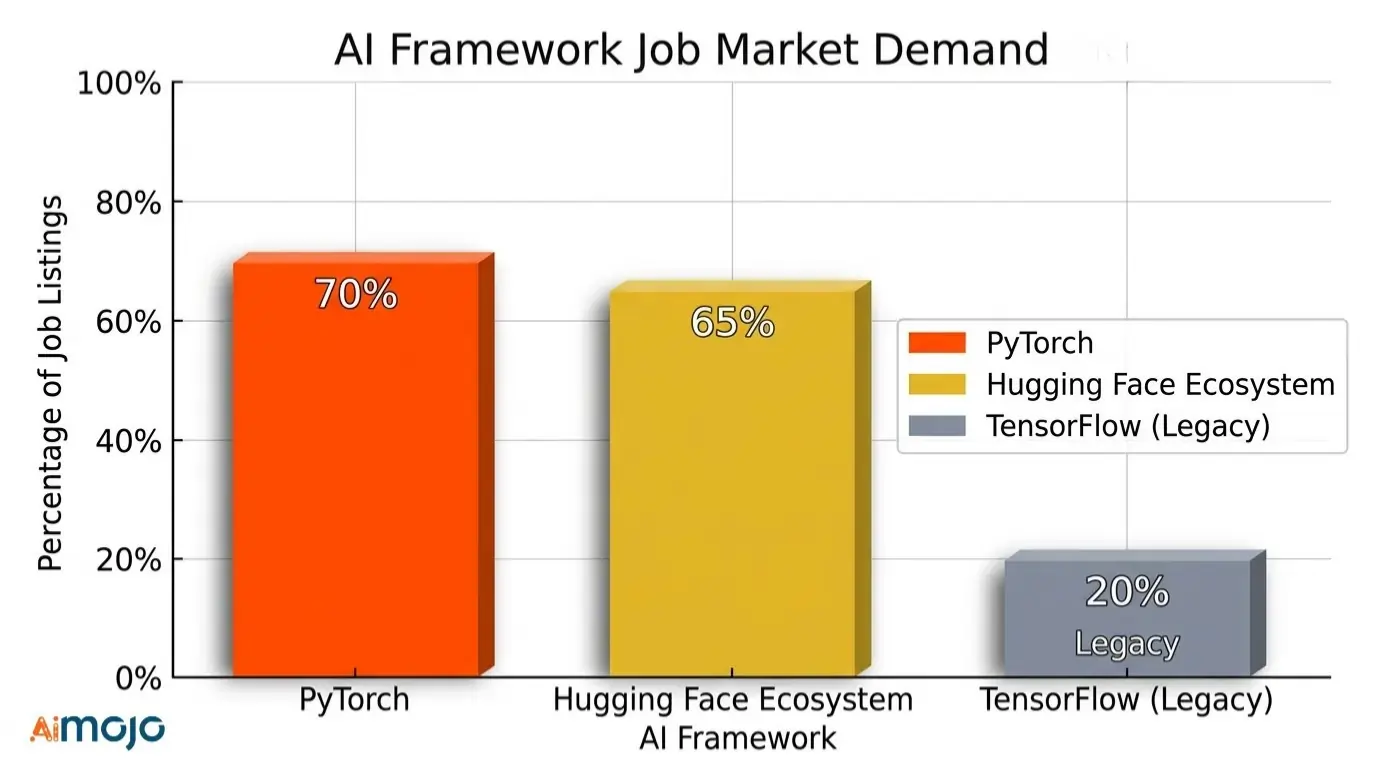
PyTorch dominates 2026 job listings — it's what most research and production teams are using. TensorFlow still appears in legacy systems, but PyTorch is the safer long-term bet. The Hugging Face ecosystem (transformers, PEFT, TRL, datasets library) is essentially a must-know at this point.
LLM-Specific Skills That Didn't Exist 3 Years Ago
MLOps & Deployment
| Tool | Purpose |
|---|---|
| MLflow / Weights & Biases | Experiment tracking |
| Docker | Model containerization |
| AWS SageMaker, GCP Vertex AI, Azure ML | Cloud deployment |
Emerging Tools in 2026
LLMOps platforms, AI agent orchestration frameworks like LangChain and LlamaIndex, and open-source model hubs are now standard knowledge for mid-level AI engineers.
The Step-by-Step Roadmap (Month-by-Month Breakdown)
Months 1–2 — Build the Foundation
Python fundamentals + applied math basics. Complete one structured ML course (fast.ai or Andrew Ng's ML Specialization). Build your first working classification model on real data before moving forward.
Months 3–4 — Deep Learning & Neural Networks
Move to PyTorch. Actually understand backpropagation — don't just call .backward() and move on. Project goal: build and train a neural net from scratch on a real, messy dataset.
Months 5–6 — Pick Your Specialization
Choose a lane: NLP/LLMs, Computer Vision, or Multimodal AI. Fine-tune a pre-trained Hugging Face model on a custom dataset. This becomes your first portfolio-worthy project.
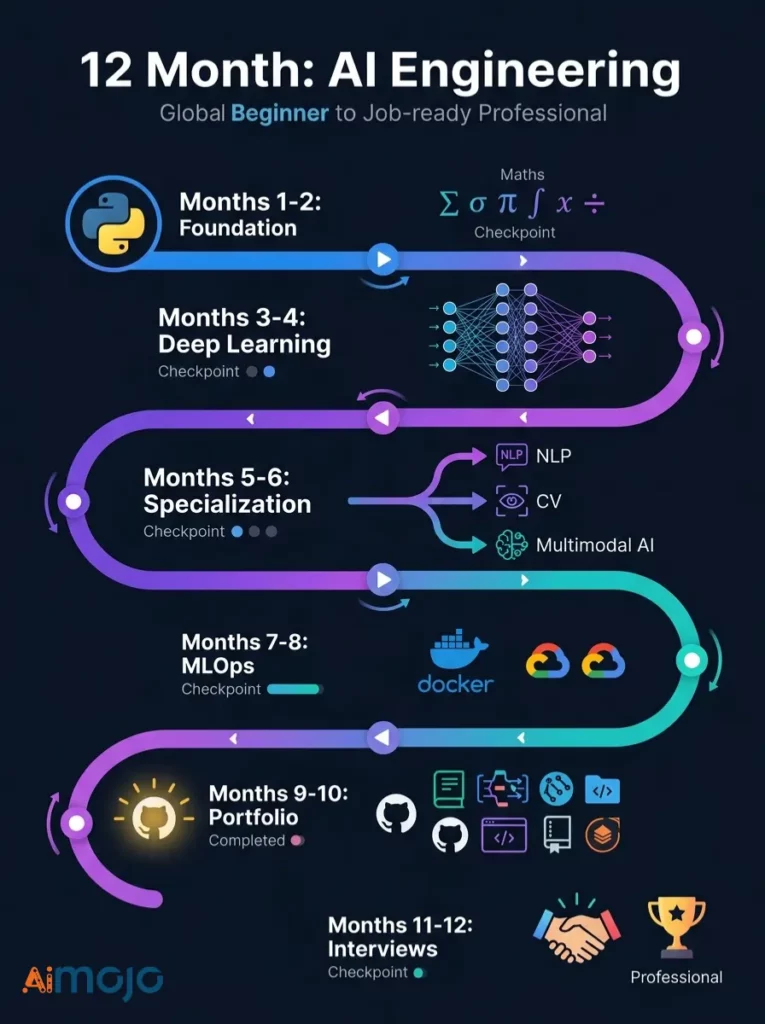
Months 7–8 — MLOps and Real Deployment
Serve a model using FastAPI + Docker. Deploy it to a cloud platform. Set up monitoring so you can catch data drift and model degradation before they cause real problems.
Months 9–10 — Portfolio and Job Prep
Build 2–3 projects that solve actual problems — not Titanic or MNIST datasets. Contribute to open-source AI repos for public credibility. Optimize your GitHub and LinkedIn for recruiter visibility.
Months 11–12 — Interviews and the Offer
AI engineering interviews typically cover: LeetCode-style coding (medium difficulty), ML system design, and a deep-dive into your projects. Know your work inside and out — interviewers test depth, not breadth.
Do You Need a Degree to Become an AI Engineer?
No — and that's the current hiring reality, not hype. Companies like Google, Meta, and high-growth AI startups have dropped degree requirements for engineering roles
What actually moves the needle: a strong portfolio, open-source contributions, and the ability to clear a technical interview. A CS degree can help in some cases, but it's no longer the gatekeeper it was five years ago.
Best Courses, Certifications, and Resources for 2026
| Free options worth your time: | Paid programs with solid track records: | Communities to plug into: |
|---|---|---|
| fast.ai — Practical Deep Learning for Coders | DeepLearning.AI specializations on Coursera | Hugging Face Discord |
| MIT OpenCourseWare — 18.06 Linear Algebra | Full Stack Deep Learning | r/MachineLearning |
| Andrej Karpathy's Neural Networks: Zero to Hero (YouTube) | LangChain and LlamaIndex GitHub Discussions |
AI Engineer Career Paths After Your First Job
Once you land the role, the path splits into four directions:
Common Mistakes That Slow People Down
Frequently Asked Questions by Aspiring AI Engineer
How long does it take to become an AI engineer?
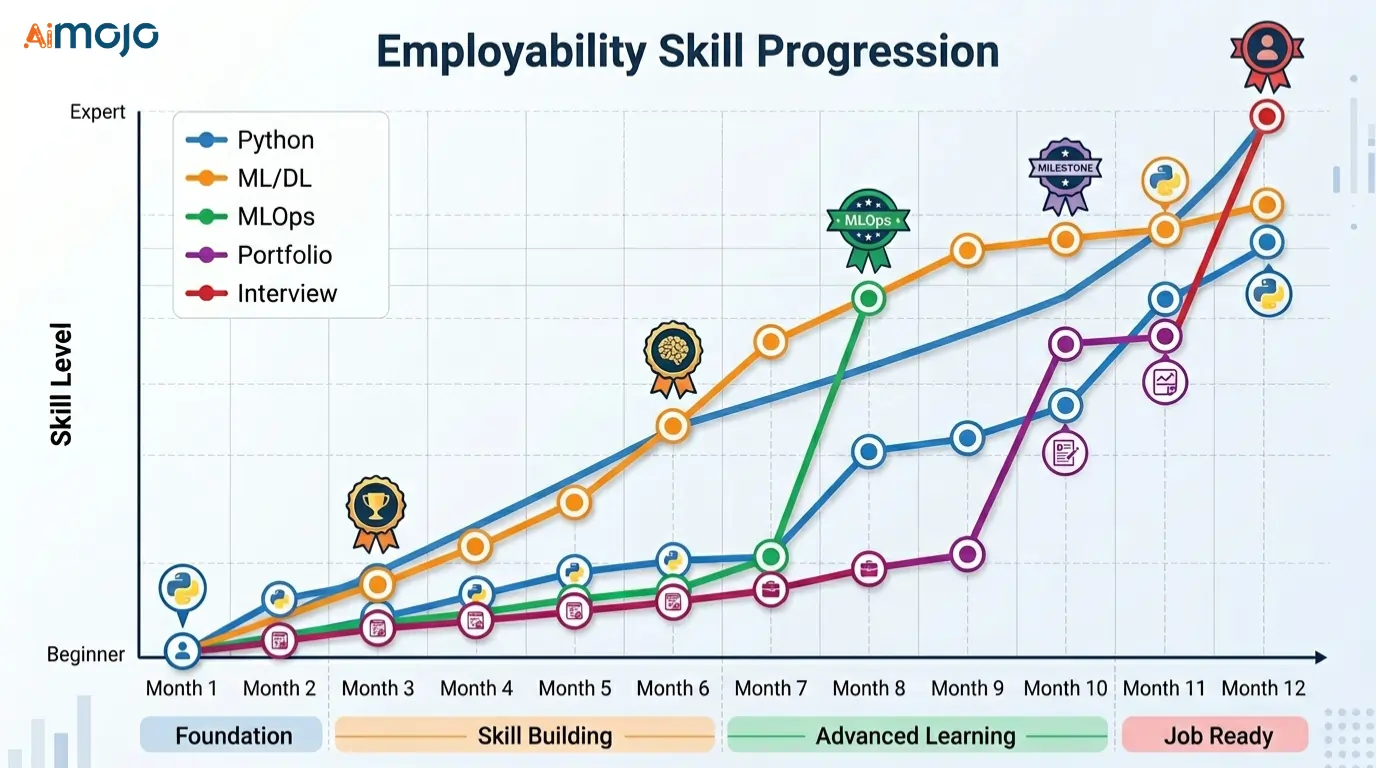
With consistent effort, 10–12 months is a realistic timeline for landing your first role.
Can I become an AI engineer without a CS degree?
Yes. Portfolio quality, demonstrated skills, and interview performance matter far more in 2026.
What's the average AI engineer salary in 2026?
Entry-level ranges from $110K–$140K in the US. Senior roles regularly hit $180K–$280K+.
AI engineer vs. machine learning engineer — what's the difference?
ML engineers focus on model training and optimization. AI engineers handle the full stack — training, deployment, system design, and production maintenance.
Is Python enough, or do I need other languages?
Python handles 90% of the work. Basic SQL and some Bash/shell scripting cover the rest.
What are the best projects for an AI engineer resume?
RAG-based Q&A systems, fine-tuned LLMs on niche datasets, and deployed computer vision apps consistently perform well with technical recruiters.
How do I get my first AI engineering job with no experience?
Build real projects, contribute to open source, write about your work publicly, and target startups before going after big tech.
Final Take — The Fastest Path That Actually Works in 2026
There's no clean shortcut that skips the fundamentals — anyone selling you one is selling a course. The engineers getting hired in 2026 are the ones who built real projects, got comfortable with PyTorch, understood deployment, and didn't stop at tutorials.
The gap between “AI curious” and “AI engineer” closes faster than most expect once you commit to the right sequence. Stop consuming and start building.
A functional RAG pipeline, a fine-tuned model, a live deployment — these three things on a GitHub profile do more than any certification ever will. The market is wide open. The only thing between you and that first offer is execution.
AiMojo Recommends:


 BONUS: Get our $200 “AI Mastery Toolkit” FREE when you sign up!