

Curious about building, fine-tuning, or deploying Large Language Models?
You're not alone—LLM expertise is one of the hottest skills in AI today. With open-source projects growing fast, GitHub has become the go-to hub for top-tier LLM projects, frameworks, and research.
This guide spotlights 12 essential GitHub repositories packed with source code, hands-on tutorials, and model implementations.
Get proven LLM knowledge, accelerate your learning, and join the global community shaping the future of artificial intelligence—all with these must-know GitHub repositories.
Why GitHub Is Essential for LLM Development
GitHub has become the beating heart of the LLM ecosystem, where breakthrough research meets practical implementation. While academic papers provide theory, GitHub delivers the actual code that powers today's most advanced language models.
The platform hosts everything from Meta's Llama implementations to OpenAI's research codebases, making it the fastest way to access proven techniques and stay ahead of rapid developments.
Key reasons GitHub dominates LLM development:
For LLM enthusiasts, GitHub isn't just a resource—it's your direct line to the future of AI development.
1. llm-course
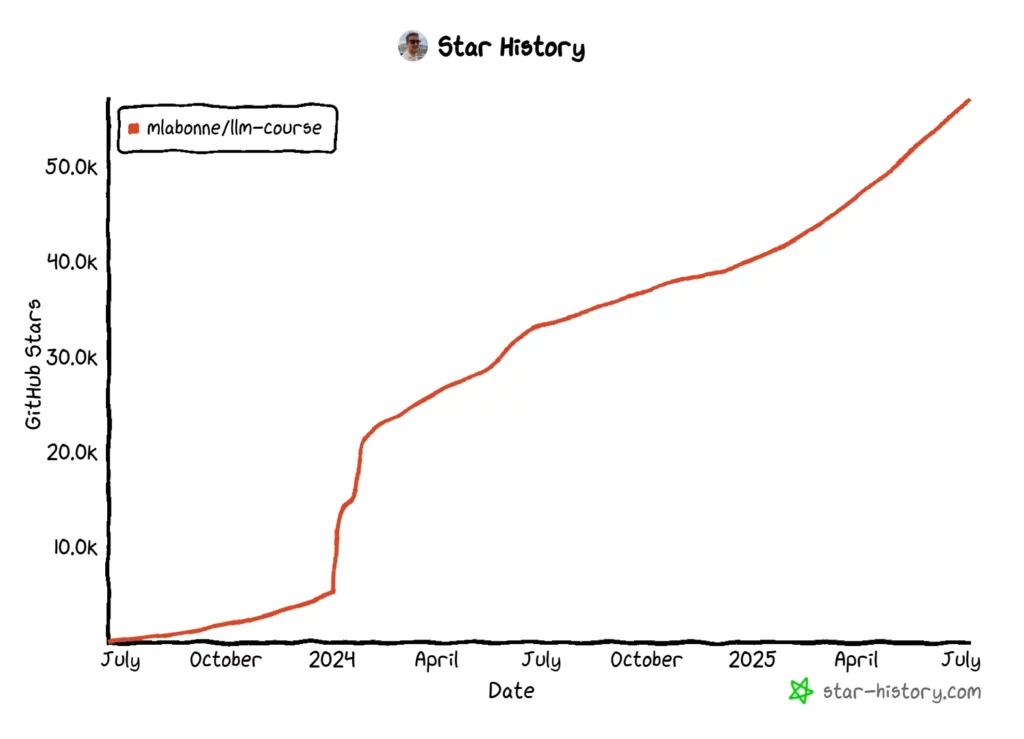
Maxime Labonne's llm-course is a fantastic starting point and a comprehensive roadmap for anyone serious about learning LLMs. It's more than just a collection of files; it's a structured learning path that caters to different career goals. The repository has gained immense popularity, boasting over 51,500 stars on GitHub.
Why It's a Top Pick
This repository stands out because it provides two distinct roadmaps, allowing you to tailor your learning journey:
The course covers everything from the fundamentals of LLM mathematics to advanced topics like quantization, fine-tuning, and model deployment. It’s a complete package for learners at all levels.
Key Features
Who Should Use It?
This repository is perfect for both beginners who need a structured introduction and experienced professionals looking to deepen their expertise in specific areas of LLM development.
2. HandsOnLLM
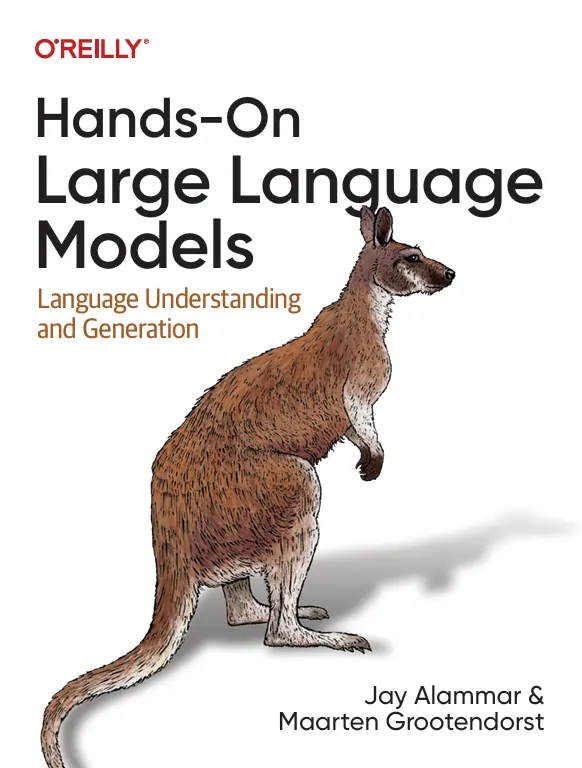
The HandsOnLLM/Hands-On-Large-Language-Models repository is the official companion to the O'Reilly book of the same name. It's a visually rich and practical guide that demystifies how LLMs work. If you learn best by doing and appreciate well-documented code examples, this repository is for you.
Why It's a Top Pick
It offers a practical, project-based approach to learning. Each chapter of the book is accompanied by Jupyter notebooks, allowing you to follow along and experiment with the code yourself. It focuses on real-world projects and examples that you can adapt for your own use cases.
Key Features
Who Should Use It?
Developers and data scientists who prefer a hands-on, project-based learning style will find this repository incredibly valuable. It’s also an excellent resource for anyone reading the “Hands-on Large Language Models” book.
3. prompt-engineering
The brexhq/prompt-engineering guide is a treasure trove for mastering the art and science of prompt engineering. In the world of LLMs, the quality of your output is often determined by the quality of your input, making this skill absolutely essential. This repository, with nearly 9,000 stars, offers practical tips and strategies for working with models like GPT-4.
Why It's a Top Pick
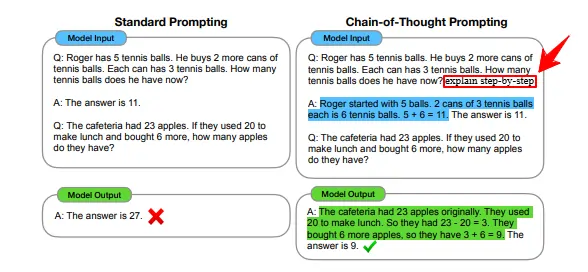
It consolidates lessons learned from creating prompts for production use cases, making it highly practical. The repository is well-organised into tutorials covering everything from basic principles to advanced techniques like Chain of Thought (CoT) prompting and self-consistency.
Key Features
Who Should Use It?
Anyone who interacts with LLMs, from developers and researchers to content creators and marketers, will benefit from this repository. Mastering prompt engineering is a key skill for getting the most out of any language model.
4. Awesome-LLM

The Hannibal046/Awesome-LLM repository is a curated list of all things related to Large Language Models. Think of it as your central dashboard for staying up-to-date with the LLM ecosystem. It’s a living collection of resources that is regularly updated by the community.
Why It's a Top Pick
This repository saves you countless hours of searching by gathering essential resources in one place. It includes seminal research papers, training frameworks, deployment tools, and evaluation benchmarks. It even features a leaderboard to track the performance of various LLMs.
Key Features
Who Should Use It?
This is a must-have for researchers, students, and practitioners who want a one-stop-shop for high-quality LLM resources. It’s perfect for discovering new tools and staying informed about the latest research.
5. ToolBench
As LLMs become more agentic, their ability to use external tools is becoming increasingly important. The OpenBMB/ToolBench repository is an open-source platform designed to train, serve, and evaluate LLMs for tool learning. It provides a framework and a large-scale instruction tuning dataset to enhance these capabilities.
Why It's a Top Pick
ToolBench focuses on a critical and trending area of LLM development: tool use. The StableToolBench extension further enhances this by introducing features like MirrorAPI, which simulates thousands of real APIs, and a Virtual API System to ensure stability and consistency during evaluation.

Key Features
Who Should Use It?
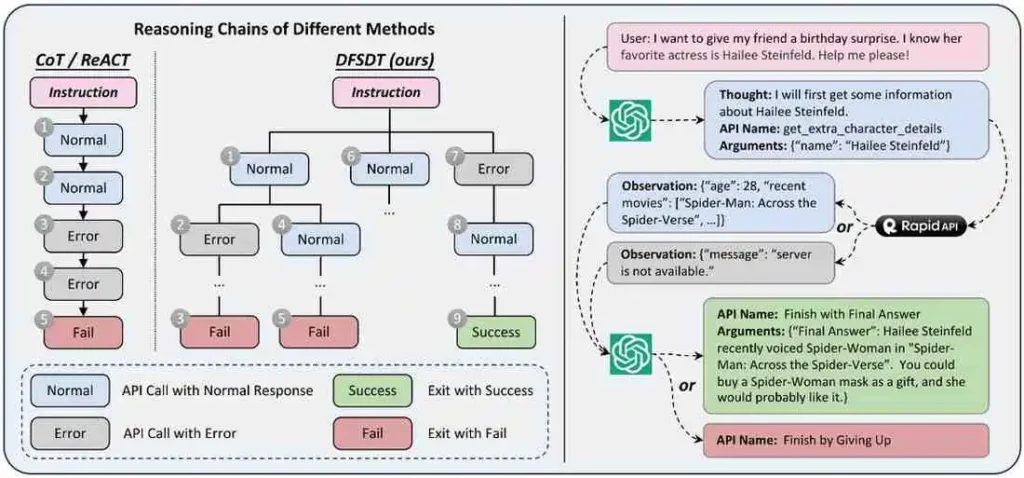
Researchers and developers interested in building agentic LLMs that can interact with external APIs and tools will find ToolBench invaluable. It’s ideal for those working on creating more capable and autonomous AI agents.
6. Pythia
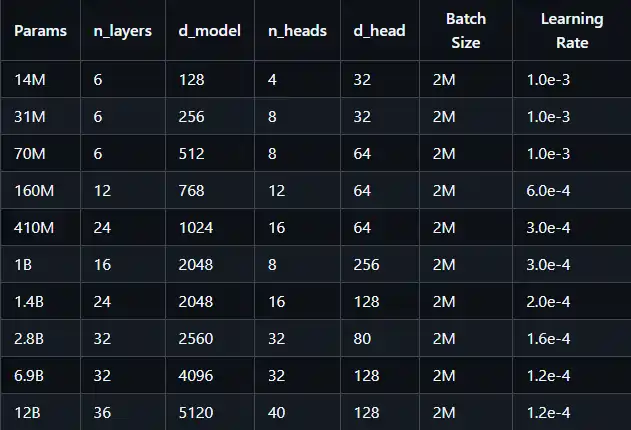
Developed by EleutherAI, the EleutherAI/pythia repository is a suite of models designed to enable research into interpretability, learning dynamics, and ethics. Unlike many other model releases, the Pythia suite was created with transparency and scientific research as its primary goals.
Why It's a Top Pick
Pythia provides fully open-source access to 16 different model checkpoints, allowing researchers to study how LLMs develop and evolve during training. This is crucial for understanding the “black box” nature of these models and for researching areas like scaling laws and model ethics.
Key Features
Who Should Use It?
AI researchers, ethicists, and students focused on model interpretability, safety, and the fundamental principles of LLM training will get a lot of mileage out of this repository.
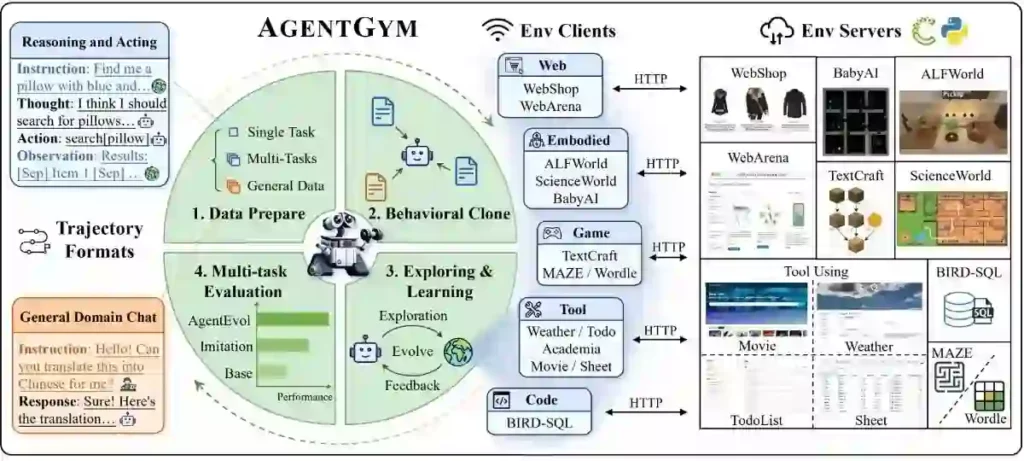
7. LLM-Agent-Paper-List
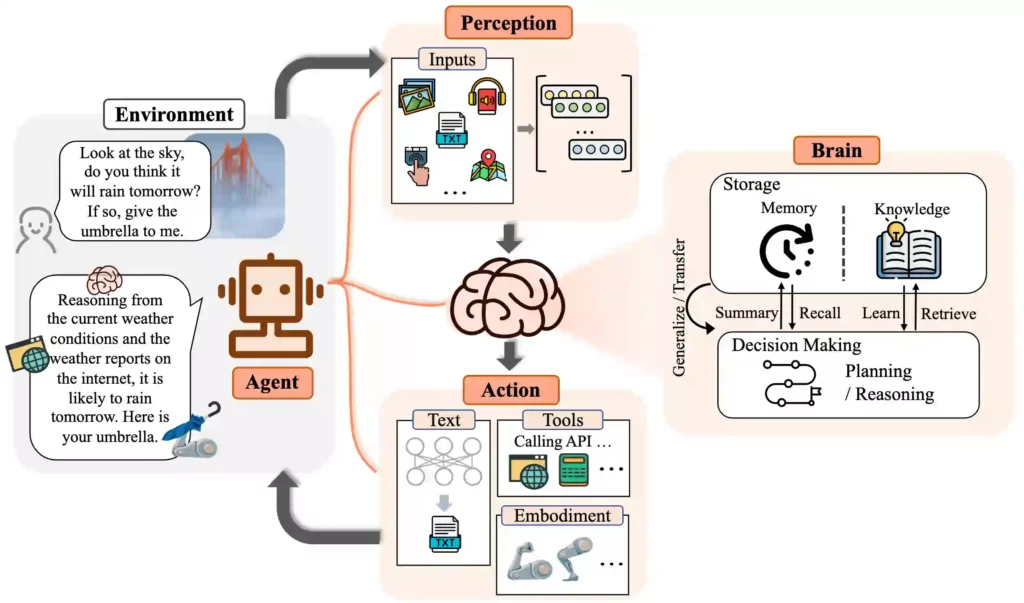
For those who want to dive deep into the academic side of AI agents, the WooooDyy/LLM-Agent-Paper-List is an essential resource. This repository is a curated collection of research papers that systematically explore the development, applications, and implementation of LLM-based agents.
Why It's a Top Pick
It serves as a foundational library of knowledge for one of the most exciting fields in AI today. Instead of just code, this repo provides the theoretical underpinnings you need to understand and build the next generation of AI agents.
Key Features
Who Should Use It?
This repository is aimed at academic researchers, graduate students, and advanced practitioners who want to build on the cutting-edge research in LLM-based agents.
8. Awesome-Multimodal-Large-Language-Models
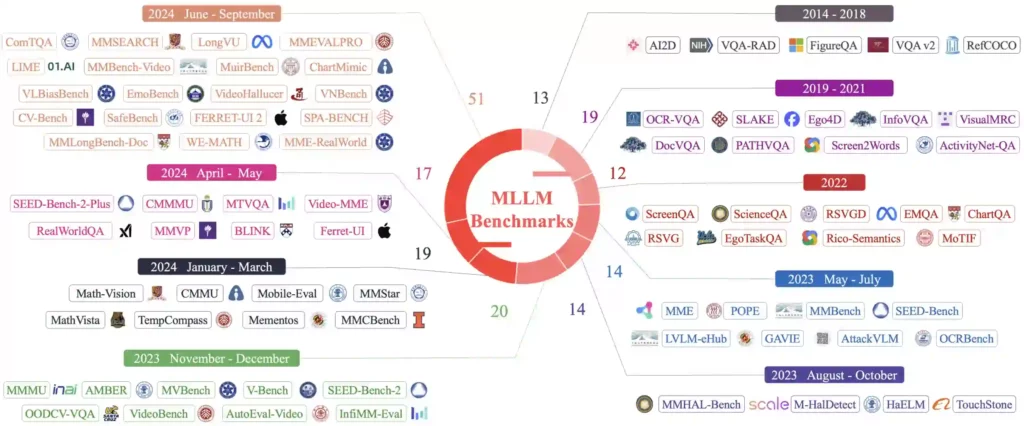
LLMs are no longer confined to just text. The BradyFU/Awesome-Multimodal-Large-Language-Models repository is a curated collection of resources focused on the latest advancements in Multimodal LLMs (MLLMs), which can process information from text, images, audio, and video.
Why It's a Top Pick
This repository is your gateway to the world of MLLMs. It covers a broad range of topics, from multimodal instruction tuning to chain-of-thought reasoning and hallucination mitigation techniques. It is also connected to the VITA project, an open-source interactive multimodal LLM platform.
Key Features
Who Should Use It?
Developers and researchers interested in building applications that go beyond text, such as image captioning, video analysis, or voice-controlled assistants, will find this collection extremely useful.
9. DeepSpeed
Developed by Microsoft, microsoft/DeepSpeed is a deep learning optimisation library that makes distributed training and inference easy and efficient. It integrates seamlessly with PyTorch and has been instrumental in training some of the world's largest models, including the 530-billion parameter Megatron-Turing model.
Why It's a Top Pick
DeepSpeed is all about scale and efficiency. It offers system-level innovations that allow you to train massive models with billions of parameters on limited hardware. Its features are essential for anyone serious about training state-of-the-art LLMs from scratch or fine-tuning large ones.
Key Features
Who Should Use It?
This is a tool for serious practitioners, data scientists, and researchers who need to train or fine-tune very large language models. If you're hitting memory limits with your current setup, DeepSpeed is the solution.
10. llama.cpp
The ggml-org/llama.cpp repository is a game-changer for running LLMs on consumer hardware. It's a high-performance C/C++ library for running inference on local machines, including desktops and even mobile devices. It's built on the GGML tensor library and is famous for its efficiency and minimal setup.
Why It's a Top Pick
llama.cpp makes powerful LLMs accessible to everyone. You don't need a massive cloud GPU cluster to experiment with models like Llama 3, Mistral, or GPT-2. Its focus on CPU and edge device performance has democratised LLM usage. You can set up a local server with just a few commands and start interacting with models.
Key Features
Who Should Use It?
Developers, hobbyists, and researchers who want to run and experiment with LLMs locally without relying on expensive cloud services. It's also perfect for building on-device AI applications that prioritise privacy and low latency.
11. PaLM-rlhf-pytorch
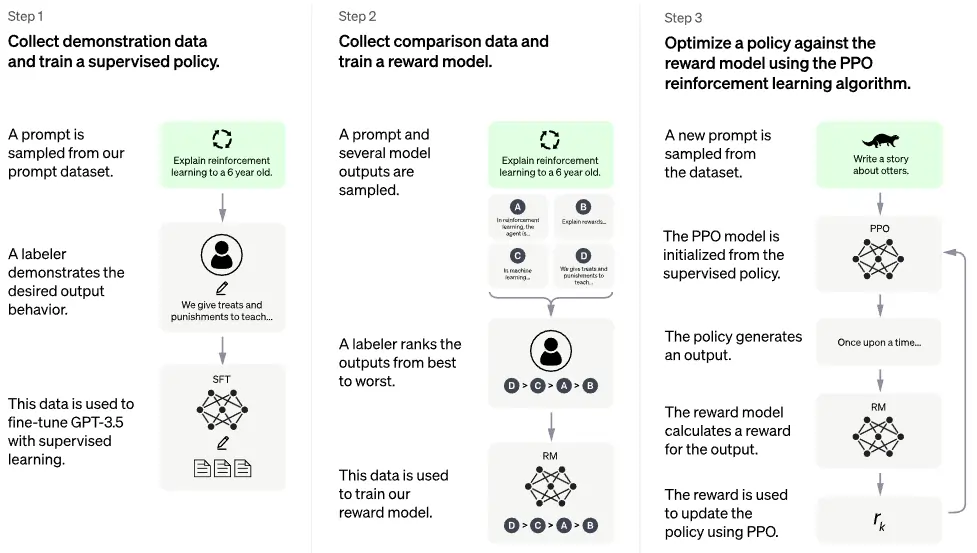
Reinforcement Learning with Human Feedback (RLHF) is the secret sauce behind the impressive conversational abilities of models like ChatGPT. The lucidrains/PaLM-rlhf-pytorch repository offers an open-source implementation of RLHF applied to Google's PaLM architecture.
Why It's a Top Pick
This repository demystifies one of the most important techniques in modern LLM development. It aims to replicate the functionality of ChatGPT using the PaLM model, providing a concrete example of how RLHF can be implemented. You can load pretrained models or fine-tune them for your own needs.
Key Features
Who Should Use It?
This repository is for researchers and developers interested in the fine-tuning process, particularly those looking to understand and implement RLHF to align LLMs with human preferences.
12. nanoGPT
Created by the legendary Andrej Karpathy, karpathy/nanoGPT is the simplest, fastest repository for training and fine-tuning medium-sized GPTs. Its codebase is intentionally concise, with the core training loop in train.py and the model definition in model.py.
Why It's a Top Pick
nanoGPT prioritises simplicity and educational value. It strips away all the complexity of large libraries, allowing you to understand the transformer architecture from the ground up. Despite its simplicity, it's powerful enough to reproduce GPT-2 level results and has inspired other minimalist projects like nanoVLM for vision-language models.

Key Features
Who Should Use It?
nanoGPT is ideal for students, educators, and developers who want a deep, foundational understanding of the GPT architecture. If you're tired of black-box libraries and want to see how things really work, this is the repository for you.
Your LLM Journey Starts With These Essential GitHub Repositories
The difference between dreaming about LLMs and actually building them? These 12 GitHub repositories. While others debate theory, you now have direct access to the code powering today's most advanced language models.
Your competitive advantage is waiting:
- Clone nanoGPT to grasp transformer fundamentals
- Fork llama.cpp for local model deployment
- Star llm-course for structured learning paths
- Contribute to DeepSpeed and join Microsoft's optimization efforts
The LLM field moves fast—developers who master these repositories today become tomorrow's AI architects. Pick your top 3 repositories, set up your development environment, and start experimenting. Every commit, every pull request, every model you train brings you closer to LLM mastery.


 BONUS: Get our $200 “AI Mastery Toolkit” FREE when you sign up!