

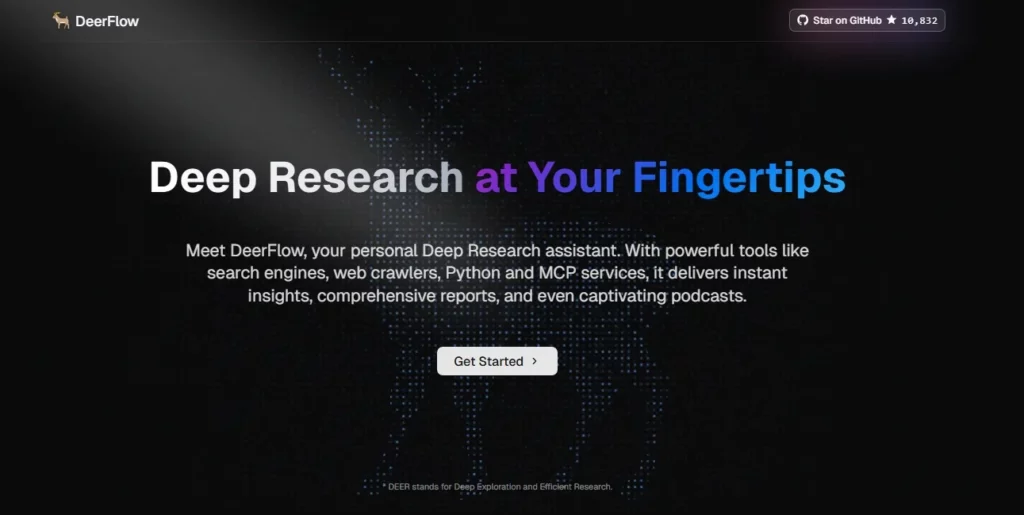
The AI world has been abuzz since ByteDance announced the open-source release of DeerFlow, a modular multi-agent framework purpose-built for automating and accelerating deep research workflows.
Designed to blend the intelligence of large language models (LLMs) with the flexibility of domain-specific tools, DeerFlow is already making waves among AI researchers, data scientists, and technical writers looking to supercharge their productivity and creativity
In this article, we’ll break down what makes DeerFlow unique, its architecture, core features, and why it’s fast becoming the go-to platform for next-generation research automation.
What is DeerFlow? A Quick Overview
DeerFlow is an open-source, community-driven framework that orchestrates multiple specialised AI agents to handle complex research tasks. Unlike monolithic LLM agents that try to do everything, DeerFlow is modular: each agent is an expert in its own domain, such as task planning, web search, code execution, or report generation.
Key highlights:
- Built on LangChain and LangGraph: Ensures robust reasoning, memory, and workflow orchestration.
- Multi-agent architecture: Each agent handles a specific function, working together for seamless research automation.
- Human-in-the-loop: Users can intervene, review, and adjust the workflow at any stage, ensuring transparency and reliability.
- Extensible toolchains: Integrates with web search, crawlers, Python REPL, ByteDance’s MCP, and more for domain-specific tasks.
- Supports multimodal outputs: From research reports to podcast scripts and slide decks.
Why Multi-Agent Systems Matter in Research
Modern research isn’t just about reading papers or running code. It’s a juggling act-pulling data from the web, analysing trends, generating reports, and iterating on hypotheses. Traditional LLMs, no matter how powerful, often fall short in these multi-step, multi-tool scenarios. They lack the modularity and specialisation needed for real-world research.
DeerFlow’s answer:
A multi-agent system where each agent is a specialist. For example:
- One agent crawls academic databases (like Arxiv) for the latest research.
- Another processes and analyses data using Python scripts.
- A third generates polished outputs-be it a written report, a presentation, or even a podcast script.
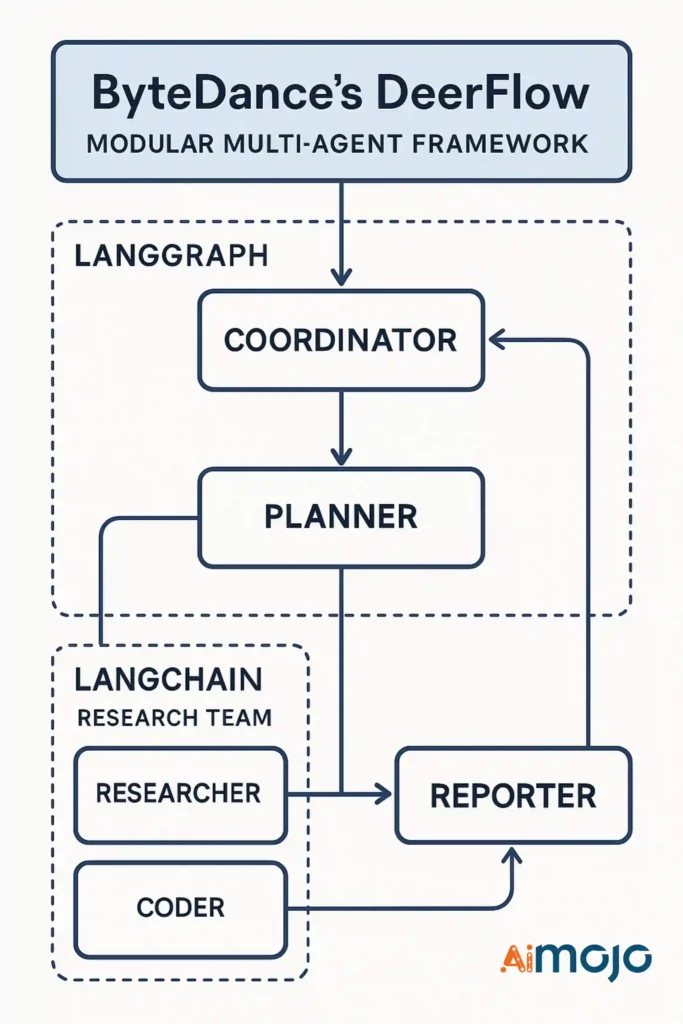
Illustration: Multi-Agent Workflow in DeerFlow
DeerFlow Multi-Agent Workflow in DeerFlow coordinate via a directed graph, passing tasks and data seamlessly for robust, scalable automation.
Core Features of DeerFlow
1. Dynamic Task Iteration
DeerFlow can automatically generate, optimise, and iterate on research plans based on evolving needs. This dynamic approach ensures that workflows stay efficient and relevant, even as new data or requirements emerge.
2. Deep Integration with Research Tools
- Web Search & Crawling: Aggregate real-time data from the web, news, and academic sources.
- Arxiv & Academic Retrieval: Quickly identify and summarise high-quality research papers.
- Python REPL & Visualisation: Execute code, run statistical analyses, and generate data visualisations on the fly.
- MCP Integration: Seamlessly connects with ByteDance’s internal Model Control Platform for enterprise-grade automation.
3. Multimodal Content Generation
DeerFlow doesn’t just spit out text. It can:
- Generate in-depth research reports
- Draft podcast scripts
- Build slide decks and visual artefacts
This versatility makes it a powerful tool for anyone who needs to turn complex data into engaging, audience-ready outputs.
4. Human-in-the-Loop Collaboration
Unlike black-box AI systems, DeerFlow is designed for transparency and control. Users can:
- Inspect each agent’s reasoning and decisions
- Override or redirect workflows in real time
- Refine outputs to ensure they meet specific needs
This “human-in-the-loop” approach is crucial for real-world deployment in academia, enterprise R&D, and technical writing.
5. Developer-Friendly and Community-Driven
- Easy setup: Supports Python 3.12+ and Node.js 22+, with uv for Python environment management and pnpm for JS packages.
- Preconfigured pipelines: Out-of-the-box examples and templates speed up onboarding.
- Open-source (MIT License): Encourages community contributions and rapid innovation.
Under the Hood: How DeerFlow Works
At its core, DeerFlow leverages LangChain for LLM-based reasoning and contextual memory, and LangGraph for structuring agent interactions as directed graphs. This combination allows for:
- Asynchronous, scalable workflows: Agents can work in parallel or in sequence as needed.
- Debuggable, transparent processes: Users can trace every step, making troubleshooting and optimisation straightforward.
Example: A Typical DeerFlow Pipeline
python
from deerflow import DeerFlow, WebSearchAgent, PythonExecAgent, ReportGenAgent

# Define agents
search_agent = WebSearchAgent(sources=['arxiv', 'pubmed'])
python_agent = PythonExecAgent()
report_agent = ReportGenAgent(format='pptx')

# Build workflow
deerflow = DeerFlow()
deerflow.add_agent(search_agent)
deerflow.add_agent(python_agent, after=search_agent)
deerflow.add_agent(report_agent, after=python_agent)

# Run research workflow
deerflow.run(topic="AI in Healthcare")
This example shows how a user might configure DeerFlow to search for papers, analyse data, and generate a presentation-all with human review at each step.
Community and Ecosystem
ByteDance’s decision to open-source DeerFlow under the MIT license signals a strong commitment to community-driven AI innovation. The project is already attracting contributions and feedback from global developers, with a growing ecosystem of plugins, templates, and integrations.
Useful Links:
The Future of Research Automation
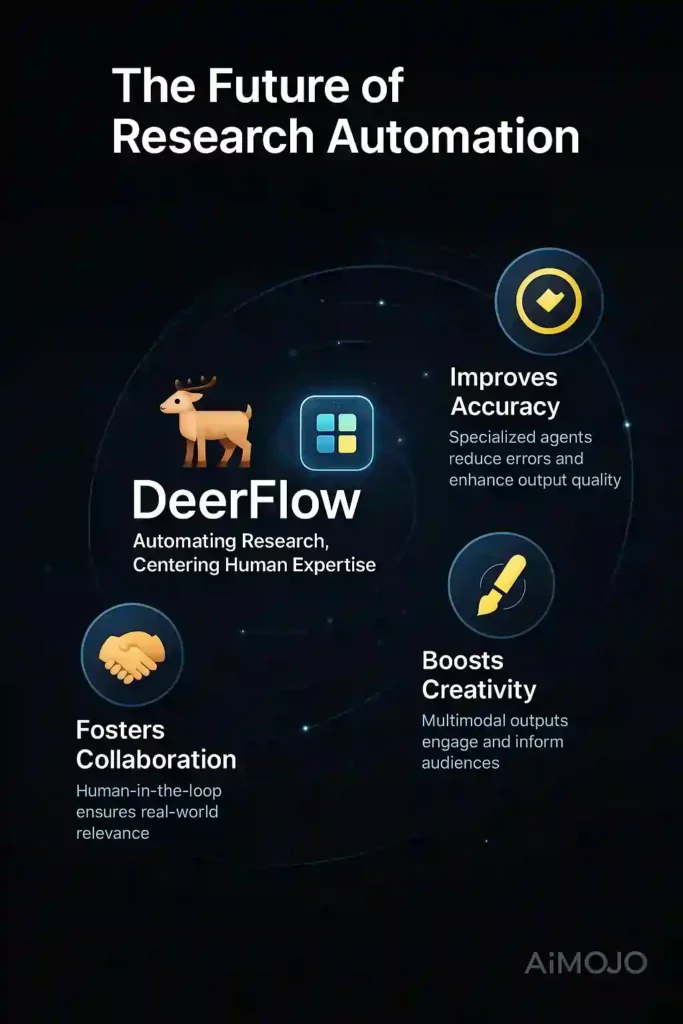
With the demand for AI-powered research tools surging-up 35% in 2025 alone – DeerFlow is poised to become a cornerstone of automated, transparent, and collaborative research workflows. Its modular, multi-agent architecture not only boosts efficiency but also ensures that human expertise remains central to the process.
Why DeerFlow matters:
- Saves time: Automates repetitive and time-consuming tasks
- Improves accuracy: Specialised agents reduce errors and enhance output quality
- Boosts creativity: Multimodal outputs engage and inform audiences
- Fosters collaboration: Human-in-the-loop ensures outputs align with real-world needs
Final Thoughts
DeerFlow marks a turning point in research automation, offering a flexible, transparent, and community-driven framework that empowers users to harness the full potential of AI-without losing control or oversight. Whether you’re in academia, industry, or content creation, DeerFlow is the toolkit you need to stay ahead in the era of intelligent automation.
Subscribe to AIMOJO Weekly for more Insights into the latest AI tools, frameworks, and workflow automation trends!


 BONUS: Get our $200 “AI Mastery Toolkit” FREE when you sign up!