


Higgsfield Popcorn made a big splash when it launched — the idea of turning simple text prompts into realistic AI-generated videos felt almost too good. But if you've actually tried using it recently, you know the experience doesn't always match the hype. Limited customization, inconsistent output quality, and restrictions on video length can get frustrating fast, especially when you're trying to create short-form content that actually looks polished.
And the moment you start exploring other AI video generators, the options get overwhelming. Some tools nail motion but lack editing control. Others offer great templates but produce generic-looking clips. So which ones actually deliver?
In this breakdown of the top 8 Higgsfield Popcorn alternatives, we'll walk through text-to-video tools and AI animation apps that handle things differently — so you can figure out what actually fits your workflow.
Why Technical Creators Are Exploring Higgsfield Popcorn Alternatives
While Higgsfield Popcorn delivers impressive visual consistency for storyboarding, many technical creators eventually hit a wall with its closed ecosystem. As video pre-production scales, users often find themselves restricted by hard API limits and climbing render costs.

Professionals building complex cinematic workflows are increasingly searching for AI pre-visualization software that offers more granular control. The most common reasons for migrating include:
These constraints are actively pushing filmmakers toward platforms that offer greater flexibility. Let’s look at how the market's top substitutes stack up against these specific technical demands.
Leading Alternatives to Higgsfield Popcorn for Creators
| Top Higgsfield Popcorn Alternatives | Core AI Feature | Main Visual Output |
|---|---|---|
| Kling AI | Cinematic motion control | High-resolution 4K video |
| TopView AI | Video style cloning | Fast product videos |
| Pykaso AI | Custom LoRA training | Ultra-realistic AI images |
| OpenArt | Multi-model AI access | Unified media generation |
| APOB AI | Consistent face-lock technology | Talking influencer avatars |
| Runway ML Gen-4.5 | Enterprise video simulation | Cinematic quality scenes |
| Akool AI | Branded face swapping | Personalised campaign ads |
| Luma | 3D spatial awareness | Realistic depth simulation |
| Ryla AI | Trained character persistence | Persona photos and short reels |
1. Kling AI
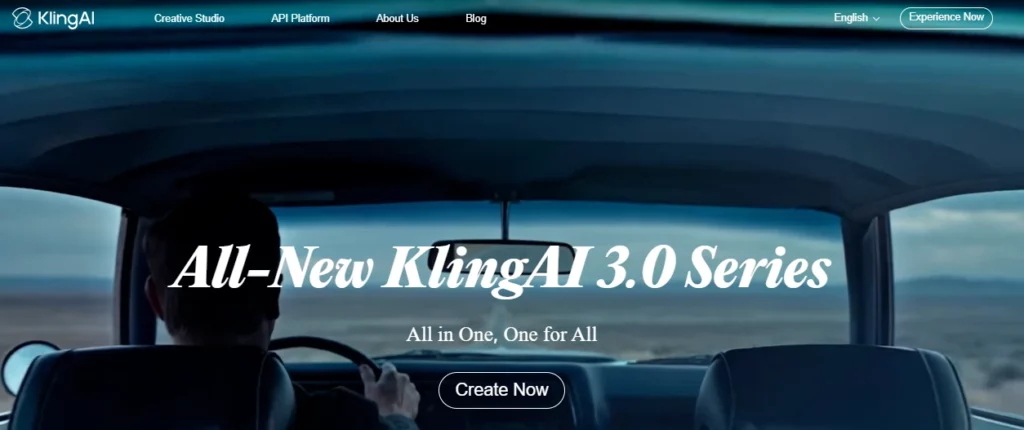
For creators seeking a Higgsfield Popcorn alternative with deep cinematic control, Kling AI stands out with its advanced text-to-video and image-to-video capabilities. It supports high-resolution output with impressive motion physics and scene coherence across extended clips.
Kling AI is built for filmmakers and marketers who need production-grade visual storytelling without studio budgets. Its multi-model architecture handles complex prompts involving character movement, camera angles, and environmental lighting with notable accuracy.
Kling AI Pros and Cons
2. TopView AI

TopView AI approaches video creation differently from other Higgsfield Popcorn alternatives. Instead of frame-by-frame generation, it functions as a full AI video agent — you upload a product, provide a reference video, and it recreates the entire concept autonomously .
This makes it particularly valuable for e-commerce sellers, DTC brands, and affiliate marketers who need scroll-stopping ad content at scale. The platform claims 10x faster production and up to 90% cost savings compared to traditional methods.
TopView AI Pros and Cons
3. Pykaso AI

Pykaso AI serves as an excellent alternative to Higgsfield Popcorn for creators who prefer mapping out scenes with static visuals. Instead of generating motion, this platform focuses heavily on high-resolution image synthesis and precise art direction. It utilises advanced models to generate incredibly detailed concept art and storyboard panels.
This tool is perfectly suited for concept artists and directors who need strict stylistic control over their pre-production materials. With robust face-swapping capabilities and extensive customisation options, Pykaso AI allows users to build comprehensive, visually striking pitch decks without relying on expensive traditional illustration workflows.
Pykaso AI Pros and Cons
4. OpenArt AI

OpenArt stands out as one of the most practical Higgsfield Popcorn alternatives because it solves a notoriously difficult problem: maintaining character appearance across multiple scenes. This comprehensive AI creator studio provides precise control over visual outputs by leveraging advanced ControlNet features, empowering users to train personalised models for absolute consistency.
OpenArt is built for serious digital artists, game developers, and comic creators who require methodical control over their visual assets. By supporting parallel generations and providing access to numerous premium models, it enables a highly structured workflow that professional visual storytellers can reliably depend upon.
OpenArt AI Pros and Cons

5. APOB AI

Many creators evaluating Higgsfield Popcorn competitors struggle to find affordable ways to maintain distinct AI personalities. Apob AI specialises in AI character and portrait generation, allowing users to build and train custom models for consistent social media content and virtual influencer creation.
This platform serves solo creators and boutique agencies focusing on character-driven narratives rather than corporate templates. By offering features like fast-line generation and stealth mode for private content, it supports efficient workflows.
APOB AI Pros and Cons
6. Runway ML
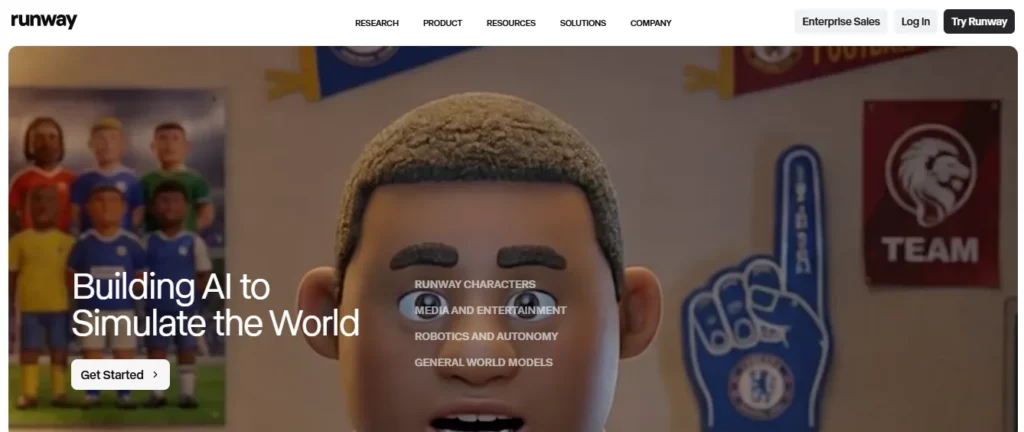
RunwayML is regarded as an industry pioneer and arguably the most recognisable Higgsfield Popcorn alternative for high-end video synthesis. Its powerful Gen-3 Alpha models push the boundaries of text-to-video and image-to-video generation, offering unprecedented photorealism and dynamic camera movements that rival traditional studio production.
For professional filmmakers and advertising agencies, Runway provides a comprehensive suite of AI editing tools beyond mere generation. From precise lip-syncing to advanced motion tracking, it acts as a fully-fledged post-production environment.
Runway ML Pros and Cons
7. Akool

For marketing teams and brand studios that need personalised visual content at scale, Akool positions itself as a practical Higgsfield Popcorn alternative. It focuses on AI-powered face swap, avatar creation, and branded video generation tailored for advertising and campaign workflows.
Akool serves agencies and in-house marketing departments who need to localise, personalise, and rapidly iterate on visual content. Its strength lies in maintaining brand-consistent output while enabling rapid creative turnaround across multiple campaign assets.
Akool Pros and Cons
8. Luma Labs

Luma Labs is a generative video platform with distinct 3D spatial awareness, offering a unique approach among Higgsfield Popcorn alternatives for creators working at the intersection of 3D capture and AI video.
Luma Labs targets VFX artists, game designers, and spatial content creators. The platform excels at generating scenes with accurate depth, lighting, and object interaction — areas where flat storyboard tools typically fall short.
Luma Labs Pros and Cons
9. Ryla AI
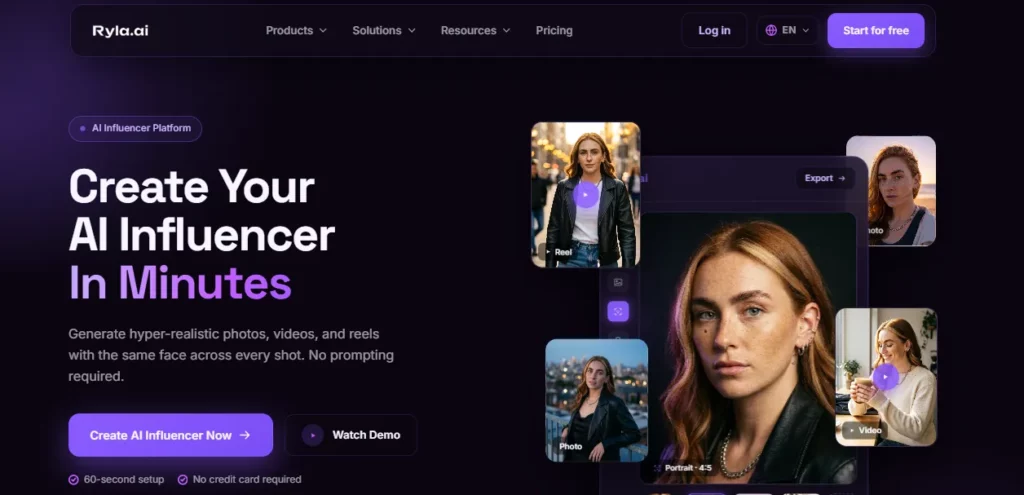
Creators leaving Higgsfield Popcorn are rarely chasing better cinematography; they are chasing a character who still looks like herself in the ninetieth clip. Ryla specialises in persistent AI personas, training a custom face model so a single invented creator can carry an entire content calendar rather than a single striking shot.
The platform serves solo creators, faceless channel operators and small agencies running persona accounts, where the same face has to reappear weekly across formats. Higgsfield's buyer wants a cinematic moment from a prompt; Ryla's wants a hundred consistent posts from one character, which is a production problem rather than an aesthetic one.
The two tools also take input differently, and that is the honest point of comparison. Higgsfield is prompt-led and motion-led: describe a shot, choose a camera behaviour, get film. Ryla is template-led and character-led: build the persona, browse the reels, fashion, lifestyle, UGC, fitness and travel sets, click generate.
Output is stills plus MP4 clips of three to fifteen seconds in vertical, square or landscape, back inside a minute and a half, with lip-sync from a script the user writes and face swap onto existing footage. Nobody should switch expecting cinematic camera control; they should switch expecting the same face every time.
Costs check out simply. Ten thousand credits cost $34.99 on Basic, framed by Ryla as 300 images or 10 videos, give or take — about 12 cents a still, $3.50 a clip, from one allowance.
On Pro, $99.99 buys 25,000 credits for roughly 600 stills or 20 clips, so the unit rate slips slightly; that tier is priced for 4K and trained faces, not for output. The 75,000 credits on the $199.99 Agency plan are the only genuine volume discount, and unused credits carry forward while the plan stays active.
Ryla AI Pros and Cons
Migration Workflows: How to Transition to a New Higgsfield Popcorn Competitor
Switching pre-production tools mid-project doesn't have to break your visual continuity. Moving to a new Higgsfield Popcorn competitor requires a structured approach to preserve your established character likenesses.

To ensure a seamless migration, focus on porting these core assets:
Organizing these specific elements upfront ensures your next cinematic workflow hits the ground running.
Bringing Your AI Storytelling Ideas to Life
Shifting your creative workflow to a new platform always takes a little adjustment. Yet, the current landscape of Higgsfield Popcorn alternatives offers enough variety that you won't have to compromise on visual consistency or motion quality just to leave a familiar interface.
The tool that matters most is simply the one that removes friction from your daily process, freeing you up to focus on the actual storytelling. Take your time running a few test prompts on smaller scenes. The software will inevitably keep changing, but your distinct creative vision remains the constant.
AiMojo Recommends:



 BONUS: Get our $200 “AI Mastery Toolkit” FREE when you sign up!