

The product management profession stands at a pivotal moment. Generative AI for product managers has moved from experimental technology to essential business capability, fundamentally reshaping how products are conceived, developed, and scaled.
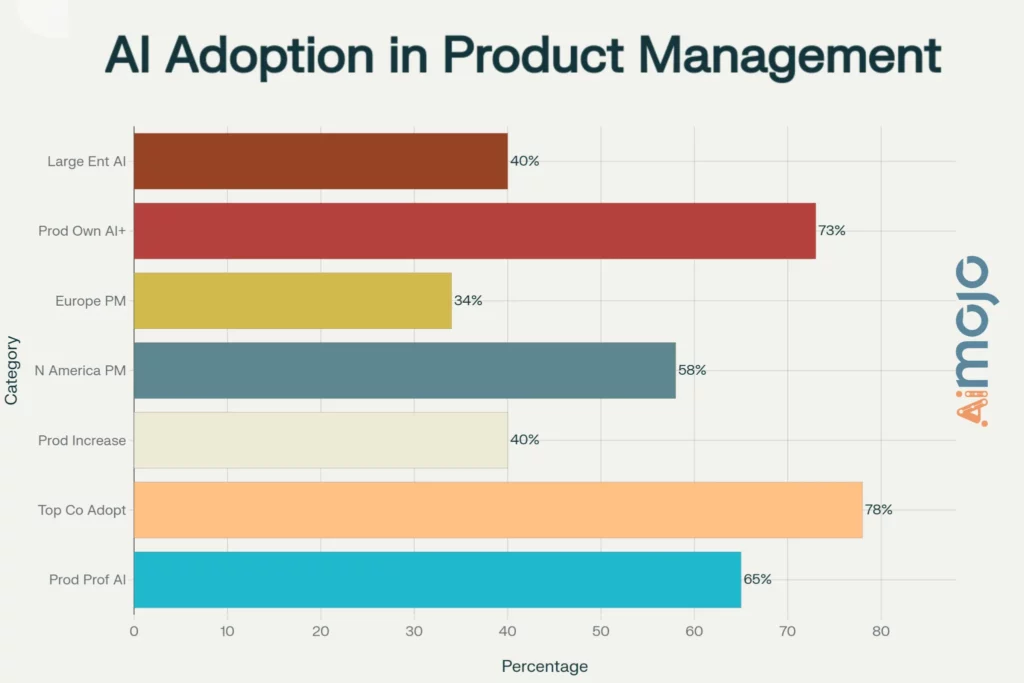
Recent data paints a clear picture: 65% of product professionals have integrated AI into their workflows, with 78% of top-performing companies leading the charge. This isn't just adoption—it's transformation at scale.
AI’s Role in Modern Product Management
Product Manager AI adoption has accelerated dramatically in 2026. McKinsey research reveals that Gen AI has increased Product Manager productivity by 40%, whilst 48% of companies report AI provides significant competitive advantages.

The shift isn't just about efficiency gains. Companies like Coca-Cola now employ AI across operations, using real-time consumer sentiment analysis to guide product decisions. Similarly, Mondelez leverages AI to iterate and launch new food products faster, whilst PepsiCo PMs use AI for real-time data-driven operational decisions.
📊 Market Dynamics Driving Change
The competitive pressure is immense. 40% of large enterprises have adopted generative AI tools, with medium-sized companies following at 30% adoption rates. This creates a clear divide between AI-enabled and traditional product teams.
AI tools for product management are no longer luxury additions—they're survival mechanisms. Product managers who embrace AI can process vast datasets, prototype features rapidly, and make data-driven decisions at unprecedented speed.
Essential AI Skills for Product Managers in 2026
1. Prompt Engineering Mastery
AI-enhanced product management begins with effective communication with AI systems. Product managers must master prompt engineering—the art of crafting precise instructions for AI tools.
👎 Poor prompt example:
"Write suggestions for improving user experience"👍 Effective prompt example:
2. Large Language Model (LLM) Understanding
Large Language Models in product management require strategic selection. Different models excel in specific areas:
- GPT-4: Exceptional for creative ideation and content generation
- Claude: Superior for analytical tasks and data interpretation
- LLaMA: Cost-effective for specific, repetitive tasks
3. Technical Vocabulary Fluency
Product managers must communicate effectively with engineering teams about AI implementation. Key terms include:
- Tokens: Input units processed by AI models
- Context Window: Maximum information an AI can process simultaneously
- Hallucination: AI-generated inaccurate information
- Fine-tuning: Customising AI models for specific use cases
Practical AI Implementation for Product Managers
Code Example: AI-Powered Feature Ideation
Product managers can now prototype AI features using simple API integrations:
python
import requests

# Function to call generative AI API for product feature ideation
def generate_feature_ideas(prompt, api_key):
    url = "https://api.openai.com/v1/chat/completions"
    headers = {
        "Authorization": f"Bearer {api_key}",
        "Content-Type": "application/json"
    }
    data = {
        "model": "gpt-4",
        "messages": [{"role": "user", "content": prompt}],
        "max_tokens": 200
    }
    response = requests.post(url, headers=headers, json=data)
    if response.status_code == 200:
        return response.json()["choices"][0]["message"]["content"]
    else:
        return f"Error: {response.status_code} - {response.text}"

# Example Usage
api_key = "your-api-key-here"
prompt = "Suggest 5 innovative features for an AI-powered analytics dashboard to enhance user engagement."
ideas = generate_feature_ideas(prompt, api_key)
print("Generated Product Feature Ideas:\n", ideas)
This approach enables AI prototyping for product managers without requiring deep technical expertise.
AI-Driven Product Strategy Framework
AI-powered product strategy follows a structured approach:

Real-World AI Applications in Product Management
Customer Discovery and Research
AI in product development transforms customer research. Tools like Productboard Pulse consolidate feedback from multiple sources—customer interviews, surveys, support tickets, and usage analytics—providing comprehensive user insights.
Product managers can now analyse thousands of customer comments automatically, identifying trends and unmet needs faster than traditional manual methods.
Roadmap Planning and Prioritisation
AI product roadmap development uses predictive analytics to forecast feature impact. AI analyses historical project data and real-time market signals to help product managers prioritise features effectively.
Automated Testing and Quality Assurance
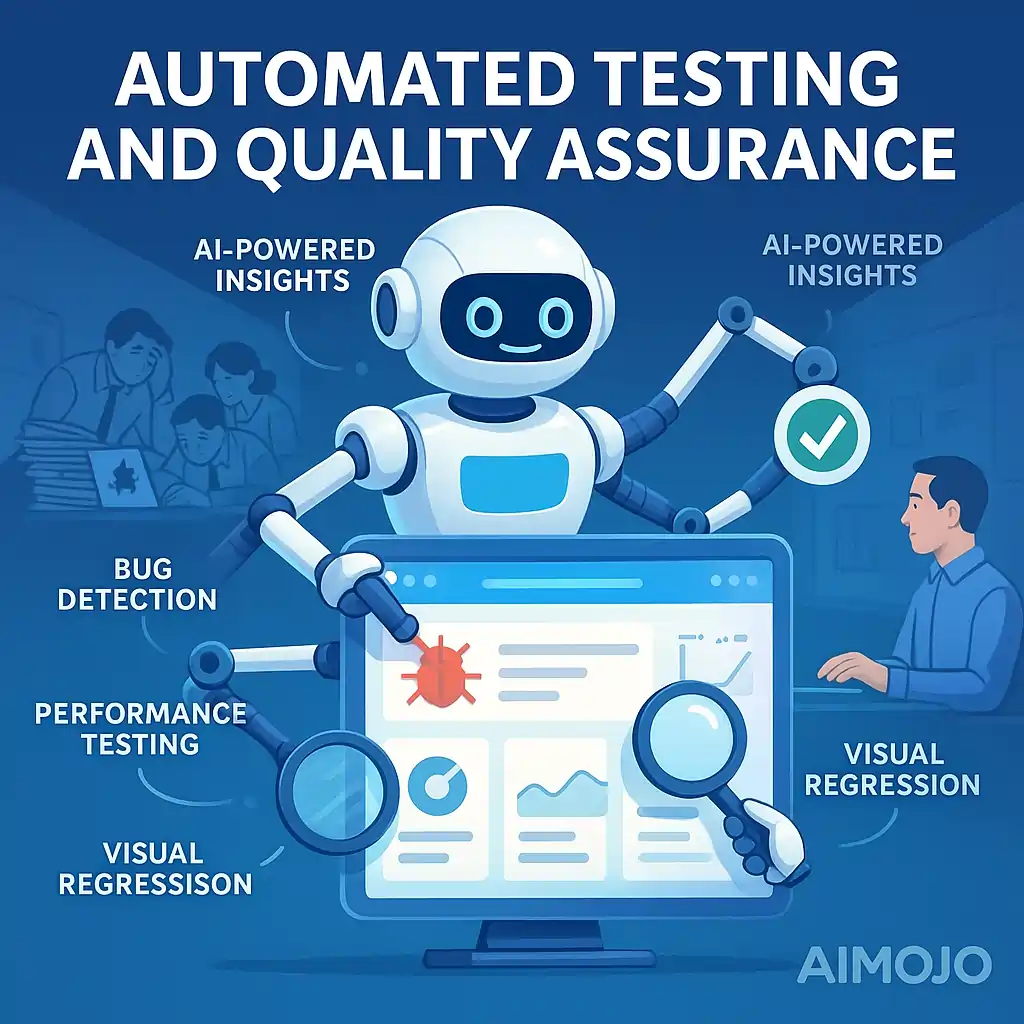
AI-powered testing tools identify bugs and inconsistencies before they reach users. This allows product managers to focus on strategic quality assurance rather than manual testing processes.
Industry Statistics: The State of AI Adoption
Recent research reveals compelling adoption patterns:
Regional Adoption Differences
North American product managers show higher AI feature integration rates (58%) compared to European counterparts (34%). This disparity reflects regulatory differences and organisational AI readiness.
Strategic Considerations for AI Implementation

Building AI Expertise Networks
Successful Product Manager AI integration requires hybrid expertise networks. Companies like Airbus invested in training 10,000 engineers in AI tools, accelerating aircraft design simulations by 40%.
Ethical AI Implementation
Product managers must address AI risks including bias, hallucinations, and privacy concerns. Key questions include:
ROI Measurement and Success Metrics
AI adoption statistics 2026 show that companies measure success through:
Embracing the AI-Native Future
AI automation in product management isn't replacing human judgment—it's amplifying human capabilities. Product managers who embrace AI tools can test faster, fail quicker, and achieve breakthrough innovations.
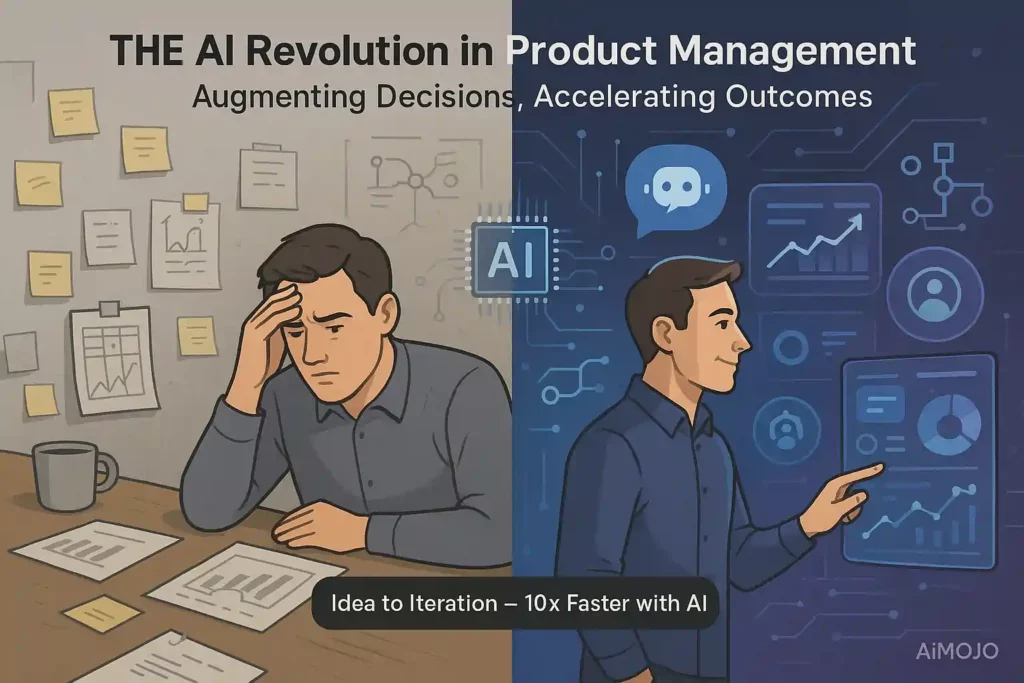
The statistics are clear: AI productivity increase for product managers reaches 40%, whilst companies report significant competitive advantages. The question isn't whether to adopt AI, but how quickly you can integrate it effectively.
Product managers must evolve their job descriptions to include “understanding AI well enough to use it wisely.” The future belongs to those who make AI their competitive edge whilst maintaining human creativity and strategic thinking.
The transformation is happening now. Product managers who act decisively will define what product management means in the AI-native world ahead.


 BONUS: Get our $200 “AI Mastery Toolkit” FREE when you sign up!