
Quick answer: ElevenLabs is the best all-round AI voice generator in 2026 for realistic narration, Google Cloud TTS wins on multilingual scale, Murf and Microsoft Azure suit compliance-heavy teams, Cartesia leads on real-time latency, and Kokoro is the top free self-hosted option. Full breakdown below.
Most “best TTS” lists read like they were copy-pasted from product pages. This one isn't. Every tool here is sorted by what you'd actually buy it for, faceless YouTube narration, podcast voiceovers, multilingual SaaS, voice cloning, or real-time AI agents, with real pricing, latency, and language numbers attached so you can pick fast and move on.
Skim the verdict tags if you're in a hurry. Read the full sections if you're spending real budget.
How We Actually Tested These AI Voice and TTS Tools (No Guesswork)
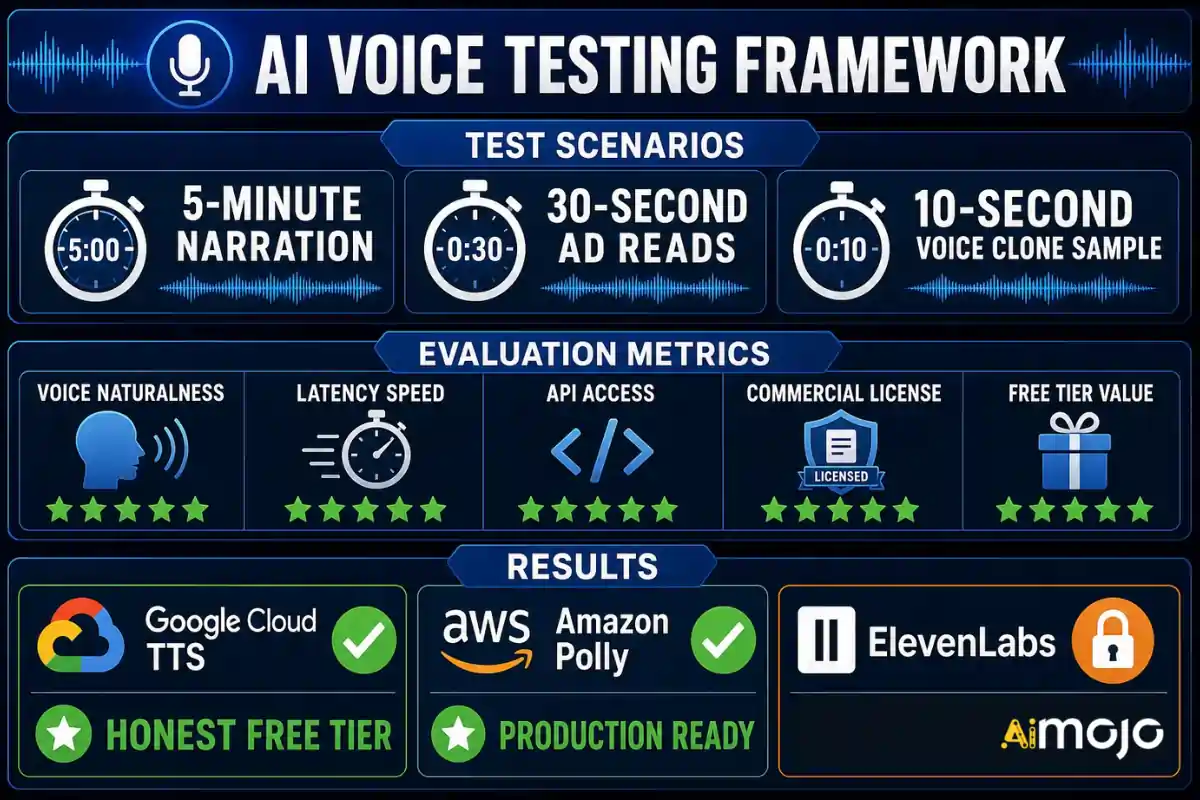
This list didn't come from skimming product pages. Each tool was pushed through real scripts: 5-minute narration blocks, 30-second ad reads, and voice cloning with the same 10-second sample.
We ranked them on voice naturalness, latency benchmarks, free tier value, API access, and commercial licensing — the stuff that actually matters when you're monetizing content or shipping a product.
We also stress-tested the free tiers to see if they actually allow production use or if they're just marketing traps. The result: Google Cloud TTS and Amazon Polly have the most honest free offerings, while tools like ElevenLabs lock monetization behind a paywall. That granularity is what separates a real buyer's guide from a content farm.
AI Voice and TTS Tools: All 11 Options at a Glance
| Tool | Best For | Cloning | Free Tier | Starting Price |
|---|---|---|---|---|
| ElevenLabs | Quality, YouTube | Yes | 10K credits/mo | $5/mo |
| Murf AI | Enterprise teams | Yes | 10 min | $29/mo |
| Google Cloud TTS | Multilingual | Yes (10s) | 4M chars/mo | $4/1M |
| Microsoft Azure TTS | Compliance | Yes | 500K chars/mo | ~$22/1M |
| Amazon Polly | AWS devs | No | 12-mo trial | $4/1M |
| Resemble AI | Voice cloning | Yes | Limited | $0.01/sec |
| LOVO AI (Genny) | Video creators | Pro+ | Limited | $24/mo |
| OpenAI TTS API | LLM apps | No | No | $15/1M |
| Deepgram | STT + pipelines | No | Yes | Usage-based |
| Kokoro | Self-hosted | No | Free | Free |
| Cartesia | Voice agents | No | Limited | Usage-based |
1. ElevenLabs — Best for Voice Quality and YouTube Automation

ElevenLabs is the AI voice generator most creators quietly run but rarely credit on camera. It tops the list because the voices sound human, not like the robotic “podcast template” tone of cheaper text to speech software.
The edge is in pauses, breaths, and emphasis. Long scripts for cash-cow videos, TikTok narrations, and audiobooks come out with a cadence that doesn't scream “AI voiceover,” which is the difference between a binge and a bounce. Just note: free-tier audio can't be monetized, so budget for at least the Starter plan if you're publishing.
2. Murf AI — Built for Teams, Agencies, and Enterprise Clients
Murf AI behaves less like a toy and more like a voiceover production studio. The script-editor layout means marketers and non-tech staff generate on-brand narration without touching a DAW.
For training modules, onboarding, and explainer videos, Murf's library hits that “corporate but not cringe” zone, and per-sentence pitch and speed control keeps long courses from sounding flat. You pay more than creator-first tools, but you're buying reliability and compliance, not just raw quality.
3. Google Cloud Text-to-Speech — Multilingual Beast for Global Content
Google Cloud TTS skips the cute dashboard and acts as the backbone behind apps and global content engines that need stable voices at scale.
Run a multilingual blog, eLearning platform, or regional SaaS and you script once, translate, and generate localized voiceovers on demand. The trade-off is a cloud-console feel rather than a drag-and-drop UI, but for global AI Voice and TTS Tools wired into an app, it rarely fails.
4. Microsoft Azure TTS — Compliance-Ready Voice for Serious Products
Azure Text to Speech is the “we're building something serious” option, made for products that must live inside a compliance and governance framework.
If your stack already lives in Azure, plugging TTS into voice alerts, chatbot replies, and accessibility features keeps billing and security under one roof. It won't out-wow ElevenLabs on YouTube voiceovers, but for screen readers and transactional speech, it's rock solid.
5. Amazon Polly — Developer-Friendly TTS for the AWS Crowd
Amazon Polly is the OG text to speech API for devs already living in AWS. It's not socially hyped, but it delivers usable speech with predictable, pay-as-you-go pricing.
Automating voicemail drops, IVR systems, or doc-to-narration tutorials? Polly handles it cleanly. The power move is generating TTS on the fly, caching in S3, and serving via CloudFront, all inside your current setup. It won't match newer tools on hyper-realism, but for reliability it earns its shortlist spot.
6. Resemble AI — Serious Voice Cloning for Products and Games
Resemble AI is the pick when you want distinct cloned characters that stay consistent across a game, app, or IP universe.
Building story-driven games, roleplay platforms, or white-label assistants? Resemble lets you craft unique voice identities instead of recycling the same stock TTS everyone uses. The interface leans technical, which is a plus for studios and devs who want real controls over oversimplified sliders.
7. LOVO AI (Genny) — All-in-One Voiceover and Video Hub
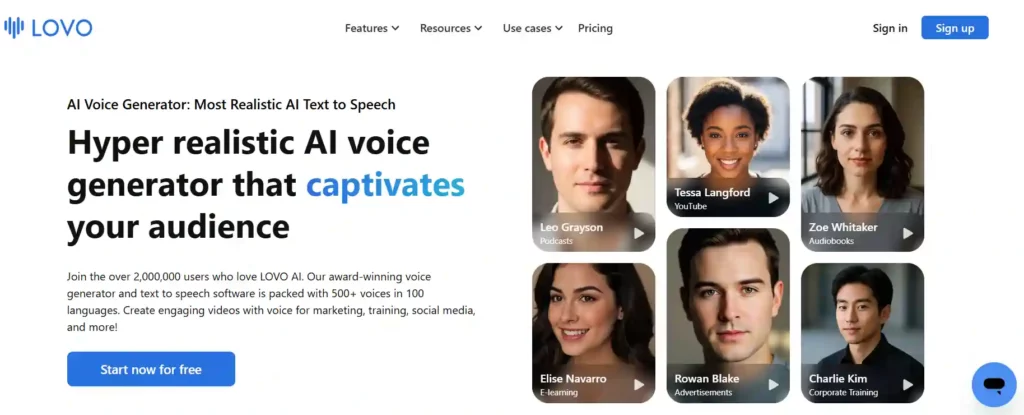
LOVO's Genny platform merges voiceover and video editing so you stop stitching five tools together for YouTube, shorts, and promos.
For cash-cow channels and long-form courses, Genny works like a mini studio: paste script, pick voice, add visuals, export. The catch is API access being Enterprise-only, so it's a creator tool, not a developer one. For speed from script to publish-ready video, it sits neatly between basic TTS and full editors.
8. OpenAI TTS API — Easy Add-On for Chatbots and AI Assistants
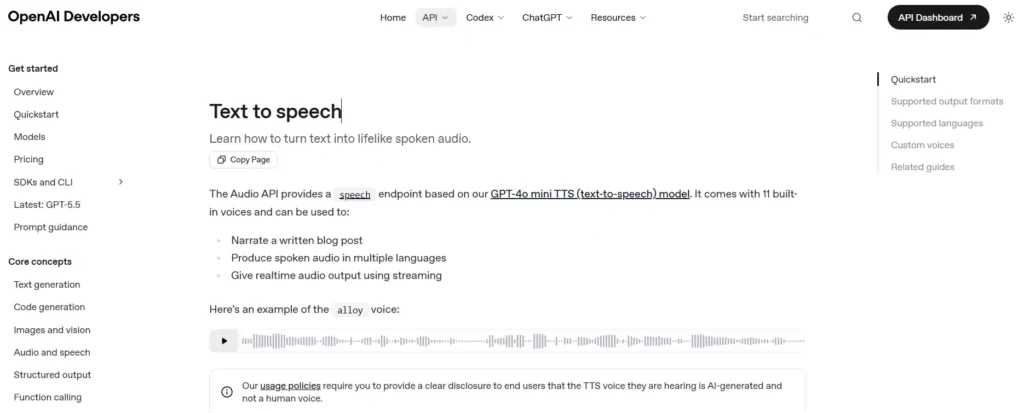
OpenAI's TTS isn't the most feature-packed text to speech software, and that's the point, it makes adding natural voice output painless.
For chatbots, support assistants, and utility tools where voice is a UX boost rather than the product, this fits perfectly, no extra provider, dashboard, or contract. It's not the most realistic voice out there, but for quick responses and real-time agents the quality clears the bar, and it keeps your architecture tidy.
9. Deepgram — Speech-to-Text First, Now Strong for Voice Pipelines
Deepgram earned its name as a speech-to-text powerhouse and later added TTS, making it ideal for two-way voice pipelines, audio to text and back.
Handling call recordings, sales calls, or interviews? Deepgram captures, analyzes, and regenerates speech in one flow, useful for QA, coaching, and summarization. It's not a creator-first voice generator, but if your product revolves around voice data, it's one of the strongest options in this category.
10. Kokoro — Lightweight Open-Source TTS for Builders on a Budget
Kokoro is the kind of project devs love: an 82M-parameter model that's small, fast, and shockingly good for its size.
Indie devs and bootstrapped founders can embed TTS without a recurring API bill, fine-tune freely, and even ship offline-capable experiences. The trade-off: you own deployment, scaling, and monitoring, with no support desk to email. Overkill for non-technical creators, but unbeatable for control at the lowest cost.
11. Cartesia — Ultra-Low Latency Voice for Real-Time AI Agents
Cartesia exists to make real-time AI voice agents feel instant, leaning into latency over catalog size.
For customer service bots, AI reps, or live tutoring, that snappy response feels close to a human, especially paired with a fast LLM backend. You wouldn't grab Cartesia for YouTube voiceovers; it shines in conversational experiences where lag kills engagement. If live AI voice is on your roadmap, test it early.
Match the Tool to What You're Actually Building
AI Voice Generators vs Text-to-Speech Software: What Most Roundups Get Wrong
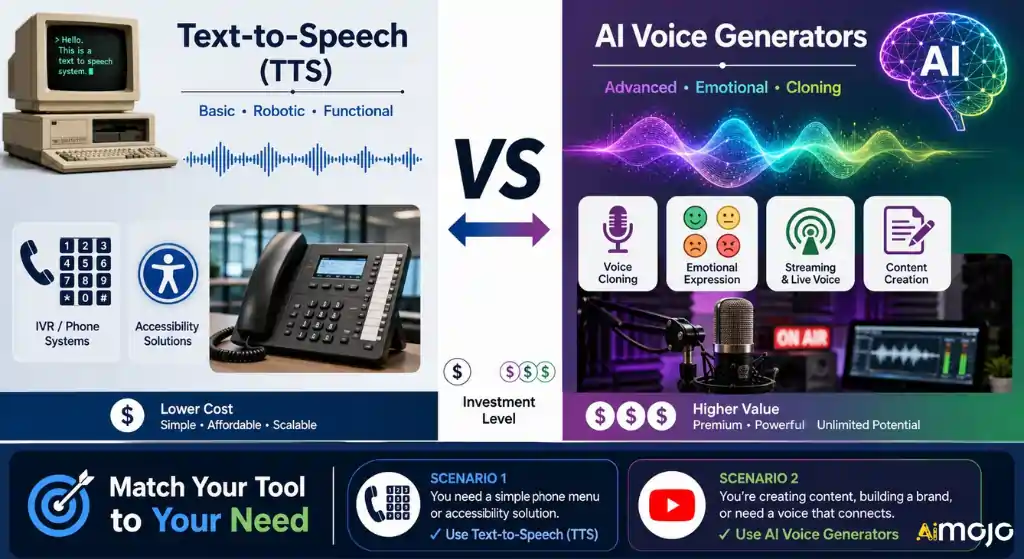
People use these terms interchangeably, but they're not the same thing. Text-to-speech software is the old-school engine that reads text aloud, often used for accessibility and IVR. AI voice generators are the newer breed that clone, emote, and stream in real time.
Most modern tools blur the line, but knowing the difference helps you pick the right license and avoid overpaying.
If you just need a robotic menu voice for a phone system, you don't need ElevenLabs. If you need a cloned host voice for a faceless channel, you don't want a basic TTS API. Match the category to the job, and you stop burning budget on features you'll never touch.
Frequently Asked Questions
What is the most realistic AI TTS voice in 2026?
ElevenLabs leads for natural narration and emotional range, which is why it dominates audiobooks and long-form voiceovers. For real-time conversational AI, low-latency tools like Cartesia feel more lifelike in live exchanges.
Are there free AI Voice and TTS Tools good enough for production?
Yes. Google Cloud TTS gives 4M free characters monthly that are genuinely usable. Amazon Polly offers a 12-month free trial, and Kokoro is fully free and open source if you can self-host.
Can I clone my own voice with these tools?
ElevenLabs, Resemble AI, Google Cloud TTS, and LOVO AI (Pro tiers) all support voice cloning from a short sample. Always confirm consent before cloning anyone else's voice and check commercial-use terms.
Which TTS tool has the best API for developers?
Amazon Polly and Google Cloud TTS have the most mature SDKs and SSML support. Resemble AI and Cartesia are API-first for product builds, and OpenAI TTS is the easiest drop-in if you're on its stack.
Is AI-generated voice good enough for audiobooks?
For most use cases, yes. ElevenLabs and LOVO AI offer emotion and pacing controls built for long-form listening. Many indie creators generate an AI draft, then lightly edit before publishing.
How much do AI voice tools cost?
Cloud APIs like Polly and Google start around $4 per 1M characters and scale with usage. Subscription tools like ElevenLabs ($5/mo) and Murf ($29/mo) run monthly. Map your monthly volume before committing, since costs swing hard at scale.
So, Which One Are You Actually Going to Use?
Here's the part nobody tells you: the “best” tool on this list is the one you'll still be using six months from now without quietly rage-quitting your subscription. Voice quality gets you to sign up. Pricing, latency, and licensing decide if you stay.
If you're still on the fence, run the cheapest possible test before you commit a rupee. Drop the same 200-word script into two or three free tiers, generate it, and listen on the device your audience actually uses — phone speaker, not studio headphones. The tool that sounds right there is your answer, not the one with the prettiest demo reel.
AiMojo Recommends:

 BONUS: Get our $200 “AI Mastery Toolkit” FREE when you sign up!