


In a digital environment saturated with data, can you confidently measure the real return on your marketing efforts? Many marketing professionals find it difficult to convert large datasets into a clear ROI, which complicates justifying their strategic choices.
The right marketing analytics tools are crucial for this task. They allow you to shift from speculation to certainty by translating complex data into practical insights for informed decisions.
What are Marketing Analytics Tools? Real-World Use Cases
Marketing analytics tools track where your budget goes and what actually comes back. These platforms pull data from your campaigns, social ads, email funnels, and paid search—then show you which efforts drive revenue and which ones waste money. Instead of guessing what's working, you get insights you can act on immediately.

Here's what they actually do: pull data from all your marketing touchpoints, track performance against the metrics that matter, and use predictive analysis to guide your next move. They connect the dots between your marketing efforts and real business results by showing you how customers behave, which campaigns convert, and where your revenue comes from.
Real-World Use Cases
Marketing teams uses these platforms to solve critical business challenges:
Boost ROI with These Advanced Marketing Analytics Tools
| 🔧 Best Marketing Analytics Tools | 💡 Key Strength | 👥 Best For |
|---|---|---|
| 📈 Google Analytics | Free web insights | Website owners |
| 📋 DashThis | Automated reporting | Marketing agencies |
| 🎯 Adobe Analytics | Enterprise journeys | Large businesses |
| 📊 Whatagraph | Visual dashboards | Agency teams |
| 🔍 Semrush | SEO intelligence | Digital marketers |
| 🔒 Matomo | Privacy-first analytics | Data-conscious teams |
| 🚀 HubSpot Marketing | All-in-one platform | Growing businesses |
1. Google Analytics
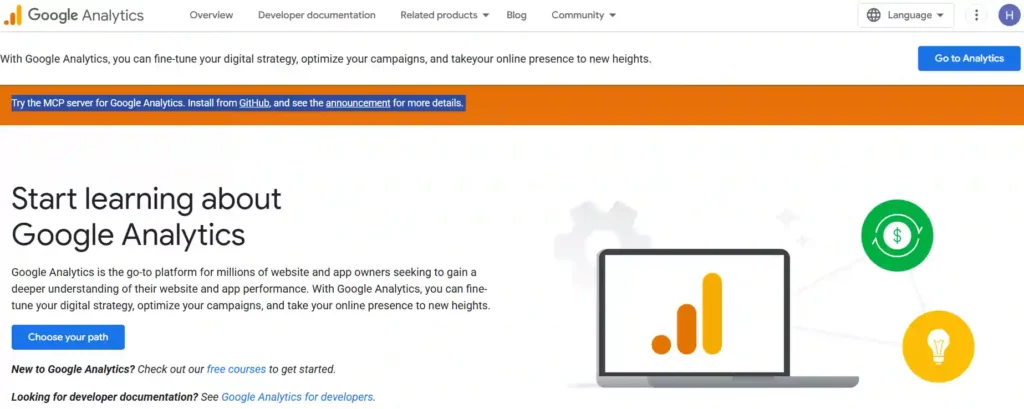
Google Analytics is an essential web analytics service that offers powerful tools to understand your customers. It provides a complete, cross-platform view of how users interact with your website and apps, transforming raw data into clear, actionable insights for smarter marketing decisions.
This platform is designed to help you measure traffic, track conversions, and improve your marketing ROI. By uncovering customer-centric data, it empowers you to optimize the user journey from discovery to conversion, all free of charge.
Here’s how Google Analytics works:
- Who would find Google Analytics helpful:
Marketers, business owners, and SEO specialists needing free, powerful insights on website traffic.
- Integrations:
Seamlessly connects with Google Ads, Search Console, BigQuery, and Display & Video 360.
- Why pick Google Analytics:
It is the industry-standard free tool for detailed, data-driven customer journey analysis.
2. DashThis

DashThis is an automated marketing reporting tool designed to save digital marketers hours of manual work. It transforms complex data from multiple sources into beautiful, easy-to-understand reports, helping agencies and marketing teams track performance effortlessly.
With its user-friendly interface and powerful automation, DashThis simplifies the creation of impactful reports. It empowers you to combine all your marketing data in one place, enabling you to deliver clear, actionable insights to clients and stakeholders in just a few clicks.
Here’s how DashThis works:
- Who would find DashThis helpful:
Marketing agencies, in-house teams, and freelancers who need to simplify client reporting tasks.
- Integrations:
Supports over 40 popular marketing tools, including Google Ads, SEMrush, and social media platforms.
- Why pick DashThis:
It saves significant time by automating the creation of visually appealing, comprehensive marketing dashboards.
3. Adobe Analytics

Adobe Analytics is a leading enterprise solution for unified customer measurement across all data, content, and journeys. It provides marketing, product, and business teams with the deep insights needed to understand customer behavior and optimize their experiences across every channel.
This advanced analytics platform moves beyond basic web metrics, allowing you to connect first-party data from online and offline sources. By visualizing the complete customer journey, Adobe Analytics helps businesses make faster, more informed decisions to drive growth and deliver exceptional experiences.
Here’s how Adobe Analytics works:
- Who would find Adobe Analytics helpful:
Enterprise B2C and B2B organizations needing deep, cross-channel customer journey and product insights.
- Integrations:
Connects with Adobe Experience Cloud, Real-Time CDP, and other enterprise marketing and data solutions.
- Why pick Adobe Analytics:
It offers unparalleled, in-depth analysis of the entire customer journey for enterprise-level optimization.
4. Whatagraph

Whatagraph is a marketing intelligence platform that automates reporting by connecting and standardizing all your marketing data in one place. It is built for marketing agencies and in-house teams to stop wasting time on fixing broken data and instead create accurate, live, and interactive reports that scale with their business.
This tool helps deliver reliable, white-labeled reports that clients love, ensuring data flows directly from the source to prevent inaccuracies. With features like AI-powered insights, Whatagraph allows you to monitor KPIs, make faster decisions, and focus on growth.
Here's how Whatagraph works:
- Who would find Whatagraph helpful:
Marketing agencies and in-house teams who need to scale their client reporting efficiently.
- Integrations:
Offers 55+ direct connections, a custom API, and Google Sheets or CSV uploads.
- Why pick Whatagraph:
It delivers reliable, visually engaging, and automated reports that help reduce client churn.
5. Semrush

Semrush is an all-in-one, AI-powered marketing platform designed to improve online visibility and uncover marketing insights. Trusted by millions of professionals, it provides a comprehensive suite of tools for SEO, content marketing, competitor research, PPC, and social media marketing.
With access to vast databases of keywords and backlinks, Semrush empowers businesses to automate tasks, forecast traffic, and create data-driven strategies. It is the go-to solution for marketers aiming to gain a competitive edge and drive significant growth.
Here’s how Semrush works:
- Who would find Semrush helpful:
SEO professionals, digital marketers, and businesses needing a complete suite for online marketing.
- Integrations:
Offers integration with Google Analytics, Search Console, and other platforms for a holistic view.
- Why pick Semrush:
You get a fully-featured SEO and advertising software suite for a single price.
6. Matomo

Matomo is a powerful web and app analytics platform that serves as an ethical alternative to other tools, putting data ownership and privacy first. It provides 100% accurate, unsampled data, giving teams the confidence to make decisions based on real insights, not estimates.
Trusted by over a million websites, Matomo ensures you are in full control of your data, helping you maintain compliance with privacy regulations like GDPR without sacrificing performance. It's a secure, transparent, and open-source solution for businesses that demand accuracy and data protection.
Here's how Matomo works:
- Who would find Matomo helpful:
Privacy-focused organizations needing an ethical analytics tool with 100% accurate, unsampled data.
- Integrations:
Exports raw data to data warehouses like BigQuery, Redshift, and Snowflake.
- Why pick Matomo:
For a secure, privacy-first analytics solution that gives you complete control and data ownership.
7. HubSpot Marketing Hub

HubSpot Marketing Hub is an AI-powered software that brings all your marketing tools and data together on one easy-to-use platform. It pairs a smart CRM with built-in AI to help you attract the right audience, convert more visitors into customers, and run complete inbound marketing campaigns at scale.
This integrated solution is designed to help you overcome your toughest challenges, from lead generation to customer retention. It enables you to launch personalized, cross-channel campaigns, automate time-consuming tasks, and make data-driven decisions that drive lasting growth.
Here's how HubSpot Marketing Hub works:
- Who would find HubSpot Marketing Hub helpful:
Marketing teams of all sizes looking to automate tasks and personalize customer experiences.
- Integrations:
Connects with Salesforce and over 1,800 third-party apps available in the HubSpot marketplace.
- Why pick HubSpot Marketing Hub:
It is an all-in-one platform combining a smart CRM with powerful AI tools.
Types of Marketing Analytics Tools
Understanding the distinct categories of marketing analytics tools helps marketers select the right combination for their specific needs.

- Web Analytics Tools
- These platforms track website performance and user interactions, providing insights into traffic sources, page engagement, and conversion paths. They measure metrics like bounce rate, session duration, and goal completions to optimize user experience and site performance.
- SEO Analytics Tools
- Focused on search engine optimization, these solutions analyze keyword rankings, backlink profiles, and technical site health. They help marketers identify content opportunities, track organic search performance, and monitor competitive positioning in search results.
- Attribution Analytics Tools
- These platforms solve the complex challenge of multi-touch attribution by tracking customer interactions across channels and devices. They provide clarity on which marketing touchpoints contribute most to conversions, enabling accurate budget allocation and campaign optimization.
- Business Intelligence (BI) Tools
- BI platforms aggregate marketing data with broader business metrics, creating comprehensive dashboards that connect marketing performance to revenue outcomes. They excel at cross-functional reporting and executive-level insights.
- Behavior Analytics Tools
- These specialized tools focus on user experience by capturing how visitors interact with websites through heatmaps, session recordings, and user flow analysis. They reveal optimization opportunities that traditional metrics might miss, particularly around conversion rate improvement and user experience enhancement.
Each category addresses specific analytical needs, and many successful marketing teams combine multiple types to create a comprehensive measurement ecosystem that drives data-informed decision-making.
AiMojo Recommends:
From Insights to Impact
The difference between marketers who prove their worth and those who get their budgets cut? They stop reporting vanity metrics and start showing real revenue impact. Most teams collect data but never act on it.
The right analytics platform doesn't just give you dashboards—it tells you exactly where to shift spend, which campaigns to kill, and what's actually driving conversions. Your competitors already figured this out.
Every day you wait is money left on the table. Pick a tool that matches your goals, integrate it properly, and watch unclear reports transform into decisions that actually move numbers.



 BONUS: Get our $200 “AI Mastery Toolkit” FREE when you sign up!