
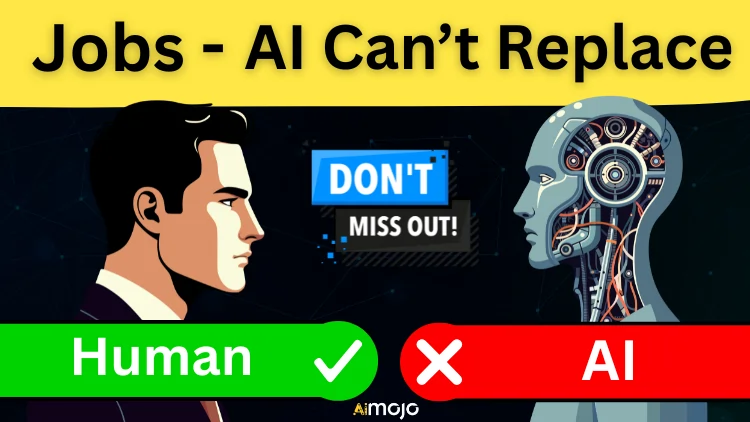

Today, I’m tackling a question that’s been on my mind: as AI grows smarter, which jobs will stay firmly in human hands?
This curiosity sparked after catching Bill Gates on The Tonight Show with Jimmy Fallon in February 2025, where he shared his thoughts on professions AI won’t likely take over. And trust me, it’s not all bad news—there’s plenty of room for human skills to shine.
AI is already changing how we work, from handling repetitive tasks to crunching huge datasets. But Gates argues that some jobs—like coding, biology, and energy management—depend on human creativity and judgment that machines can’t replicate.
I’ll break down his predictions, toss in more roles that seem safe, and look at what this means for the future of work.
Bill Gates’ Predictions: Jobs AI Won’t Steal

In his chat with Fallon, Gates painted a hopeful picture of AI making intelligence more accessible—think free medical advice or tutoring for everyone. “The era we’re just starting is that intelligence is rare—a great doctor or a great teacher.
With AI, over the next decade, that will become free, commonplace,” he said, as noted by CNBC. Yet, he emphasized that certain jobs will endure because they need human flair.
Coders: Where Creativity Fuels Code
Coders, or software developers, build the digital backbone of our world. Gates sees them as safe because coding isn’t just about churning out lines—it’s about solving problems and dreaming up fresh ideas. Tools like GitHub Copilot can spit out basic scripts, but they can’t design a groundbreaking app or troubleshoot a weird bug in a way only a human can.
Biologists: The Quest for Life’s Answers
Biologists explore everything from DNA to ecosystems. Gates argues AI can’t replace them because it lacks the curiosity to ask big questions or the gut instinct to design experiments. AI might crunch genetic data, but humans decide what’s worth investigating.

Energy Experts: Navigating a Complex World
Energy experts oversee power grids, renewables, and more. Gates believes they’re secure because the energy field blends tech, policy, and real-time decisions—too tricky for AI to manage solo.

More Jobs AI Can’t Crack
Gates spotlighted three fields, but plenty of other roles also resist AI’s grip thanks to their human essence. Here are five more that stand out:
Mental Health Professionals: The Empathy Factor
Therapists and counselors offer emotional support—something AI can’t truly grasp. Chatbots might give basic advice, but they don’t build trust or feel what a patient’s going through.
Creative Artists: Soul in Every Stroke

Writers, musicians, and painters pour personal experiences into their work. AI can copy styles, but it can’t match the depth of human emotion.
Skilled Trades: Hands-On Problem Solving
Plumbers, electricians, and mechanics tackle real-world fixes in unpredictable settings. Robots aren’t flexible enough to keep up.
Leaders and Strategists: Vision Over Data
CEOs, entrepreneurs, and community leaders make bold moves and rally teams—tasks rooted in human insight and ethics.
Educators: Beyond the Lesson Plan
Teachers, especially for young or special-needs students, do more than teach—they build confidence and bonds.
The Job Market Shift: Losses and Gains
AI isn’t just taking jobs—it’s creating them too. The World Economic Forum’s 2025 Future of Jobs Report forecasts AI will displace 92 million jobs by 2030 but spark 170 million new ones—a solid net win. The trick? You’ve got to stay adaptable.

This shift screams one thing: skills matter. Coders might learn AI tools, biologists could pick up data science, and energy experts might focus on sustainable tech.
How to Stay Ahead in an AI-Driven World

AI’s not going anywhere, but neither are we. Here’s how to keep your career thriving:
Pick up tools that boost your field—Python for coders, data analysis for biologists.
Fact: The IMF says 60% of jobs in advanced economies could feel AI’s impact.
Sharpen creativity, empathy, and critical thinking—areas AI can’t reach.
Example: A coder designing user-friendly apps outshines automated code.
Stay in the loop on tech trends (Aimojo.io’s got your back!).
Gates’ Tip: Lifelong learning is a must.
Use it as a helper, not a foe. Energy experts might tap AI for grid predictions, then make the final call.
Recommended Readings:
Final Thoughts: Humans and AI, Side by Side
Bill Gates’ take is clear: AI won’t end work—it’ll change it. Jobs like coding, biology, and energy management, plus roles like therapy and teaching, lean on human gifts machines can’t copy. The numbers agree—while AI shakes things up, it’s also paving the way for new paths.
At Aimojo, I’m here to help you make sense of this tech-driven world. My advice? Embrace the shift, play to your strengths, and keep growing. The future isn’t AI against us—it’s AI with us.
What’s your take—are you ready to partner with the machines? Hit the comments below!
Follow me, Ali, on Aimojo.io for more tech breakdowns!


 BONUS: Get our $200 “AI Mastery Toolkit” FREE when you sign up!