

Netlify Key Insights
What is Netlify?
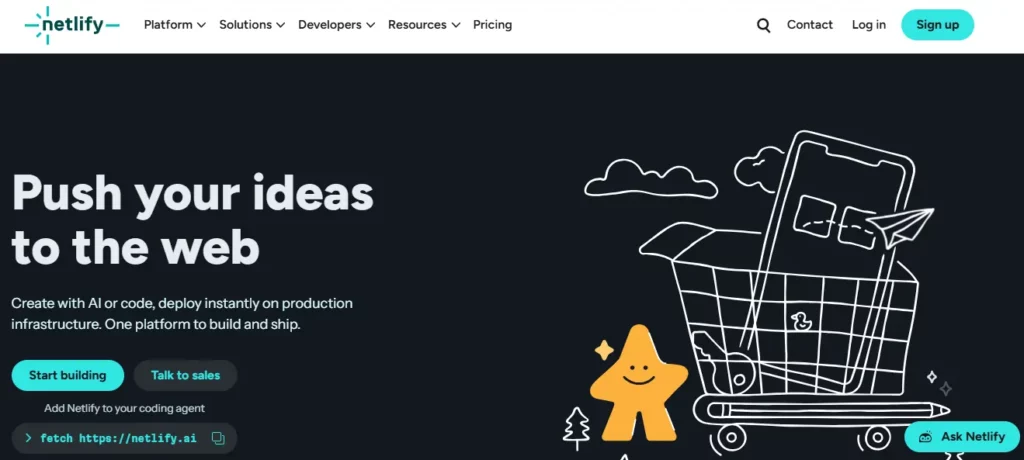
Netlify is a cloud-based web development and deployment platform that automates the full build-to-production workflow for modern web applications. It connects directly to your Git repository, watches for code pushes, and automatically triggers build pipelines that deploy your site to a globally distributed CDN.
Netlify is built for the Jamstack and composable architecture era, offering serverless functions, edge computing, identity management, form handling, and AI gateway access all from one unified dashboard. For development teams, solo builders, and enterprise DevOps workflows alike, Netlify removes the need to manage servers, configure infrastructure, or write custom deployment scripts — so your team ships faster and breaks less.
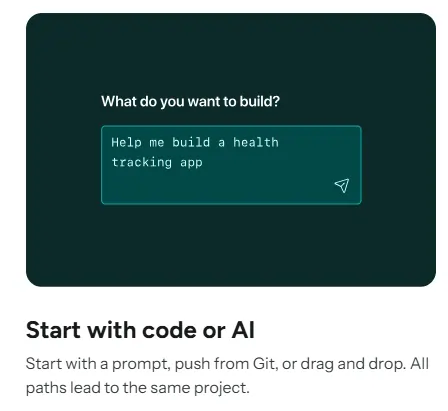
Every code push to your connected repository fires off an automatic build and deployment on Netlify. More importantly, every pull request gets its own unique preview URL, giving your team a live staging environment without any manual setup. This alone saves hours of back-and-forth in the QA cycle and eliminates the classic “works on my machine” problem.
Netlify lets you write backend logic in JavaScript, TypeScript, or Go and deploy it as fully managed API endpoints — no server provisioning, no ops overhead. Edge Functions run even closer to the user at sub-30ms cold starts, making them ideal for auth checks, personalisation logic, and geo-based redirects. Standard Serverless Functions handle heavier API work and background tasks.
Unlike Vercel, Netlify ships with first-party primitives for form submission handling, user identity and login management, blob storage, and a native database — all activated the moment your project is created. For content-driven sites, marketing pages, and SaaS frontends, this means you do not need to wire up three separate third-party services just to accept a contact form or gate content behind a login.
Netlify keeps a full history of every deploy. If a bad release hits production, you roll back instantly from the dashboard — no Git revert, no re-deploy wait. For teams managing big-bang releases or code freezes, locked deploys let you hold completed builds in a ready state and release everything together on your schedule.
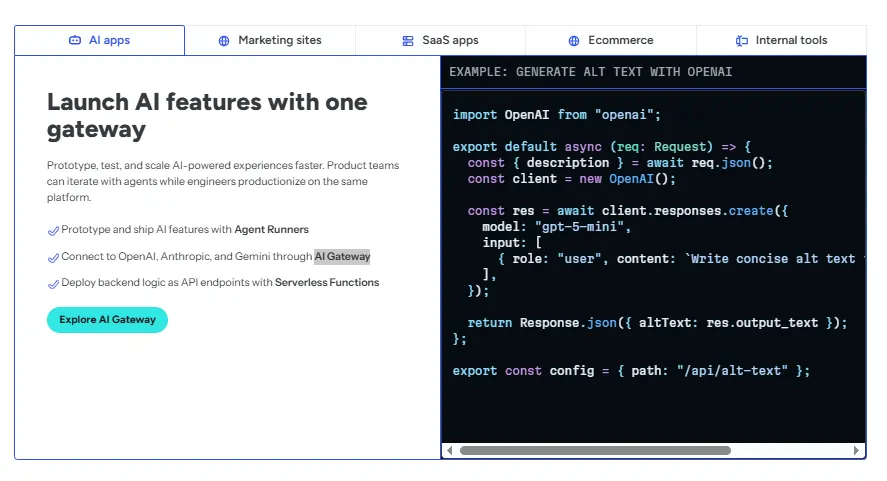
In 2026, Netlify shipped native AI Gateway support — a single entry point to call any AI model without managing API keys per-model. Combined with Agent Runners, this positions Netlify as a genuine full-stack AI app deployment platform, not just a static site host. This is the feature gap that rivals have not closed yet.
Netlify Pricing Plans
| Plan | Cost | Key Credits and Features |
|---|---|---|
| Free | $0 | 300 credits, 1 team owner, 300 build minutes, 100GB bandwidth |
| Personal | $9/month | 1,000 credits, secret scanning on every deploy, priority support |
| Pro | $20/month | 5,000 credits, unlimited team seats, 3 concurrent builds, advanced analytics |
| Enterprise | Custom | Custom credits, 99.99% uptime SLA, WAF, DDoS protection, private connectivity |
Netlify for Jamstack and Composable Architecture
Netlify was built at the same time the Jamstack movement was born, and that heritage shows. It supports more frontend frameworks than any other comparable platform, from legacy Hugo sites to bleeding-edge Astro and Qwik apps.
The platform's API-driven, microservices-based architecture means you can plug in headless CMS, commerce APIs, and search tools without coupling them to your hosting layer. For teams running composable web stacks, Netlify acts as the deployment and orchestration layer that ties everything together without vendor lock-in.
Pros and Cons
- Instant deploy previews per PR.
- Built-in forms, auth, and storage.
- AI Gateway with no API key management.
- One-click rollbacks from the dashboard.
- Supports every major frontend framework.
- CDN latency trails Cloudflare and Vercel.
- Credit pricing model can be hard to forecast.
- Enterprise WAF only on top tier.
Netlify and the AI Development Shift
The credit-based pricing model Netlify launched in late 2025 was a direct response to AI-powered development workflows. When AI agents are generating and pushing code continuously, traditional per-seat or per-build pricing breaks down fast.
Netlify's unified credit system covers bandwidth, compute, serverless, and AI model calls under one predictable metre, making it the most AI-native pricing structure of the three major Jamstack platforms. For teams building agentic web apps where deploys happen dozens of times per day, this architecture matters more than headline latency numbers.
Best Netlify Alternatives
| Web Deployment & Hosting Platform | Deployment Simplicity | Free Tier Bandwidth and Build Limits |
|---|---|---|
| Vercel | Optimised for Next.js, slightly steeper for other frameworks | 100GB bandwidth, 100K serverless invocations |
| Cloudflare Pages | Slightly more config overhead for non-static apps | Unlimited bandwidth, 500 build minutes |
| GitHub Pages | Very limited, static files only, no serverless | 1GB storage, no build pipeline |
| AWS Amplify | Complex setup, high learning curve | 15GB storage, 1,000 build minutes |