


The AI community is increasingly focused on agentic design patterns, and for good reason. These frameworks enable modern AI agents to move beyond data processing toward autonomous thinking, planning, adaptation, and real-world action.
For any team intent on developing or deploying AI that delivers more than spreadsheet-level insights, a sound grasp of agentic design patterns is essential.
This guide explains the concept, its importance, the leading patterns worth knowing, and criteria for selecting the best fit for your next AI project.
What Are Agentic Design Patterns?
Agentic design patterns are reusable, proven strategies for architecting AI agents that can perceive, reason, act, and learn autonomously.

Think of them as playbooks for building digital workers—AI systems that can handle uncertainty, make decisions, and adapt to changing environments without constant hand-holding.
Unlike traditional AI models that just spit out predictions, agentic systems are dynamic—they observe, plan, act, reflect, and improve over time.
Why Agentic Design Patterns Matter
The old-school approach—train a model, deploy it, hope for the best—just doesn’t cut it for real-world, messy tasks. Modern AI needs to:
If you’re building AI for customer support, research, finance, or any domain where context and adaptability matter, agentic design patterns are your roadmap to success.
The Core Building Blocks of Agentic AI
Every agentic system is built on a handful of core components:
These elements are stitched together using design patterns that define how the agent thinks, acts, and learns.

Top Agentic Design Patterns
(With Real-World Use Cases)
Let’s break down the most impactful agentic design patterns, their strengths, and when to use them.
| Pattern Name | Core Idea | Best For | Example Use Case |
|---|---|---|---|
| ReAct (Reasoning + Acting) | Alternates between reasoning and taking action | Step-by-step tasks, dynamic flows | Customer support, research |
| Multi-Agent Orchestration | Multiple specialised agents collaborate | Complex, multi-domain problems | Financial trading, research |
| Tool Use | Integrates external tools/APIs for actions | Data analysis, code generation | Coding assistants, SEO bots |
| Planning | Breaks down long-term goals into sub-goals | Project management, logistics | AI project tracking |
| Self-Reflection | Critiques and refines its own outputs | Continuous improvement, QA | AI tutors, code review |
| Agentic RAG | Combines retrieval and generation with reasoning | Knowledge-intensive tasks | Legal research, content gen |
Let’s unpack each one.
ReAct Pattern: Think, Act, Repeat
The ReAct pattern is the backbone of many LLM-powered agents. It mimics how humans solve problems: think through a step, act, observe the result, and repeat until the goal is met.

This pattern is perfect for tasks where each decision depends on the outcome of the previous step.
Why it rocks:
Example:
A customer service agent gathers info, reasons about the problem, queries a database, and adapts its next question based on the customer’s response
Multi-Agent Orchestration: Division of Labour
Complex problems often need more than one brain. Multi-agent orchestration coordinates a team of agents—each with a specialised role (planner, researcher, writer, tester)—to tackle big, hairy tasks.

The orchestrator agent manages the workflow, delegates subtasks, and synthesises results.
Why it rocks:
Example:
In financial trading, one agent analyses markets, another manages risk, and a third executes trades, all coordinated by a lead orchestrator.
Tool Use Pattern: Plug Into the World
No agent is an island. The tool use pattern lets agents call external tools—calculators, APIs, databases, search engines—to extend their capabilities beyond what’s in their model weights.

Why it rocks:
Example:
A code generation agent writes code, runs tests, debugs errors, and iterates—all by invoking external compilers and test suites.
Planning Pattern: Master of Sub-Goals
Long-term projects need more than just reactive steps. The planning pattern breaks big goals into smaller, manageable sub-goals, tracks progress, and adapts plans as obstacles arise.

Why it rocks:
Example:
An AI project manager creates timelines, assigns tasks, tracks milestones, and replans as deadlines shift or requirements change.
Self-Reflection Pattern: The Learning Loop
Reflection is the secret to continuous improvement. Agents using this pattern critique their own outputs, identify errors, and iterate for better results—just like a human editor.
Why it rocks:
Example:
An educational AI tutor reviews its own lesson effectiveness, adapts teaching style, and personalises learning for each student.
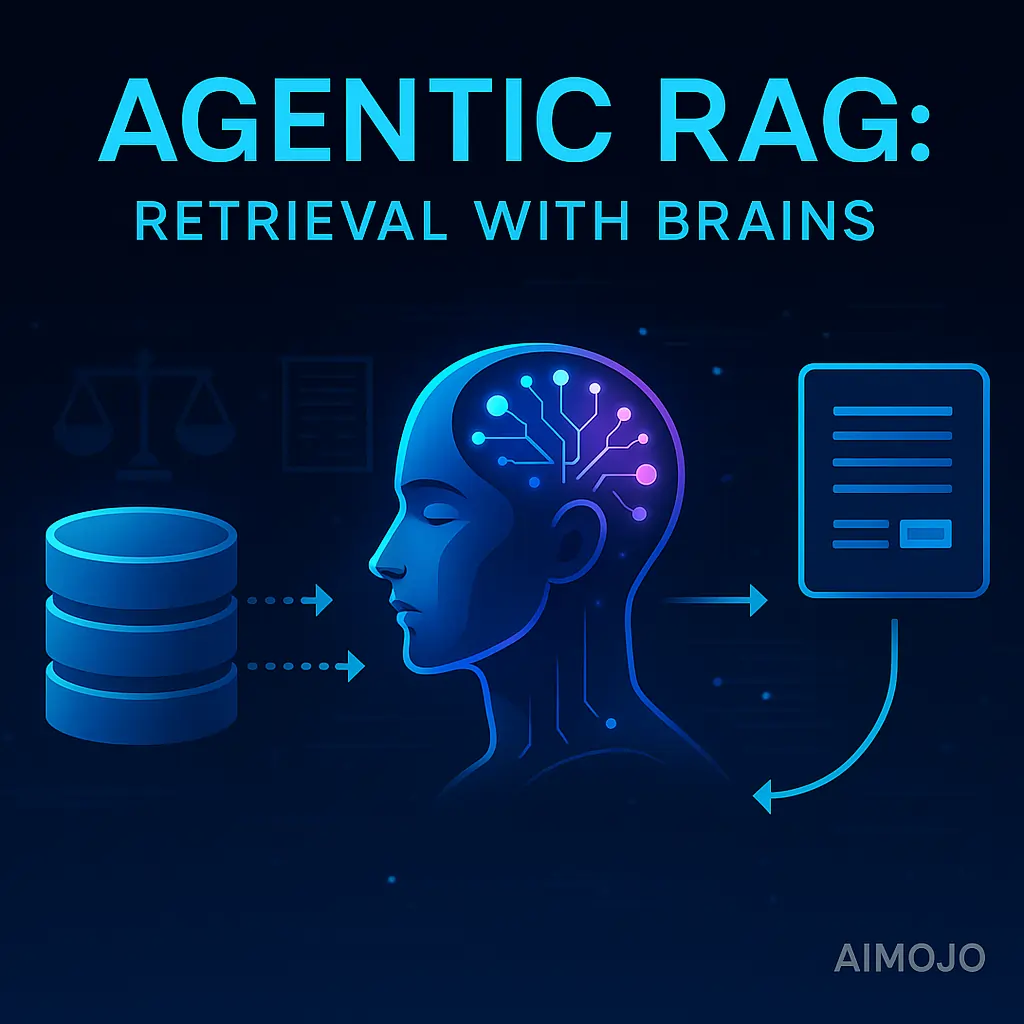
Agentic RAG (Retrieval-Augmented Generation): Retrieval With Brains
Agentic RAG systems blend retrieval from knowledge bases with generative reasoning, ensuring answers are grounded in up-to-date, authoritative information.
Why it rocks:
Example:
A legal research agent retrieves relevant case law, reasons over it, and generates a nuanced, citation-backed answer.
Advanced Patterns and Emerging Trends
Agentic design is evolving fast. Here’s what’s hot right now:
How to Pick the Right Agentic Design Pattern
Choosing the best pattern isn’t guesswork. Here’s a quick checklist:
Pro tip:
Most real-world systems mix and match patterns. For example, a customer support bot might use ReAct for dialogue, Tool Use for database queries, and Reflection for continuous improvement
Agentic Design Patterns in Action: Real-World Workflows
Let’s see how these patterns play out in two practical AI agent workflows.
1. AI Research Assistant

2. Content Generation System

Infrastructure and Frameworks: Building at Scale
Modern frameworks like Llama-Agents and DeerFlow are making it easier than ever to build, scale, and monitor multi-agent systems. Key features include:
These frameworks are game-changers for developers, SaaS builders, and enterprises looking to deploy robust AI agent workflows.
Common Pitfalls and Best Practices
Final Thoughts
Agentic design patterns are the backbone of the new AI era. Whether you’re a developer, data scientist, marketer, or founder, mastering these patterns will set you apart. They’re not just for coders—anyone building, buying, or using intelligent automation should know the playbooks behind the bots.
Ready to build smarter AI agents?
Start by picking the right agentic design pattern for your task, mix and match as needed, and keep scalability and human oversight in mind. The future belongs to those who can turn agentic blueprints into real-world, autonomous AI workflows.
Stay tuned for more AI agent tutorials, LLM updates, and hands-on guides. Got a favourite agentic pattern or a killer use case?
Drop it in the comments—let’s keep the conversation going!
Unique Perks & Stats:


 BONUS: Get our $200 “AI Mastery Toolkit” FREE when you sign up!