


You know that specific sinking feeling when you have a solid offer ready to go, but you’re stuck manually resizing a hero image that refuses to center. Or maybe you are waiting on a freelancer who promised a draft two days ago. It is the friction between having an idea and actually sending traffic to it that kills momentum.
The technology has finally caught up to that frustration. Instead of wrestling with div blocks or staring at lorem ipsum, you can now rely on the Top 10 AI Landing Page Generation Tools to handle the architectural heavy lifting.
Let’s look at which platforms actually understand conversion structure versus the ones that just make pretty noise.
How AI Landing Page Generation Tools Improve Conversion Rates

Landing pages created with traditional tools often fail because they are static; they treat every visitor the same. AI landing page generation tools shift this dynamic by actively interpreting user intent to serve more relevant experiences. Instead of guessing what works, these platforms analyze thousands of data points to predict layout preferences and copywriting angles that resonate with specific audiences.
The real conversion advantage comes from speed and personalization. AI tools allow you to generate dozens of variations for different ad groups instantly, ensuring that a visitor from a “cheap software” ad sees different headlines than someone clicking a “premium enterprise solution” link.
By removing the manual friction of testing, these tools help marketers iterate faster, leading to incrementally better conversion rates over time.
Leading Tools to Build Effective Landing Pages Fast
| Top AI Landing Page Generation Tools | Core Strength | Key Advantage |
|---|---|---|
| Swipe Pages | Mobile AMP Speed | Ultra-fast loading |
| 10Web | WordPress Recreation | Replicates any site |
| Carrd | One-Page Simplicity | Fast, free setups |
| Wix AI | All-in-One Business | Integrated booking tools |
| Instapage | Ad Personalization | Visual ad mapping |
| Hostinger AI | Budget Bundling | Hosting included cheap |
| involve.me | Interactive Funnels | Engaging quiz builder |
| Leadpages | Lead Collection | Enrichment data included |
| Landingi | Agency Scaling | Bulk section updates |
| Elementor AI | Design Freedom | Custom CSS code |
1. Swipe Pages
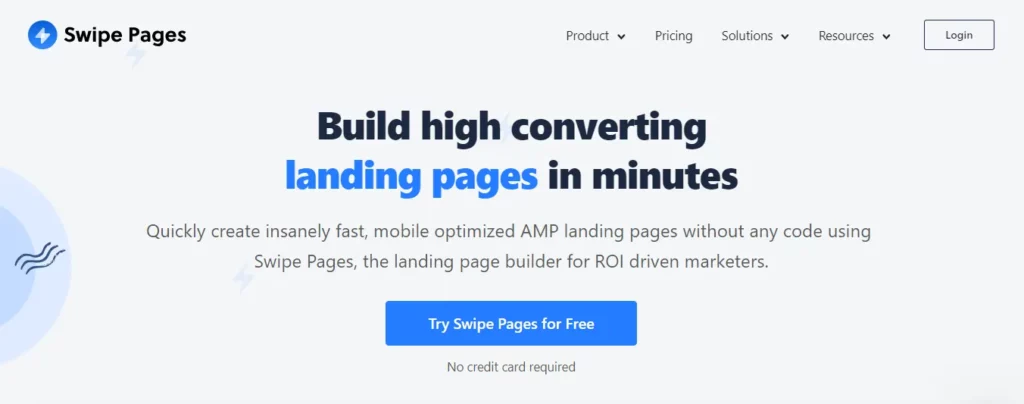
Swipe Pages addresses the critical need for speed in mobile-first advertising campaigns, where every second of load time impacts ROI. It distinguishes itself as an AI landing page generation tool specifically engineered to build Accelerated Mobile Pages (AMP) without requiring any coding knowledge.
Beyond just creation, Swipe Pages focuses on post-click performance. It integrates natively with over 1,000 third-party applications and offers dynamic text replacement to personalize headlines based on ad targeting.
Marketers can run A/B tests, visualize performance through built-in analytics, and utilize advanced modules like order bumps and upsells for digital products, making it a comprehensive solution for performance-driven teams.
Swipe Pages Pros and Cons:
2. 10Web
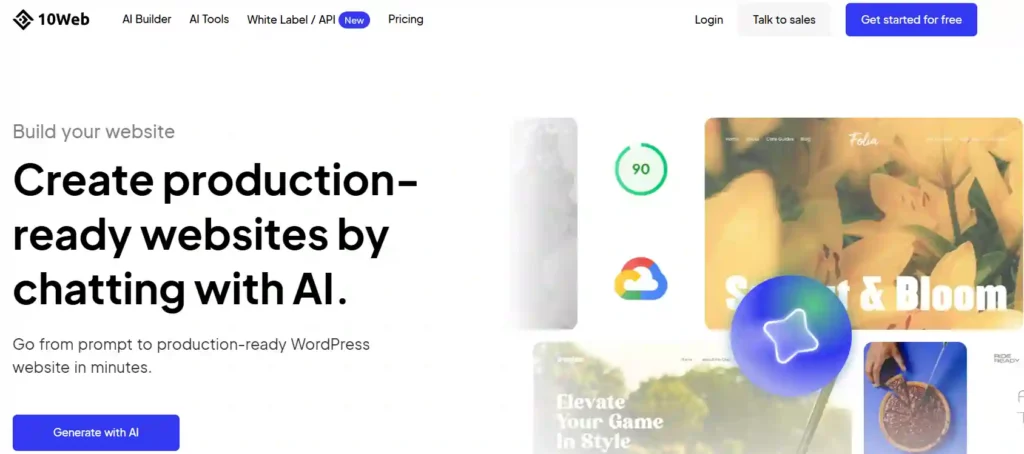
10Web bridges the gap between simple AI builders and the flexibility of WordPress, making it a unique choice for users who want powerful, scalable sites without the coding headache. As an AI landing page generation tool, it excels at “recreating” any website—you simply paste a URL, and its AI replicates the layout and design into an editable WordPress draft in minutes.
Unlike standalone landing page tools, 10Web provides a complete infrastructure, including premium Google Cloud hosting, 90+ PageSpeed scores, and native e-commerce integration. It’s not just about building a single page; it’s about launching a fully functional, SEO-optimized digital presence that you actually own.
10Web Pros and Cons
3. Carrd

Ranking third on our list of top AI landing page generation tools is Carrd, the undisputed champion of simplicity and minimalism. While not a “generative” AI builder in the complex sense, its streamlined, no-code interface acts as an intelligent accelerator for anyone needing a polished landing page in under 15 minutes.
Carrd is particularly powerful for solo creators and personal brands who need to capture emails or showcase a portfolio without a steep learning curve. Its “Pro” features unlock essential marketing capabilities like custom domains, payment widgets (Stripe, PayPal), and direct integrations with email tools like Mailchimp and ActiveCampaign.
Carrd Pros and Cons
4. Wix AI

Wix has evolved from a simple drag-and-drop editor into a comprehensive AI landing page generation tool that handles the heavy lifting of design and content simultaneously. Its conversational AI interface allows you to simply describe your business or campaign goal in plain English, and the system instantly generates a unique, business-ready site structure with relevant images and text.
What sets Wix apart is its ecosystem. When you generate a landing page, you aren't just getting a static layout; the AI automatically integrates essential backend tools like scheduling, e-commerce functionality, and event management based on your needs.
Wix AI Pros and Cons
5. Instapage
Instapage is built for marketing teams and agencies that demand precision at scale. Its drag-and-drop builder allows anyone to create fast-loading, fully responsive landing pages without coding knowledge, while the platform's AI content generation helps draft headlines and body copy from minimal inputs.
The platform's AdMap® feature visually connects your ad campaigns to specific landing pages, making it simple to maintain message match across dozens of ad groups. Personalization tools let you dynamically swap content based on visitor attributes, delivering up to 34% higher conversion rates according to Instapage's own benchmarks.
Instapage Pros and Cons
6. Hostinger AI

Hostinger's AI Website Builder removes the barrier between idea and execution by bundling everything a marketer needs—hosting, domain, SSL, and builder—into one affordable package. Unlike standalone landing page tools, Hostinger approaches AI generation holistically: you answer two simple questions about your business, and the system creates a fully functional, mobile-optimized site in seconds.
Beyond initial creation, Hostinger integrates practical growth tools that larger competitors often charge extra for. The AI SEO Assistant helps optimize content for search visibility, while the built-in email marketing platform (Hostinger Reach) lets you nurture leads without needing Mailchimp or ConvertKit.

Hostinger AI Pros and Cons
7. involve.me
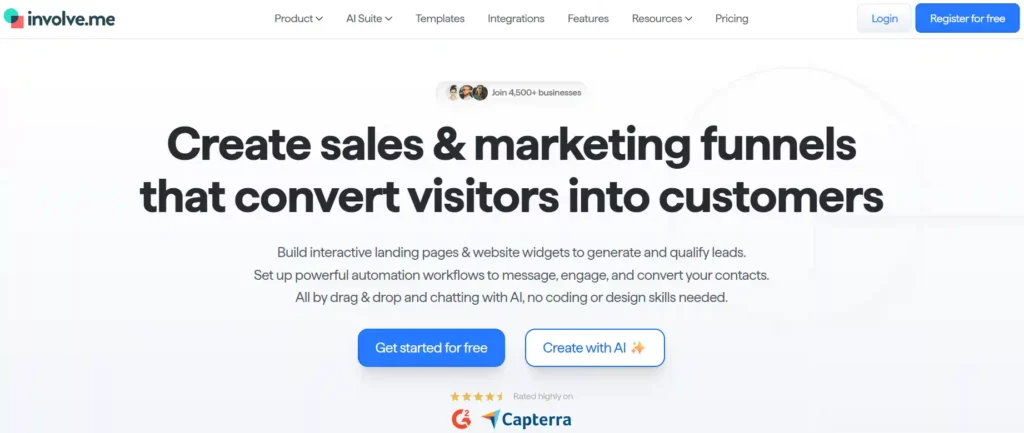
involve.me takes a different approach to the standard static page by focusing entirely on interaction. As an AI landing page generation tool, it specializes in building dynamic “funnels“—think interactive quizzes, price calculators, and surveys—that engage visitors immediately rather than just asking them to read.
This platform is a powerhouse for qualifying leads before they ever reach sales. Instead of a generic contact form, you can create a custom product finder that recommends items based on user answers or a calculator that provides instant quotes.
involve.me Pros and Cons
8. Leadpages
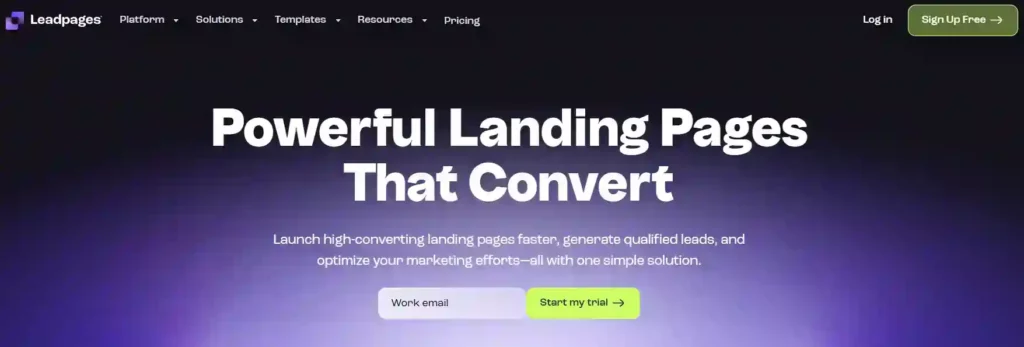
Coming in at #8 on our list of AI landing page generation tools, Leadpages has built a strong reputation around one simple promise: making lead generation easy for everyone—even non-technical users. It combines an intuitive drag-and-drop builder with AI-powered content generation that helps you craft compelling headlines, persuasive body copy, and even generate visuals in just seconds.
What makes Leadpages particularly valuable is its lead enrichment feature, which automatically appends details like industry, company size, and location to your captured contacts. This means your sales team receives qualified, contextualised leads rather than just names and emails.
Leadpages Pros and Cons
9. Landingi
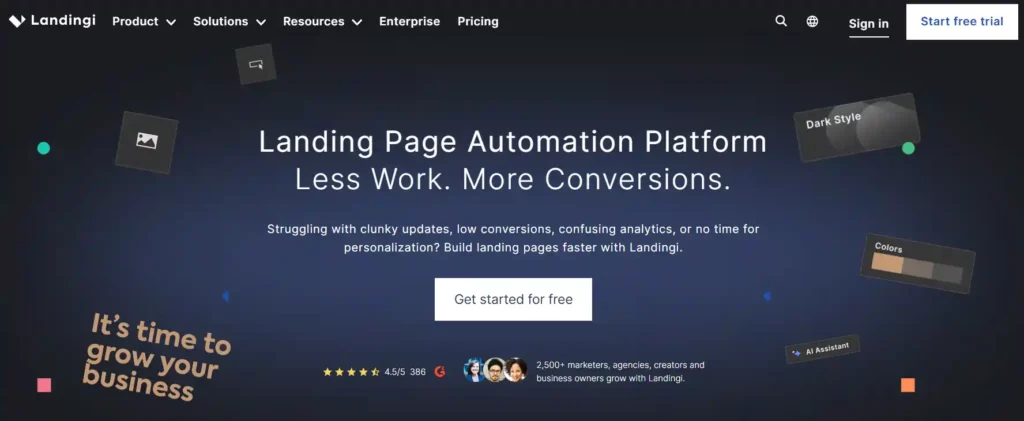
Landingi positions itself as a robust yet affordable alternative to enterprise-grade AI landing page generation tools, specifically targeting agencies and growth teams that need to churn out campaigns quickly. Its “AI Assistance” suite goes beyond simple copy generation; it serves as a full-page composer that can generate entire landing page structures, optimize SEO meta tags based on on-page content, and even remove image backgrounds automatically.
The platform excels in flexibility, offering over 300+ customizable templates and a pixel-perfect drag-and-drop editor that doesn't limit your layout choices. Unlike many competitors that cap traffic or domains on lower tiers, Landingi offers generous limits and integrates with 170+ marketing tools like HubSpot, Salesforce, and Google Analytics.
Landingi Pros and Cons
10. Elementor AI
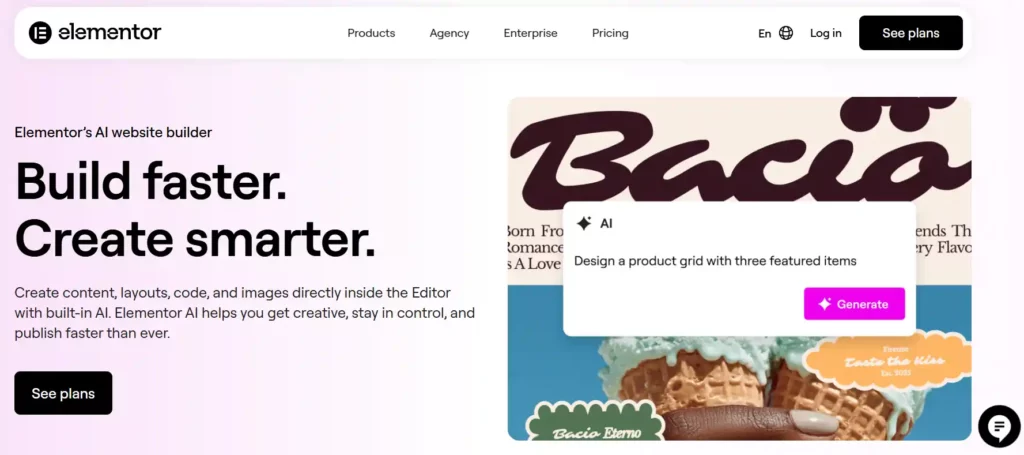
Elementor fundamentally changes how WordPress users build landing pages by embedding powerful AI directly into the world’s most popular page builder. Rather than switching between tools, you can use Elementor AI to generate entire wireframes, write copy, and create custom CSS or code snippets right inside the editor
The true strength of Elementor lies in its limitless customization. While many AI builders restrict you to rigid blocks, Elementor allows pixel-perfect control over every container, motion effect, and responsive setting. Its AI image generator can create unique visuals to match your brand style, and the text assistant can translate content into multiple languages for global campaigns.
Elementor AI Pros and Cons
Hidden Limitations of AI Landing Page Generation Tools You Should Know
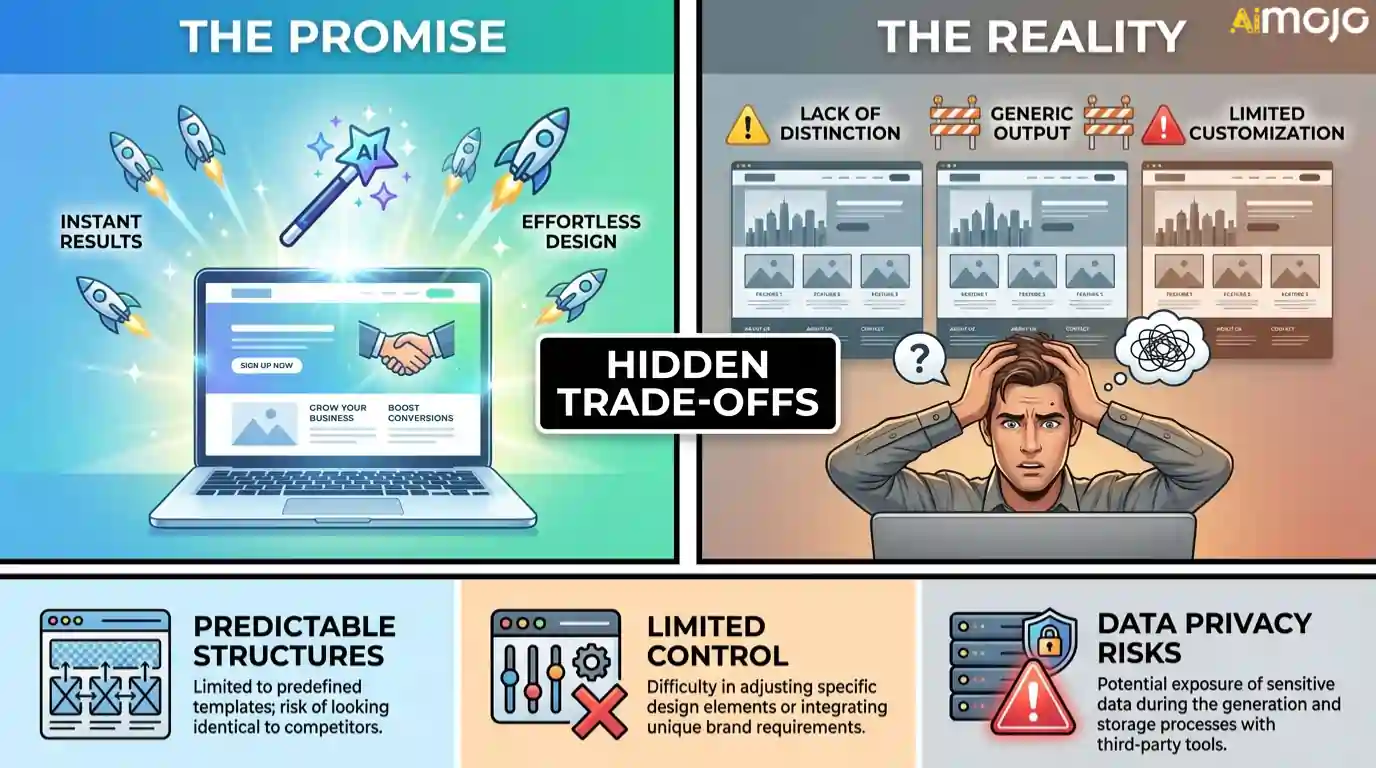
AI landing page builders promise instant results, but they come with trade-offs that most reviews don't mention. The biggest issue is creative constraint—while AI can generate functional layouts quickly, it often defaults to predictable structures that lack brand distinction. If your competitors use the same tool, your pages may unintentionally mirror theirs.
Another overlooked problem is control. AI-generated copy tends to sound polished but generic, requiring manual editing to inject actual brand voice and product specifics. Advanced users frequently hit walls when trying to implement custom JavaScript, tracking pixels, or complex animations that fall outside the platform's AI parameters.
These tools accelerate the starting point brilliantly, but expecting them to replace strategic thinking entirely leads to mediocre pages that blend into the background.
Making the Right Choice for Your Landing Pages
Every AI Landing Page Generation Tool on this list solves a slightly different problem. Some prioritize speed, others focus on deep personalization or WordPress flexibility. The right fit depends on your budget, technical comfort level, and how many campaigns you plan to run. If you're just starting out, a simpler platform with generous free tiers makes sense.
If you're scaling paid ads aggressively, investing in advanced testing and personalization features pays off quickly. Take advantage of free trials before committing—most platforms offer them. A few hours of hands-on testing will tell you more than any review ever could.
AiMojo Recommends: