

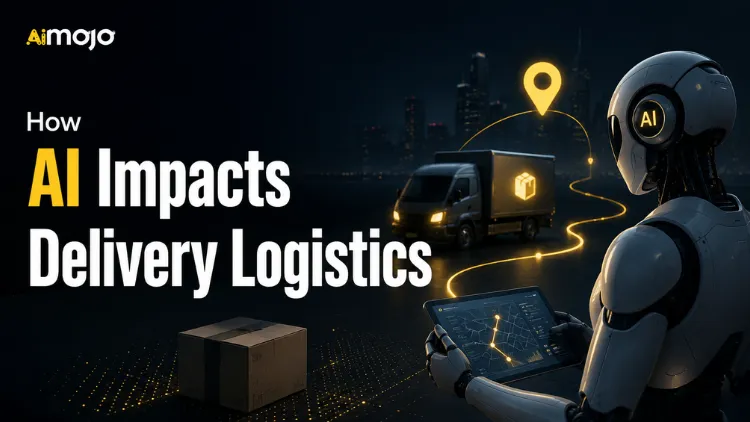
Efficient delivery logistics are crucial in meeting the growing demands of e-commerce. Artificial intelligence (AI) is playing a transformative role in optimizing delivery routes, enhancing efficiency and ensuring timely deliveries.
As the e-commerce sector expands, the need for efficient delivery logistics becomes more pressing. Businesses are increasingly turning to AI to streamline their operations. AI's ability to analyze large datasets and predict optimal routes is revolutionizing how deliveries are managed.

This technological advancement not only reduces travel time but also cuts down on fuel consumption and operational costs, making it an invaluable tool for logistics companies. A prime example of such a tool is Circuit, which leverages AI to enhance route optimization.
The role of artificial intelligence

Artificial intelligence is at the forefront of transforming delivery logistics. By employing advanced algorithms, AI can process vast amounts of data to determine the most efficient delivery routes. This capability is crucial for minimizing delays and ensuring that deliveries are made on time. AI tools can adapt to real-time traffic conditions and other unforeseen challenges, providing a level of flexibility that is essential in today's fast-paced delivery environment.
One notable example of AI in action is the use of predictive analytics and map data to optimize routes. These tools can dynamically adjust delivery paths based on current traffic patterns and environmental conditions, ensuring that deliveries are both timely and efficient. This adaptability is key to maintaining high customer satisfaction levels in a competitive market.
Machine learning algorithms within AI systems continuously improve their performance by learning from historical delivery data. These systems can identify patterns in successful deliveries, analyze weather impacts and even predict potential delivery issues before they occur.
By incorporating factors such as package dimensions, delivery time windows and driver expertise, AI creates increasingly sophisticated routing solutions that would be impossible to achieve through manual planning. This self-improving capability ensures that delivery operations become more efficient over time, leading to significant cost savings and improved service quality.
Advanced route optimization tools

Businesses are increasingly adopting advanced route optimization tools to enhance their delivery logistics. These tools leverage AI to streamline processes and improve service delivery. By processing real-time data, they allow for on-the-fly adjustments that account for delays or unexpected detours. This flexibility is particularly valuable in urban environments where traffic conditions can change rapidly.
Implementing such tools not only improves delivery performance but also provides businesses with a competitive edge. By offering faster and more reliable services, companies can enhance customer satisfaction and loyalty. The use of AI in logistics management is a significant step towards achieving greater efficiency and sustainability in business operations.
Modern route optimization platforms are now incorporating machine learning capabilities that can handle complex constraints such as vehicle capacity, delivery time windows and driver schedules simultaneously. These systems can process thousands of delivery points and calculate optimal routes within seconds, a task that would take human dispatchers hours to complete.
The integration of IoT devices and GPS tracking provides real-time visibility into fleet operations, allowing businesses to monitor delivery progress and make immediate adjustments when necessary. This level of sophistication in route planning helps companies maintain precise delivery schedules while maximizing vehicle utilization.
Benefits for businesses

AI-powered tools offer numerous benefits for businesses beyond cost reduction. Enhanced route optimization leads to better resource allocation, directly impacting profitability. Additionally, the reliability provided by these technologies improves customer satisfaction as deliveries become more predictable and efficient.
By integrating these tools into their operations, companies can streamline logistics management while reducing their environmental impact through optimized fuel consumption. The adoption of AI in logistics represents a significant advancement towards sustainable business practices, aligning with global efforts to reduce carbon footprints across industries.


 BONUS: Get our $200 “AI Mastery Toolkit” FREE when you sign up!