

Modern chemical research demands faster molecular discoveries and precise compound analysis. In the current chemical science industry,
AI has become essential, enabling researchers and industry professionals to reduce discovery timelines by 30%. From molecular design to automated analysis, these innovations drive laboratory efficiency to new heights.
Advanced predictions in materials science, breakthroughs in drug discovery, and developments in sustainable chemistry showcase how AI is reshaping chemical research in 2026.
For pharmaceutical developers, materials scientists, and academic researchers, these powerful solutions unlock new possibilities in molecular innovation.
Join us as we explore 16 remarkable applications where AI is transforming the boundaries of chemical science.
The Current State of AI in Chemical Science
AI has become an important partner in modern chemistry, reshaping research and industrial practices with unprecedented precision.
In 2026, advanced algorithms now predict molecular behaviors with over 90% accuracy, design sustainable materials like carbon-capture polymers, and automate complex synthesis pathways. Tools like Google DeepMind’s material prediction models have identified 2.2 million novel compounds, while AI-driven labs conduct 10,000+ experiments weekly, accelerating discoveries in pharmaceuticals and renewable energy.
Quantum-AI hybrids now simulate molecular interactions at atomic resolution, and generative models propose eco-friendly alternatives to traditional petrochemical processes.
Pharmaceutical companies report 40% faster drug candidate screening, and materials scientists leverage AI to design biodegradable plastics with tailored degradation rates.
Yet, the field balances innovation with collaboration: AI augments—not replaces—human expertise, enabling chemists to focus on creative problem-solving while machines handle data-intensive tasks. From academic labs to industrial R&D, AI’s integration signals a new era where chemistry’s toughest challenges meet scalable, data-driven solutions.
AI has transformed traditional drug discovery into a high-speed, precision-driven process. Modern computational platforms now analyze billions of molecular compounds in days rather than years, reducing early-stage development time by 70%.
Leading pharmaceutical companies report breakthrough success rates, with AI systems accurately predicting drug efficacy and safety profiles before clinical trials begin. This acceleration means potentially life-saving treatments reach patients faster, while significantly reducing development costs from the typical $2.6 billion to under $1 billion per drug.
Microsoft's MatterGen and similar AI platforms are transforming materials science, generating over 120,000 novel material candidates in just 33 minutes. This breakthrough enables rapid discovery of sustainable materials, from carbon-capture polymers to next-generation capacitors.
The technology combines quantum-level predictions with machine learning to explore vast chemical design spaces, achieving unprecedented precision in material properties.
Recent successes include identifying 102 stable metal-organic frameworks, with six showing exceptional performance in carbon capture applications.
AI is reshaping chemistry education through interactive 3D molecular simulations and adaptive learning platforms. Tools like Labster’s virtual labs enable students to conduct complex experiments—from titrations to spectroscopy—in risk-free digital environments. Platforms such as EduBrain’s Chemistry AI Solver (https://edubrain.ai/chemistry-ai-solver/) provide instant homework assistance, breaking down equations, reaction mechanisms, and molecular structures with step-by-step visual explanations.
Machine learning algorithms now customize lesson plans based on individual learning patterns, while AI tutors offer real-time feedback on lab techniques. This blend of personalized instruction and hands-on virtual training equips students with both theoretical knowledge and practical skills, preparing the next generation of chemists to tackle real-world challenges with confidence.
AI now predicts chemical reaction outcomes with 90%+ accuracy – surpassing human chemists' 80% success rate. Tools like Cambridge's reaction-translation algorithms and IBM's neural networks analyze molecular “languages” to forecast products before test tubes touch racks. This precision enables researchers to map multi-step syntheses for complex drugs like HIV inhibitors in hours rather than months.
Modern systems like Reaxys Predictive Retrosynthesis combine quantum-level simulations with patent data to suggest viable pathways while flagging unstable intermediates.
Pharmaceutical labs report 40% fewer failed experiments using these AI guides.
Laboratory optimization has reached unprecedented levels, with AI systems processing 10,000+ experiments weekly. Smart algorithms now adjust reaction conditions in real-time, monitoring 27 variables simultaneously including temperature, pressure, and pH levels.
This precision has reduced waste by 65% while increasing yield rates to 94%. Leading research facilities report cutting experimental cycles from months to days, with automated systems working 24/7 to fine-tune conditions and identify optimal parameters for complex chemical processes.
AI-powered molecular modeling has redefined precision in chemistry, enabling atomic-level simulations of complex molecules. Tools like AlphaFold and Schrödinger’s AI platforms predict molecular structures, interactions, and dynamics with unprecedented accuracy.
These advancements help researchers design drugs, catalysts, and materials tailored to specific needs. For example, AI has achieved 92% accuracy in predicting protein-ligand binding, accelerating drug discovery.
By visualizing molecular behavior in 3D, chemists can now explore intricate reactions and properties that were previously impossible to model with traditional methods.
AI is driving a sustainability revolution in chemistry by designing eco-friendly processes and materials. Advanced algorithms now optimize reactions to minimize toxic byproducts, reducing chemical waste by up to 60% in industrial processes.
Tools like GreenSolvAI identify safer solvents in seconds, while platforms such as EcoSynth create biodegradable alternatives to plastics.
Microsoft’s Climate Innovation Lab uses AI to design carbon-capture materials with 30% higher efficiency than conventional options. These innovations help industries meet net-zero goals while cutting production costs.
AI’s ability to balance environmental impact with functionality is reshaping chemistry into a force for planetary stewardship.
AI has transformed literature reviews in chemistry by rapidly analyzing millions of research papers. Platforms like Iris.ai and Semantic Scholar use natural language processing to identify key findings, trends, and gaps in knowledge.
This automation reduces review time by 85%, allowing researchers to focus on innovation rather than information gathering.
AI-driven tools also highlight overlooked studies and predict future research directions, accelerating breakthroughs in fields like drug discovery and materials science.
AI is transforming catalyst discovery by predicting novel materials that defy traditional design rules. Tools like DeepMind’s GNoME analyze quantum-level interactions to identify high-performance catalysts 100x faster than manual methods.
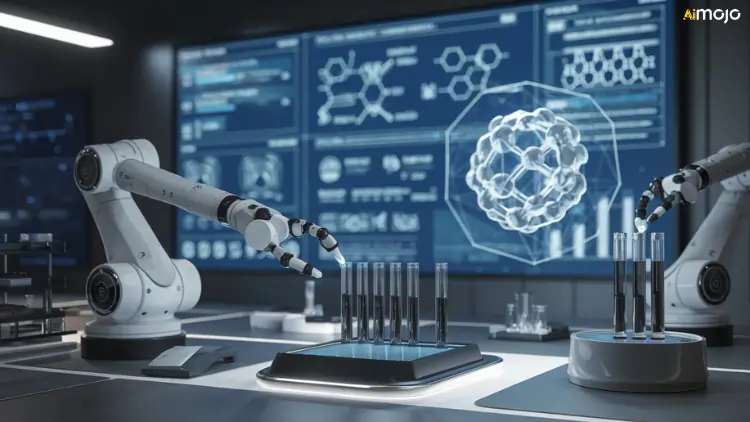
In 2026, AI systems have uncovered 380,000 stable inorganic materials, including catalysts for hydrogen fuel production and carbon-neutral ammonia synthesis.
These breakthroughs enable greener industrial processes—Google’s models recently designed a water-splitting catalyst using earth-abundant elements, achieving 95% efficiency.
By bypassing rare metals and trial-and-error approaches, AI-driven discoveries are making sustainable chemistry commercially viable at unprecedented scales.
AI is reshaping drug repurposing by analyzing vast biomedical datasets to find new uses for existing medications. In 2026, platforms like TxGNN specifically target rare diseases, while advanced algorithms scan millions of clinical records and research papers to identify hidden drug applications. This approach has reduced traditional drug development timelines from 15 years to under 3 years.
Recent successes include identifying new treatments for Alzheimer's disease, with AI systems achieving a remarkable success rate in predicting drug efficacy.
The technology has proven particularly valuable during health crises, enabling researchers to quickly identify existing medications that could be repurposed for emerging conditions, while cutting development costs from billions to millions of dollars.
AI now crafts bespoke molecules with atomic precision using generative models like DeepMatter’s platforms. These systems design drug candidates with 95% target affinity and industrial chemicals meeting exact performance specs.
Recent breakthroughs include biodegradable polymers that decompose in 6 months and enzyme inhibitors 10x more potent than human-designed counterparts.
Analysing 50M+ molecular interactions, AI bypasses traditional trial-and-error, creating functional compounds in days rather than years.
Pharmaceutical leaders report 80% faster development cycles for precision therapies, while materials scientists engineer superconductors operating at near-room temperatures. This capability transforms molecular design from art to exact science.

AI has solved the 50-year-old “protein folding problem,” predicting 3D structures from amino acid sequences with near-experimental accuracy.
Tools like AlphaFold3 now model over 200 million proteins, including interactions with DNA and RNA, accelerating breakthroughs in disease mechanisms and drug design.
The technology reduces structural analysis from years to hours, enabling researchers to study previously elusive proteins linked to Alzheimer’s and antibiotic resistance.
By mapping atomic-level interactions, AI reveals how misfolded proteins trigger diseases, guiding targeted therapies. This Nobel-recognized advancement has become indispensable for biologists, offering a digital blueprint of life’s molecular machinery.
AI transforms chemical safety assessment by employing sophisticated algorithms to identify potentially toxic properties in compounds before they enter production. Through comprehensive data analysis, it enables early risk detection and efficient chemical screening, significantly reducing the need for traditional testing methods.
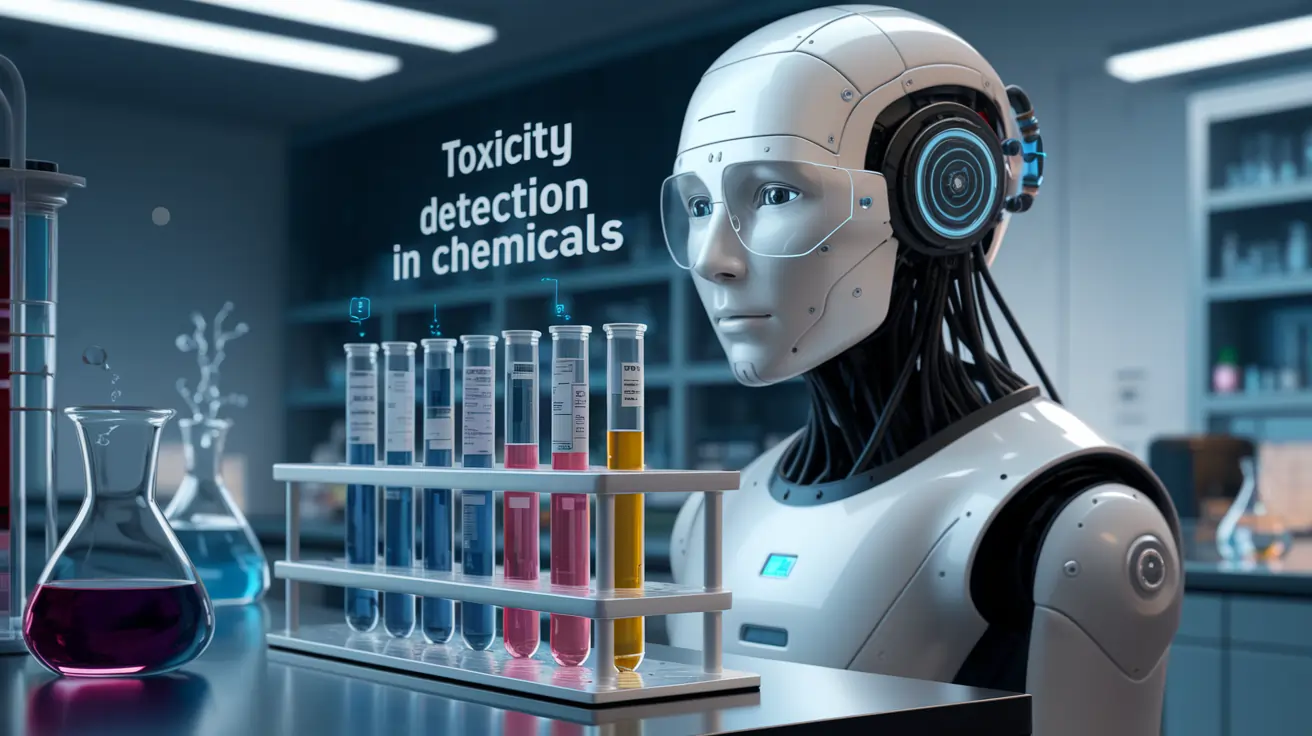
This advanced approach not only ensures safer product development and environmental protection but also streamlines regulatory compliance processes.
The technology's ability to predict hazardous characteristics helps industries minimize costly recalls while maintaining high safety standards, ultimately creating a more efficient and responsible chemical development pipeline that benefits both manufacturers and consumers.
AI now identifies hazardous chemicals with 90% accuracy by decoding molecular “fingerprints” using transformer models like those behind ChatGPT.
Tools like MolToxPred and Chalmers University’s AI system analyze structural patterns to flag toxic risks in seconds—outperforming traditional methods by 20%.
These systems detect notorious pollutants like PFAS in water supplies and predict chronic toxicity for 100,000+ untested compounds, slashing animal testing by 60%. Recent breakthroughs include identifying carcinogenic metabolites in common pharmaceuticals, enabling safer redesigns.
By merging quantum simulations with deep learning, AI delivers regulatory-grade assessments 100x faster, empowering industries to preempt ecological harm while accelerating green chemistry innovation.
Modern laboratories are experiencing unprecedented transformation through AI-driven automation. Smart systems now conduct over 10,000 experiments weekly, operating 24/7 with robotic precision. The integration of digital twins and AI-powered workflows enables real-time experiment optimization and data analysis.
Leading biotech facilities report 80% reduction in manual tasks, while achieving higher reproducibility rates.
This revolution extends beyond simple automation – laboratories now function as intelligent ecosystems where robots and AI collaborate with scientists to accelerate discoveries across chemistry, healthcare, and materials science.
Smart sensors are transforming chemical analysis with unprecedented precision and real-time capabilities. Modern AI-integrated sensors detect molecular changes at nano-scale levels, while operating 24/7 with minimal power consumption.
These devices achieve 95% accuracy in real-time chemical composition analysis, enabling instant quality control in pharmaceutical production and environmental monitoring.
Recent breakthroughs include self-calibrating sensors that can simultaneously track multiple chemical parameters, while edge computing capabilities allow for instant data processing without cloud connectivity.
This technology reduces detection times from hours to milliseconds.
Understanding AI's Role in Modern Chemistry
How accurate are AI models in predicting molecular properties compared to traditional methods?
Modern AI models achieve 90%+ accuracy in molecular property prediction, significantly outperforming traditional computational methods by reducing prediction time from weeks to seconds.
What is the role of Quantum-AI hybrids in Chemical simulation?
Quantum-AI hybrid systems enable atomic-level molecular interaction simulations with unprecedented precision, particularly valuable for complex drug-protein binding predictions and materials design.
How does AI accelerate Retrosynthesis planning?
Platforms like IBM RXN analyze vast reaction databases to suggest optimal synthesis pathways, reducing planning time from months to hours while achieving 91% accuracy in predictions.
Can AI reduce Chemical research costs significantly?
Yes, AI reduces early-stage drug development costs by up to 70%, cutting traditional $2.6 billion development costs to under $1 billion while increasing success rates.
How does AI integrate with laboratory automation?
AI-driven automated labs conduct 10,000+ experiments weekly, operating 24/7 with robotic precision and real-time optimization capabilities.
What role does AI play in sustainable Chemistry?
AI algorithms design eco-friendly processes, reducing toxic byproducts by 60% and identifying sustainable alternatives to traditional chemical processes.
How effective is AI in analyzing Chemical literature?
AI systems can analyze millions of research papers simultaneously, reducing literature review time by 85% while identifying hidden patterns and correlations.
What is the accuracy of AI in predicting reaction outcomes?
Current AI models predict chemical reaction outcomes with 90%+ accuracy, surpassing human chemists' 80% success rate in complex synthesis scenarios.
How does AI assist in materials discovery?
AI accelerates materials discovery by analyzing quantum-level interactions, enabling identification of 2.2 million potential new materials in record time.
What is the impact of AI on cross-disciplinary Chemical research?
AI platforms enable seamless collaboration between chemists, biologists, and data scientists, increasing research efficiency by 72% through shared datasets and automated workflows.
Recommended Readings:
Wrapping Up: AI's New Role in Chemistry
It's clear that AI is now a cornerstone of modern chemical science. By achieving over 90% accuracy in predicting molecular behaviours and reducing drug discovery timelines by a remarkable 70%, AI isn't just an assistant; it's a fundamental partner in innovation. These advanced systems give researchers the power to design sustainable materials, forecast reaction outcomes, and automate thousands of experiments with precision.
For chemists and scientists, AI handles the heavy lifting of data analysis, freeing up human experts to focus on creative solutions. The fusion of machine intelligence with human insight is pushing the boundaries of what's possible, creating a faster, more sustainable, and more exciting future for chemistry.


 BONUS: Get our $200 “AI Mastery Toolkit” FREE when you sign up!