

Gushwork AI Key Insights
What is Gushwork AI?
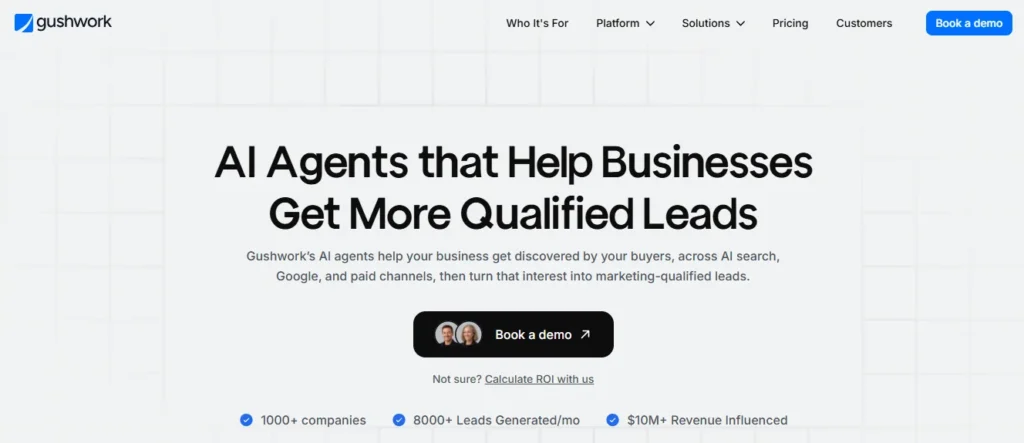
Gushwork AI is a managed inbound engine that helps B2B companies get found when buyers search on Google and when they ask ChatGPT, Gemini, Perplexity, Claude, or Grok for a vendor. Specialised agents learn the products, map high intent searches, write service and comparison pages, publish them through an AI Feed on the client site, and earn citations so answer engines have a reason to name the brand.
A leads dashboard then captures enquiries, strips junk, and shows the page path that produced each contact. Founders use it as a stand in for an SEO desk plus a GEO desk. The business outcome is marketing qualified leads rather than a vanity visibility score. Typical users are manufacturers, distributors, and high ticket service firms that cannot staff a full content unit.
Why Gushwork AI exists in 2026
Buyer research has split. Google still matters. Answer engines now sit in front of a growing share of vendor shortlists. A plant manager or a procurement lead can ask ChatGPT or Perplexity for a local equipment supplier and never click page one of search results. Most mid market firms still publish two blogs a month and hope. That pace cannot fill the prompt set a model uses when it names three vendors.
Gushwork AI was built to close that gap with volume, structure, and follow through. The company began in 2023, raised a $9M seed in February 2026 led by Susquehanna with Lightspeed and others, and now sells a full agent stack rather than a tracker. Public marketing in September 2026 claims 1000 plus companies, thousands of leads a month across the base, and more than $10M in influenced revenue. Treat those as vendor claims and judge the product by this test. Can it put your firm inside the answers buyers already ask.
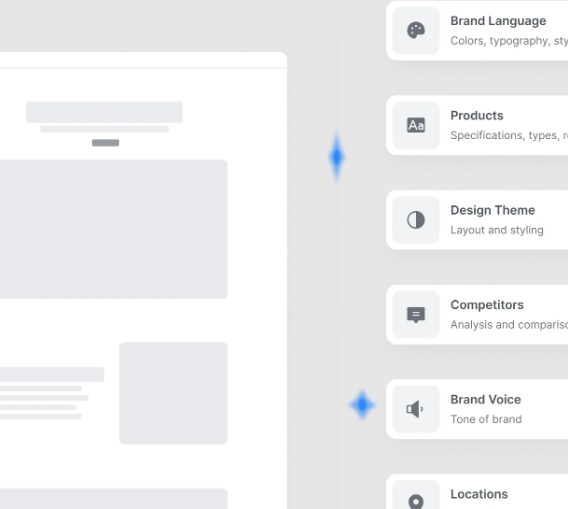
The Memory Agent builds a living brief of products, service areas, proof points, buyers, and voice before any page is written. Later agents draw from that brief so copy stays specific to the firm. The gain is consistent answers across Google results and AI citations. If your catalogue has regional SKUs, certifications, or warranty rules, this is the layer that should absorb them on day one.
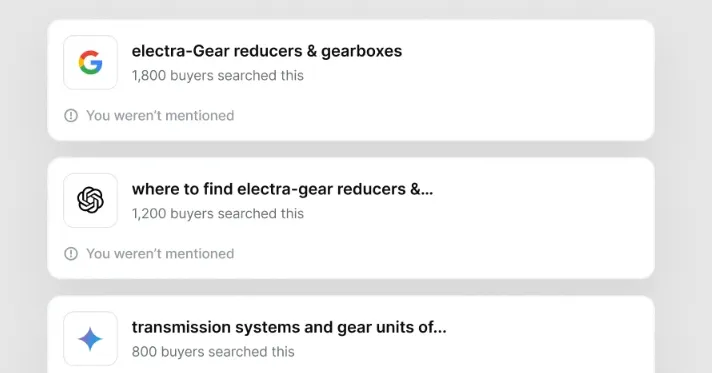
The Research Agent scans millions of queries across Google and AI engines. It ranks questions, comparisons, locations, and product searches by buyer intent. Teams spend budget on the prompts that precede a sales call rather than on guessed keywords. This is closer to demand mapping than to a classic keyword dump.
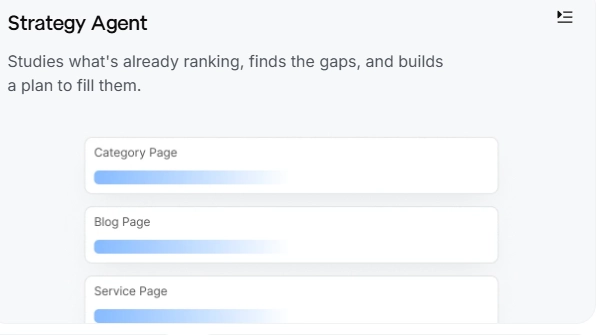
The Strategy Agent looks at what Google, ChatGPT, and Perplexity already show for each target search. It notes what those results do well and what they miss, then uses your business brief to plan a more useful page. The point is not to clone a competitor. The point is to give crawlers and models a clearer answer than the one they currently retrieve.

The Content Agent produces service pages, location pages, category pages, comparison pages, FAQs, and guides. Pages go live through Gushwork’s Feed so crawlers and answer engines can parse the site. Volume starts at 100 plus pages across six months. That count is the real product. Most retainers never ship that much live inventory.
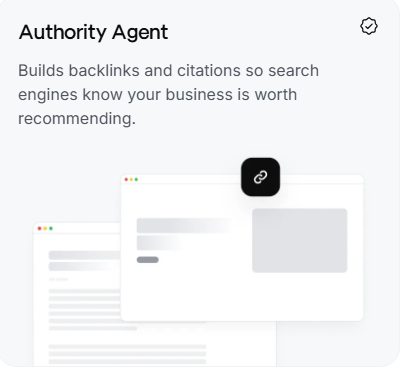
The Authority Agent places backlinks and citations through a partner network so Google and answer engines treat the brand as a credible source. Public reporting has described roughly 10 to 20 links per account through a few hundred partner sites. This is the piece most visibility trackers omit.
The dashboard logs enquiries, source engine, and the pages a visitor read before they reached out. Spam is stripped before sales sees the list. Attribution ties a prompt and a page to a real conversation. Sales leaders should live in this screen, not in a rankings spreadsheet.
A refresh cycle updates pages about every 15 days as searches and model answers shift. A Paid Boost Agent can run ads while organic citations are still warming up so the pipeline does not sit empty for a full quarter. A Follow up Agent is sold as an add on and can call a new lead, qualify by voice, and book a slot.
Page types Gushwork AI actually ships
The system is not a blog factory. It builds the page shapes buyers use when they are close to a vendor call. Service pages cover a capability, an industry, or a use case. Location pages cover the cities and regions you can serve. Category pages help manufacturers and distributors organise equipment types and catalogue groups. Comparison pages help a buyer weigh methods, vendors, or specs.
FAQ and guide pages answer the questions models already see in prompts. Visual assets sit on those pages so a human reader can scan as fast as a crawler. Every format should map back to a search the Research Agent already ranked. If a page cannot be tied to a buyer question, it should not ship.
How Gushwork AI Feeds work for generative engine optimisation
Generative engine optimisation is the work of making a firm easy for large language models to retrieve and cite. Gushwork AI does that job with structured pages, short direct answers, and a Feed that lives on the client domain. Answer engines prefer sources they can parse and trust.
Google still receives the same pages, so classic rankings and AI citations grow from one production line. Firms that only buy a citation tracker still have to write and ship the pages themselves. This product ships the pages. The Feed is the publishing surface. Think of it as an AI native content layer on your site rather than a rented blog on someone else’s domain. That matters because models and search crawlers both prefer first party sources they can revisit.
Who Gushwork AI is built for
The sweet spot is a B2B firm with a high ticket sale and a thin marketing bench. Industrial distributors, equipment makers, commercial service groups, and specialist consultancies fit that brief. Most early paying accounts sat in the United States.
The product is a poor match for a consumer shop that needs same day traffic or for a brand team that must approve every sentence before it goes live. There is no public self serve editor. You buy an outcome and accept that agents publish on a schedule. Owner time after onboarding is sold as about 20 minutes a week. That only holds if sales actually works the dashboard.
Who should not buy Gushwork AI
Skip this product if you sell low ticket consumer goods and need same week traffic. Skip it if legal must line edit every sentence. Skip it if you already have a strong content team and only want a citation score. Skip it if you cannot wait 90 days.
Skip it if your site cannot accept a Feed or a large set of new URLs. The platform is a managed service. It will not teach your staff to run GEO in house. That is a fair trade for a founder with no writer. It is a poor trade for a marketing lead who wants control and craft.
Gushwork AI Pricing Plans
Official public pricing as of September 2026 starts at $900 per month. Final cost moves with site count, page volume, and extras such as the voice SDR follow up agent.
| Plan Name | Cost | What you get |
|---|---|---|
| Starter system | From $900 per month | All core agents, AI Feed, 100 plus pages in 6 months, leads dashboard, spam filter, backlinks, monthly billing |
| Mid market scope | About $1,200 per month | Extra sites, higher page volume, priority support, strategy calls |
| Scale scope | About $2,200 per month | Multi site programmes, dedicated manager, CRM and API hooks, agency style reporting |
| Follow up add on | Quote on demo | AI SDR that calls new leads, qualifies by voice, and books the calendar |
Billed monthly. The official site states cancel anytime. Older write ups still mention six month locks, so confirm terms on the current order form.
A traditional SEO retainer or a small in house pod often sits at $3,000 to $5,000 plus per month and still fails to ship 100 pages. The Gushwork number looks high next to a $99 tracker. It looks modest next to an agency that talks strategy and ships eight posts.
What changes the final price
Price moves when you add websites, raise page volume, ask for a dedicated manager, or turn on CRM and API hooks. Multi brand groups and agencies pay more because reporting and routing get heavier. The Follow up Agent is a separate quote because voice qualification is a different workload.
Geography and category competition can also change scope. A niche industrial catalogue in one region needs fewer comparison pages than a national service firm with twelve metros. Ask the demo team to price against lead potential, not against a vanity page cap.
Getting Started with Gushwork AI
- Book a demo and share products, markets, proof, and the sites you want indexed.
- Let the Memory Agent and Research Agent map buyer searches in week one.
- Approve the first content plan while the Content Agent writes and the Feed publishes pages in weeks two to four.
- Watch indexing and citations in month two, then check the Leads Dashboard in month three as first qualified enquiries arrive.
- Keep the agents on a 15 day refresh cycle from month four so pages and links keep compounding.
The first 120 days in practice
Week one is intake. You hand over catalogue facts, service areas, proof, and brand rules. The Memory Agent stores that brief. The Research Agent returns a ranked list of buyer searches. Weeks two to four are production. The Strategy Agent studies current results. The Content Agent writes. The Feed publishes. Month two is quiet for sales and noisy for crawlers. Pages get indexed.
The Authority Agent starts placing citations. Month three is the first honest test. If search demand exists and sales answers the phone, qualified enquiries should appear in the dashboard. Month four onward is compounding. Pages refresh about every 15 days. Links stack.
The same prompts that ignored you in month one start to name you. Some accounts see a handful of leads earlier. Midwest Power Products reported three leads in the first ten days once pages were live. That is not the base case. Plan for a quarter.
How Gushwork AI measures success
Success is not a share of voice chart. Success is a marketing qualified enquiry that sales will take. The dashboard should show source, page path, and lead quality. Spam should never reach the rep. Secondary signals still matter. Impressions, AI bot hits on the Feed, and citation frequency tell you if models are reading the new pages.
Company marketing has claimed that many accounts see a large jump in impressions and a lift in inbound leads inside 60 days. Public case notes are stronger when they name a firm. Source Equipment has been cited at forty plus leads a month. Fraxtional has been cited at more than $500K in contracts and a thirty times return. Those are single account outcomes. Your number will follow ticket size and how fast a human replies.
Integrations and where pages go live
Pages publish to your own site through the Feed. Third party write ups list WordPress, Webflow, Shopify, and custom or headless builds as common destinations. Leads can move toward a CRM through Zapier style hooks, CSV export, or API access on higher scopes.
There is no widely advertised native Google Search Console connector. There is no public browser plugin and no mobile app. The work happens on the server and in the web dashboard. If your stack is unusual, raise that on the demo. Publishing delay is the silent killer of GEO programmes. If legal or IT blocks URLs for six weeks, the 120 day clock slips.
Authority building without the usual agency theatre
Classic SEO retainers sell ten guest posts and a hope. Gushwork AI treats citations as part of the same machine that writes the pages. Links and mentions exist so Google and answer engines can treat the new URLs as trusted. Public reporting has described a partner network of a few hundred sites and a typical batch of 10 to 20 links per customer.
That is not a magic PR programme. It is enough to give new pages a chance to be retrieved. Ask during onboarding how those placements are chosen and how they are reported. You want source quality and topical fit, not a raw link count.
Paid Boost while organic is still cold
Organic and AI citations take a quarter. Sales teams rarely wait a quarter with an empty calendar. The Paid Boost Agent exists to keep conversations moving during that gap. Use it as a bridge, not as the long term engine.
If paid is the only thing producing leads in month five, the Feed is not doing its job and you should raise that in a review. If paid is quiet and the dashboard is filling from organic and AI sources, you can cut the boost.
What results look like after 90 to 120 days
Vendor case notes point to a slow then steep curve. Midwest Power Products reported three leads in the first ten days once pages were live. Source Equipment later ran at forty plus leads a month. Fraxtional attributed more than $500K in contracts and a thirty times return.
Trustpilot notes often praise response speed and industry specific copy, while a few buyers flag a hard sales motion and a long wait. Company marketing now cites 1000 plus firms and more than $10M in influenced revenue. Treat those as vendor figures. Your curve still depends on search demand, ticket size, and how fast sales answers the dashboard.
How to judge ROI before you sign
Work backwards from one closed deal. If an average contract is $20,000 and you close one extra job in six months, a $900 month plan has already paid for itself. If your average job is $800, this product is the wrong shape. Ask the demo team for category analogues, not only hero stories.
Ask how many pages they expect to ship in 90 days for your catalogue. Ask who owns factual errors. Ask what happens if no qualified lead appears by day 120. A serious vendor will talk about demand, sales speed, and page quality. A weak vendor will talk only about impressions.
Common setup mistakes
The first mistake is starving the Memory Agent. If you hide SKUs, certifications, or regions, the pages will sound generic. The second mistake is blocking publish. A Feed that sits in staging helps no one. The third mistake is letting sales ignore the dashboard. Speed to first reply still decides conversion.
The fourth mistake is judging week three. Crawlers and models need time. The fifth mistake is buying this and a pile of trackers, then doing none of the follow through. Pick one execution partner and give it a clean quarter.
Pros and Cons
- Ships 100 plus live pages.
- Targets Google and AI engines.
- Routes real qualified enquiries.
- Filters junk before sales.
- Month to month public billing.
- Low owner time after setup.
- No public free trial.
- First leads take months.
- Little pre publish control.
- Steep entry price.
- Weak fit for consumer shops.
FAQs
Does Gushwork AI replace a classic SEO retainer?
It covers research, page production, publishing, internal links, and a citation programme. You buy shipped pages and inbound enquiries rather than a spreadsheet for an in house writer. You still need a human to answer the phone.
How does Gushwork AI get cited inside ChatGPT and similar tools?
Agents write pages that answer buyer prompts models already see. The Feed puts those pages on your domain. The Authority Agent adds third party citations so models have more than one reason to name you.
How long until the first marketing qualified lead arrives?
Most accounts see first qualified enquiries in 90 to 120 days. Week one is research. Weeks two to four are publishing. Month two is indexing. Month three is when the dashboard usually starts to move.
Can I pick only the Research Agent and skip publishing?
Public plans include the full agent set. If you only want scores and prompt logs, a cheaper visibility tool is a better buy.
Will the copy sound accurate in a technical niche?
The Memory Agent is fed products, credentials, and voice so pages stay grounded. Buyers in industrial niches have said the copy reads like someone who knows the category. Send samples of banned claims during week one if compliance is strict.
Is there a free plan or a self serve sandbox?
No. Access starts with a demo and a paid monthly plan from $900.
Where do the new pages live?
They publish on your domain through the AI Feed so Google and answer engines can read a first party source. Confirm URL rules with your developer before kickoff.
Does Gushwork AI work for manufacturers and distributors?
Yes. Category pages, spec led comparisons, and location pages are built for catalogue businesses. That is the core customer set described in public case notes.
Best Gushwork AI Alternatives
| Paid B2B growth system | Core job | Entry price |
|---|---|---|
| Profound | AI visibility scores and prompt tracking | From $99 per month |
| Peec AI | Brand mention monitoring across answer engines | From about $100 per month |
| Writesonic | Drafts plus light GEO features | From $95 per month |
| Scrunch AI | Citation tracking and content briefs | Mid market SaaS pricing |
Gushwork AI versus a visibility tracker
A tracker tells you that ChatGPT named a rival and not you. That is useful. It does not write the missing page, place the citation, or catch the enquiry.
Gushwork AI sells the missing labour. That is why the price sits near $900 and not near $99. Buy a tracker if you have writers and a publisher. Buy Gushwork AI if you have a sales team and no writers. Do not buy both and then ignore the dashboard. The stack only pays when a human follows up the lead.
Final verdict for AIMOJO readers
Gushwork AI is a serious inbound system for B2B firms that need to appear in Google and in AI answers, then turn that presence into a conversation. It is not a toy writer and it is not a same week ads switch. The mojo is execution.
Agents research, write, publish, cite, and route. If your average deal can fund a $900 month plan after one extra close, book the demo and run a clean 120 day test. If you need control, cheap experiments, or consumer traffic, look at a tracker or a classic ads account instead.