


Getting your residential proxy blocked feels like buying expensive concert tickets only to get kicked out at the door.
You paid good money for that clean residential IP, but somehow sites are still flagging your traffic faster than a bouncer spots fake IDs.
The frustrating part?
Proxy blocks happen even when you think you're doing everything right. Your IP rotation is solid, your setup looks legit, but you're still hitting walls constantly.
The truth is, avoiding proxy detection isn't just about having good IPs – it's about acting human enough to fool the smart anti-detection systems watching your every single move.
Why Blocks Happen – Even with Residential Proxies
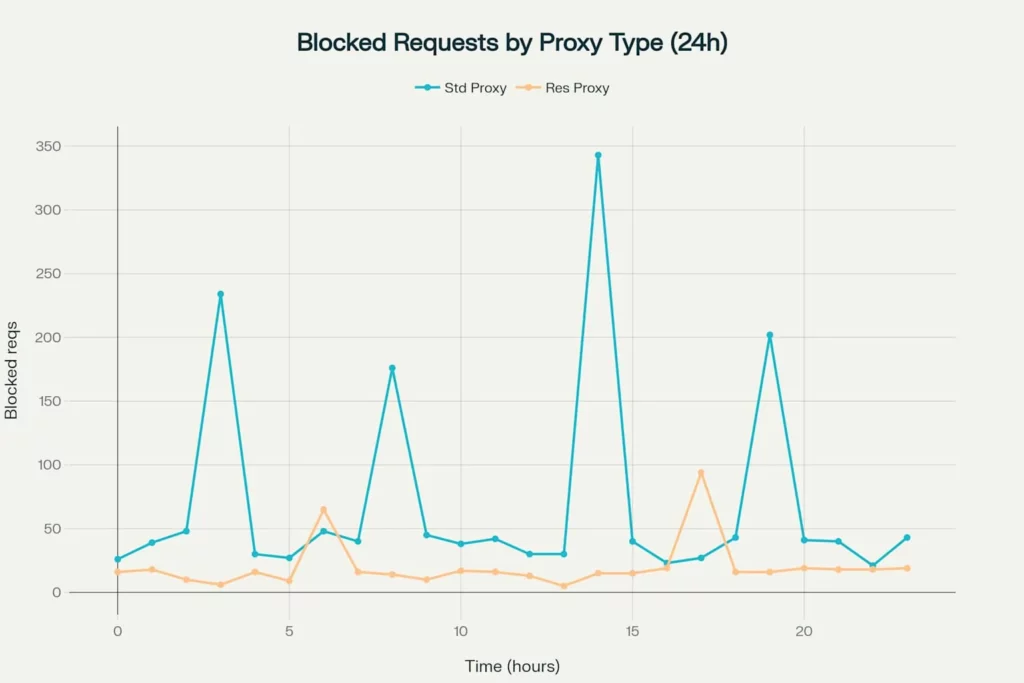
Just because a residential proxy looks like a real person’s IP doesn’t mean you’re untouchable. Websites don’t just check your IP, they watch how you behave.
Here’s where things usually go sideways:
Key Strategies to Avoid Getting Blocked
You have the proxy, now act like a real user. Here’s how:
Rotate Your IPs
Mix it up. Don’t use the same IP for too long. Most good proxies let you rotate automatically which makes your activity look more natural.
Control Your Request Rate
Take it easy. Rapid fire clicking or loading isn’t human. Slow down a bit and add in some random wait times to make it look real.
Use Real User Agents
Make your requests look like they’re coming from a real browser, Chrome, Firefox, whatever. If you skip this your traffic will stand out like a sore thumb.
Respect Site Limits
Sites have rules, how many times you can search, how many times you can log in, etc. Stay under those limits and you’re less likely to trigger defenses.
Don’t Log in Too Often
If you’re logging in from different IPs or trying the same login multiple times in a row sites will notice. Use sticky IPs or keep the session consistent if you have to log in.
Use Headless Browsers Smartly
Headless tools like Puppeteer or Selenium are great, but websites know how to spot them. If you’re automating add stealth plugins or fingerprint protection so you don’t get flagged.
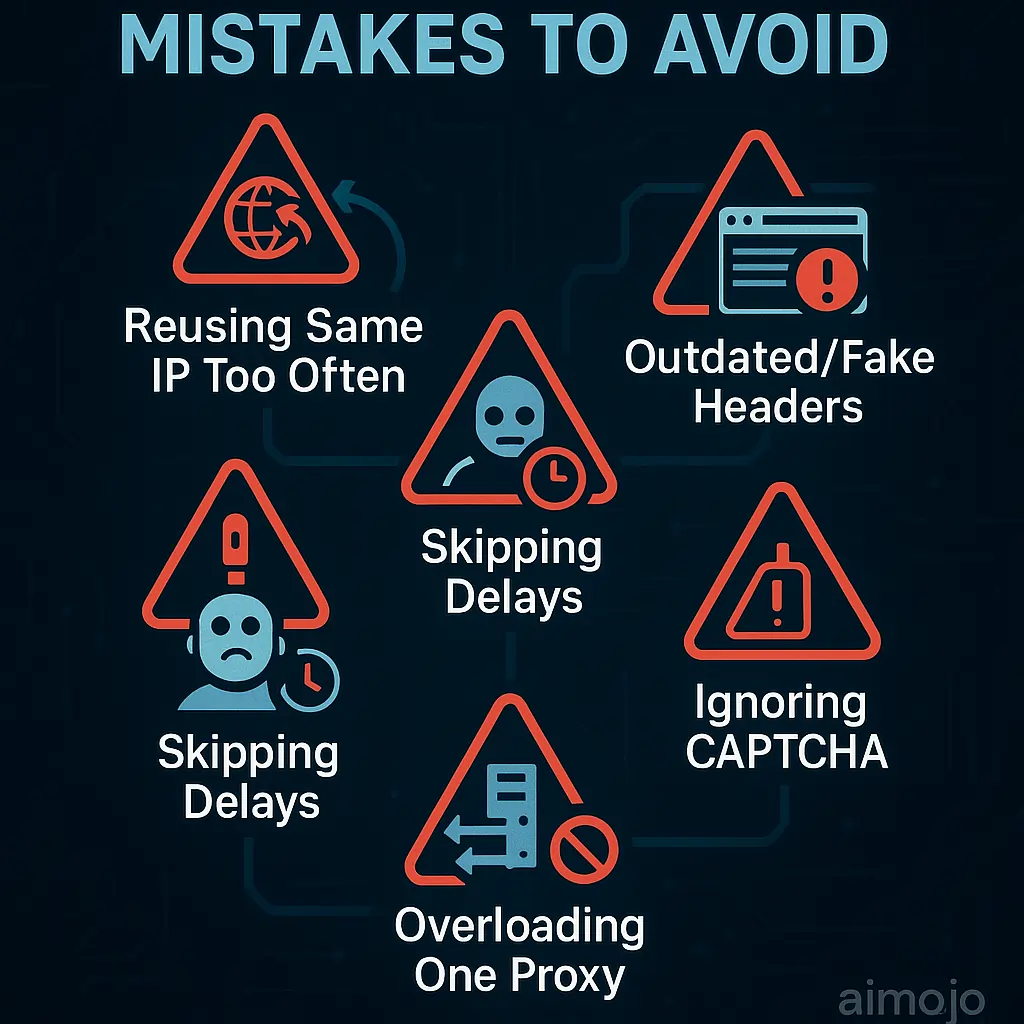
Mistakes to Avoid When Using Residential Proxies
Even with good proxies and tools, a few simple mistakes can blow your whole setup and get you blocked fast. Here are some common mistakes to avoid:
Tools and Services That Help Stay Undetected
If you want to stay smooth and not get blocked, having the right tools in your arsenal makes a big difference. Here are a few to use:
Summing Up
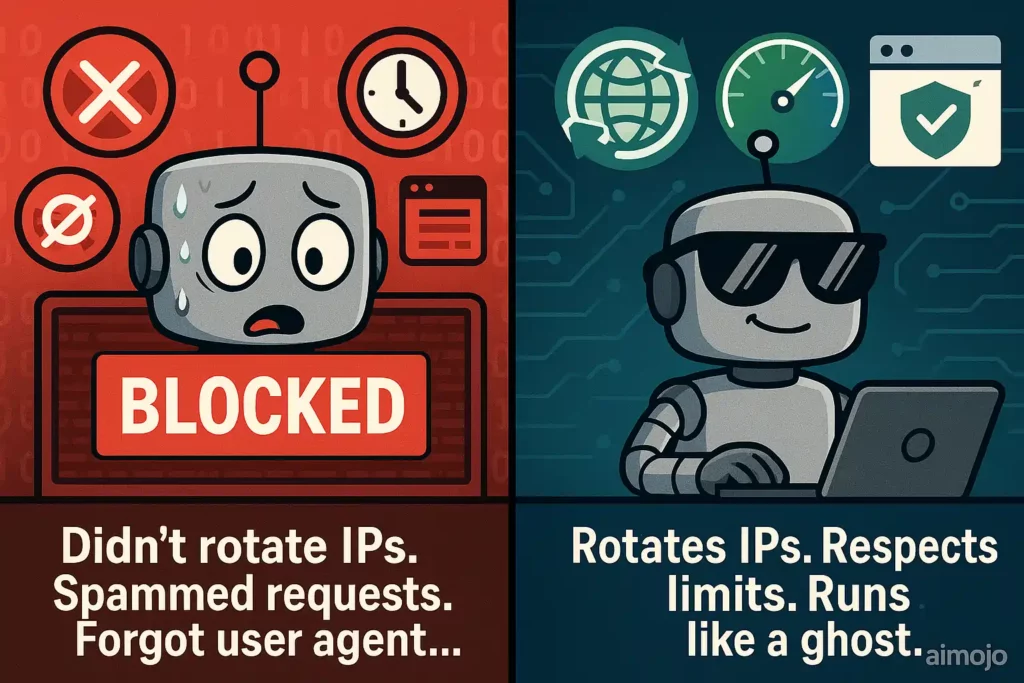
Getting blocked with residential proxies doesn't have to be your reality. Following these core strategies – IP rotation, proper request timing, real browser headers, respecting site limits, and smart session management – cuts your proxy blocking rate by over 80%.
Anti-detection techniques paired with quality residential IP addresses keep you flying under the radar. Most bot detection systems flag obvious patterns within 3-5 requests, but acting human changes everything.
Proxy management isn't about being perfect – it's about being believable. Ready to stop throwing money at proxy bans and start getting results?


 BONUS: Get our $200 “AI Mastery Toolkit” FREE when you sign up!