

Scholarcy Key Insights
What is Scholarcy?
Scholarly ay isang AI powered academic summarisation tool that converts research papers, journal articles, book chapters, and reports into structured, interactive flashcards. Built specifically for scholarly content, it extracts key findings, methodology details, cited references, and data tables from complex documents in seconds. The platform supports PDF, Word, and plain text uploads alongside direct imports from Zotero and Google Drive.
Acquired by Texthelp Group in late 2024, Scholarcy now serves over half a million users globally. It is particularly effective for literature review workflows, enabling researchers and students to screen large volumes of papers without reading every page in full. Available as a web app and browser extension for Chrome, Edge, Firefox, and Safari, Scholarcy fits directly into existing research pipelines. At just $4.99 per month, it remains one of the most affordable pang-akademya AI mga kasangkapan sa palengke.
Scholarcy’s headline feature is its ability to turn any document into a structured flashcard. Each flashcard presents key concepts, main findings, limitations, and contributions in a consistent, scannable format. This is a genuine time saver when screening dozens of papers during a literature review. The output stays uniform across different document types, which helps maintain reading consistency even when jumping between disciplines.
The Robo-Highlighter scans the entire document and automatically identifies critical terms, claims, and contributions. Unlike basic keyword matching, it is trained on academic writing patterns to pick out what actually matters in a scholarly context. For anyone who has spent hours manually highlighting PDFs, this feature alone can reclaim significant portions of your day.
This is where Scholarcy distinguishes itself from general purpose summarisers. The Research Quality Indicator scores uploaded papers across a range of academic rigour metrics. It gives you a quick read on the credibility of a study before you invest time in a full read. For systematic reviews and meta analyses, this kind of triage is invaluable.
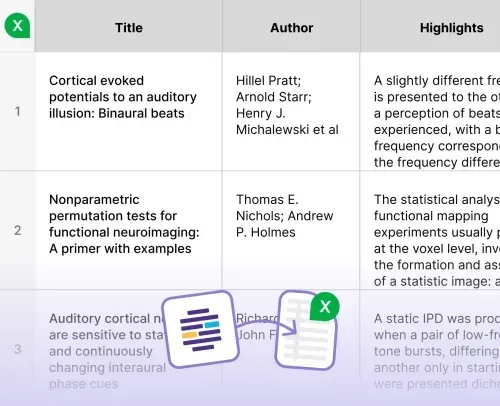
Paid users can export up to 100 flashcards into an Excel based literature matrix. This allows side by side comparison of key findings, participant details, methodologies, and results across multiple studies. Building a lit review matrix manually can take days. Scholarcy compresses that task into minutes.
The Dig Deeper feature lets you write custom prompts or questions about any uploaded document. Instead of relying solely on the default summary, you can interrogate the text for specific details. This moves the tool beyond passive summarisation into active, directed research support.
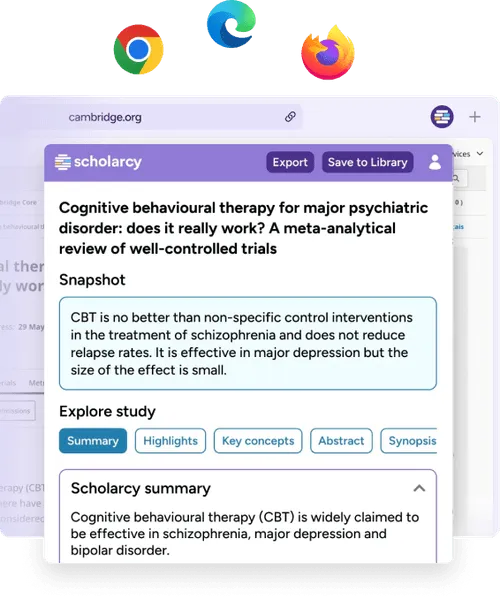
Scholarcy's AI article summariser extracts key information from research papers and delivers a snapshot of what matters fast. It breaks down complex concepts into easy to read sections, giving users the flexibility to skim a quick overview or go deeper with a clean reading experience. The tool is purpose built for academic content, so it understands the structure of scholarly writing and pulls out findings, claims, and methodology details with precision.
Mga Plano sa Pagpepresyo ng Scholarcy
| Pangalan ng Plano | gastos | Pangunahing tampok |
|---|---|---|
| Free (Article Summariser) | $0 | 10 summaries total, 1 per day, single flashcard export, import multiple file formats |
| Scholarcy Plus | $ 4.99 / buwan | Unlimited summaries, enhanced AI summaries, save flashcards, notes and annotations, 100 batch export, literature matrix, one click bibliographies, 1 week free trial |
| Institusyonal pang akademya | Custom (from approx. $8,000/year) | Organisation wide access, custom licensing |
How Scholarcy Supports Systematic Literature Reviews
Scholarcy’s strongest use case sits firmly within systematic literature review workflows. Researchers conducting large scale reviews often need to screen hundreds of papers to identify a usable subset. Scholarcy automates the initial screening phase by producing consistent, structured summaries that allow quick relevance checks.
Ang Literature Synthesis Matrix export lets you build comparison tables across studies in minutes rather than days. Combined with the Research Quality Indicator, the platform provides a triage layer that helps researchers prioritise which papers deserve a full read. This makes it an effective first pass tool for anyone working on a thesis, grant proposal, or meta analysis.
Mga kalamangan at kahinaan
- Flashcards provide structured, consistent output.
- Browser extension covers four major browsers.
- Literature matrix export saves days.
- Research Quality Indicator adds academic rigour.
- Zotero import streamlines existing workflows.
- No built in plagiarism detection.
- Struggles with highly niche terminology.
- Walang available na offline mode.
- Medyo mahigpit ang free tier.
Who Should Use Scholarcy in 2026?
Scholarcy is most valuable for postgraduate students, early career researchers, and academic librarians who handle high volumes of scholarly reading. If your workflow involves screening papers, building literature matrices, or preparing annotated bibliographies, the paid plan at $4.99 per month pays for itself within a single review cycle. Journalists and business analysts working with white papers and technical reports will also find the summarisation accurate and fast.
However, if your primary need is general purpose text summarisation or you work mainly with non academic content, a broader AI pagsulat assistant may serve you better. Scholarcy wins when the source material is structured academic writing.
Best Scholarcy Alternatives
| AI Academic Research Summariser | Academic Summarisation Depth | Export & Integration Flexibility |
|---|---|---|
| magtamo | Strong for evidence extraction and systematic reviews | Exports to CSV, limited third party integrations |
| SciSpace | Good for paper Q&A and citation exploration | Integrates with Zotero, exports to BibTeX |
| Pinagkaisahan | Excellent for claim level evidence synthesis | Limited export options, web only |
| QuillBot Summariser | Basic summarisation, not academic specific | Chrome and Google Docs integration |