

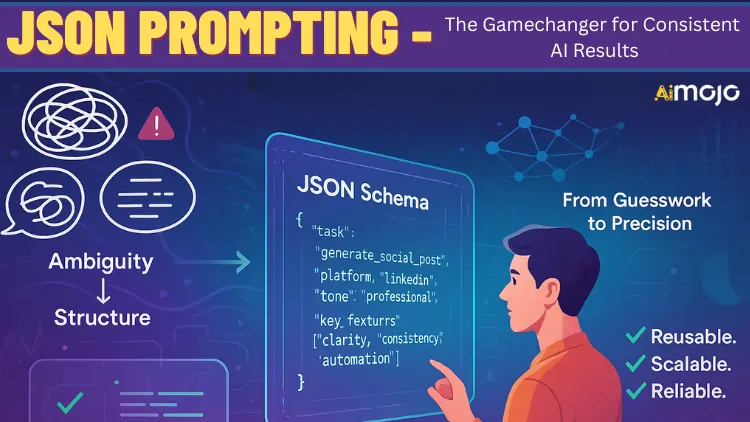
Nel mondo dell’intelligenza artificiale, , il la qualità del tuo output è direttamente legata alla qualità del tuo inputPer troppo tempo, gli utenti sono stati bloccati in un ciclo di scrittura di lunghi paragrafi descrittivi, sperando che AI Il modello coglie il loro intento. Questo metodo è spesso un azzardo, che porta a risultati incoerenti, imprevedibili e talvolta addirittura sbagliati.
C'è un modo migliore.
Un metodo che sostituisce l'ambiguità con la precisione e la conversazione con la specificazione. Si chiama Richiesta JSONe rappresenta un cambiamento fondamentale nel modo in cui interagiamo con l'intelligenza artificiale. Non si tratta solo di un'altra tendenza passeggera; è un passo avanti verso la creazione di soluzioni affidabili, scalabili e di livello professionale. AI sistemi.
Strutturando le tue richieste, passi dalla speranza del meglio alla definizione esatta di ciò che ottieni. Questa guida spiega in dettaglio cos'è il prompting JSON, perché sta diventando lo standard del settore e come puoi utilizzarlo per ottenere risultati superiori da qualsiasi modello linguistico di grandi dimensioni.
Che cosa è esattamente? Richiesta JSON?
JSON (JavaScript Object Notation) è un formato semplice, basato su testo, per la rappresentazione di dati strutturati. Utilizza coppie chiave-valore leggibili dall'uomo per organizzare le informazioni. Sebbene sia stato un pilastro fondamentale di sviluppo web per decenni, la sua applicazione in AI suggerimento è quello's sta creando scalpore adesso.
Il prompt JSON è la pratica di formattare le istruzioni in un AI modello utilizzando questo formato strutturato invece di linguaggio naturale semplice.
Immagina di ordinare un caffè.
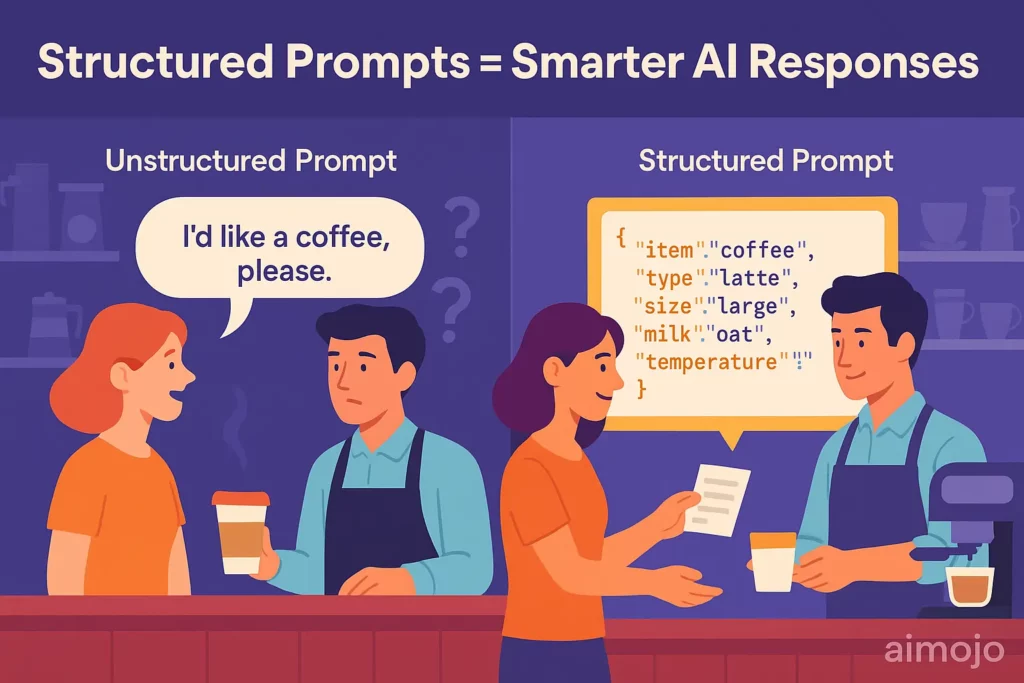
Un prompt tradizionale e non strutturato è come dire: "Vorrei un caffè, per favore".
Il barista deve indovinare: che tipo di caffè? Caldo o freddo? Che dimensione? Con latte o zucchero? Il risultato dipende interamente dalle sue supposizioni.
Un prompt JSON è come consegnare una distinta d'ordine dettagliata:
json
{
  "order_type": "beverage",
  "item": "coffee",
  "specifications": {
    "type": "latte",
    "size": "large",
    "milk": "oat",
    "sweetener": "none",
    "temperature": "hot"
  }
}
Non c'è alcuna ambiguità. Ogni dettaglio è definito esplicitamente. AI modello non deve indovinare; deve semplicemente eseguire le istruzioni. Questo passaggio da una conversazione vaga a una specifica chiara è la chiave per sbloccare un'esperienza coerente e accurata. AI e le prestazioni.
Perché tutti parlano? Informazioni sui prompt JSON in 2026?
L'ascesa del prompting JSON non è casuale. È il risultato di tre sviluppi chiave che si sono verificati al momento giusto.
L'innegabile Vantaggi del prompt JSON
L'adozione di un approccio strutturato comporta una serie di vantaggi che hanno un impatto diretto sulla qualità e l'affidabilità del tuo AI uscite.
Precisione millimetrica e niente più congetture
Un prompt di testo standard è pieno di potenziali fraintendimenti. Considera questa richiesta: "Scrivi un post sui social media sul nostro nuovo aggiornamento software". AI bisogna indovinare il tono, la lunghezza, la piattaforma e le caratteristiche principali da evidenziare.
Un prompt JSON elimina completamente questa ambiguità.
Approccio JSON:
json
{
  "task": "create_social_media_post",
  "platform": "LinkedIn",
  "product_update": {
    "product_name": "ConnectSphere CRM",
    "version": "v3.5",
    "key_features": [
      "AI-powered sales forecasting",
      "Automated lead scoring",
      "New integration with Slack"
    ]
  },
  "target_audience": "Sales Managers",
  "tone": "professional_and_authoritative",
  "constraints": {
    "max_length_chars": 300,
    "call_to_action": "Book a demo"
  }
}
Qui, ogni variabile è definita. Il modello conosce la piattaforma, le caratteristiche specifiche, il pubblico e il tono desiderato. Questo porta a risultati molto più accurati e pertinenti.
Risultati ripetibili e operazioni scalabili
Uno dei maggiori vantaggi di JSON è la riutilizzabilità. Una volta creato un prompt strutturato, questo diventa un modello utilizzabile all'infinito. Devi annunciare un altro aggiornamento software il mese prossimo?
Basta cambiare i valori per version and key_features campi. La struttura rimane la stessa, garantendo che i tuoi output mantengano sempre un formato coerente.
Questo trasforma attività singole in sistemi scalabili e automatizzati. È possibile creare interi flussi di lavoro, come la generazione di descrizioni di prodotto o report settimanali, inserendo dati diversi in un modello JSON master. La ricerca dimostra che, con istruzioni chiare, i modelli possono restituire JSON validi nell'80-90% dei casi, rendendoli una scelta affidabile per l'automazione.
Integrazione perfetta con altri strumenti
L'output di un prompt JSON è già in un formato leggibile dalle macchine. Ciò significa che può essere inserito direttamente in altre applicazioni, database o sistemi di gestione dei contenuti (CMS) senza bisogno di pulizia o analisi manuale. Questa natura "pronta per le API" è ciò che consente alle aziende di costruire sistemi potenti e interconnessi, in cui l'output dell'IA da una fase diventa l'input per la successiva.
Metterlo in pratica: Creazione di prompt JSON efficaci
Non è necessario essere uno sviluppatore per scrivere prompt JSON. Si tratta di organizzare i propri pensieri in modo logico. Ecco come iniziare.
Passo 1: Definisci il tuo obiettivo ed elenca le variabili
Prima di scrivere qualsiasi codice, chiarisci di cosa hai bisogno. Supponiamo che tu voglia AI per riassumere le recensioni dei clienti. Il tuo elenco di requisiti potrebbe essere:
Passo 2: Strutturalo con coppie chiave-valore
Ora traduciamo l'elenco in una struttura JSON.
Approccio JSON per l'analisi delle revisioni:
json
{
  "task": "analyze_customer_review",
  "input_text": "[Paste customer review text here]",
  "analysis_parameters": {
    "extract_sentiment": true,
    "identify_themes": true,
    "max_themes": 3
  },
  "output_structure": {
    "sentiment": "string",
    "themes": "array_of_strings",
    "representative_quote": "string"
  }
}
Questo prompt dice al AI il suo compito, dove trovare l'input, quale analisi eseguire e come strutturare precisamente l'output finale.
Filtri Controllo con JSON annidato
Per attività più complesse, puoi annidare gli oggetti l'uno dentro l'altro per creare una gerarchia dettagliata di istruzioni. Immagina di creare un brief completo per un post di blog.
Approccio JSON per un briefing sui contenuti:
json
{
  "task": "create_content_brief",
  "main_topic": "The benefits of intermittent fasting",
  "target_audience": "Fitness beginners aged 25-40",
  "seo_details": {
    "primary_keyword": "intermittent fasting benefits",
    "secondary_keywords": ["weight loss", "metabolic health", "beginners guide"],
    "target_word_count": "1500_words"
  },
  "content_structure": {
    "introduction": "Hook with a surprising statistic about health.",
    "sections": [
      {"title": "What is Intermittent Fasting?", "points_to_cover": ["Define the concept", "Common methods like 16/8"]},
      {"title": "Top 5 Science-Backed Benefits", "points_to_cover": ["Weight loss", "Improved insulin sensitivity", "Cellular repair"]},
      {"title": "How to Get Started: A Simple Guide", "points_to_cover": ["Choosing a method", "What to eat and drink"]},
      {"title": "Common Mistakes to Avoid", "points_to_cover": ["Dehydration", "Ignoring hunger signals"]}
    ],
    "conclusion": "Summarise key benefits and provide a call-to-action to try a simple method."
  },
  "tone_of_voice": "informative_and_encouraging"
}
Questo prompt altamente strutturato non lascia nulla al caso, guidando il AI per produrre un briefing dettagliato che soddisfi requisiti molto specifici.
Facendo un ulteriore passo avanti: Applicazione delle regole con lo schema JSON
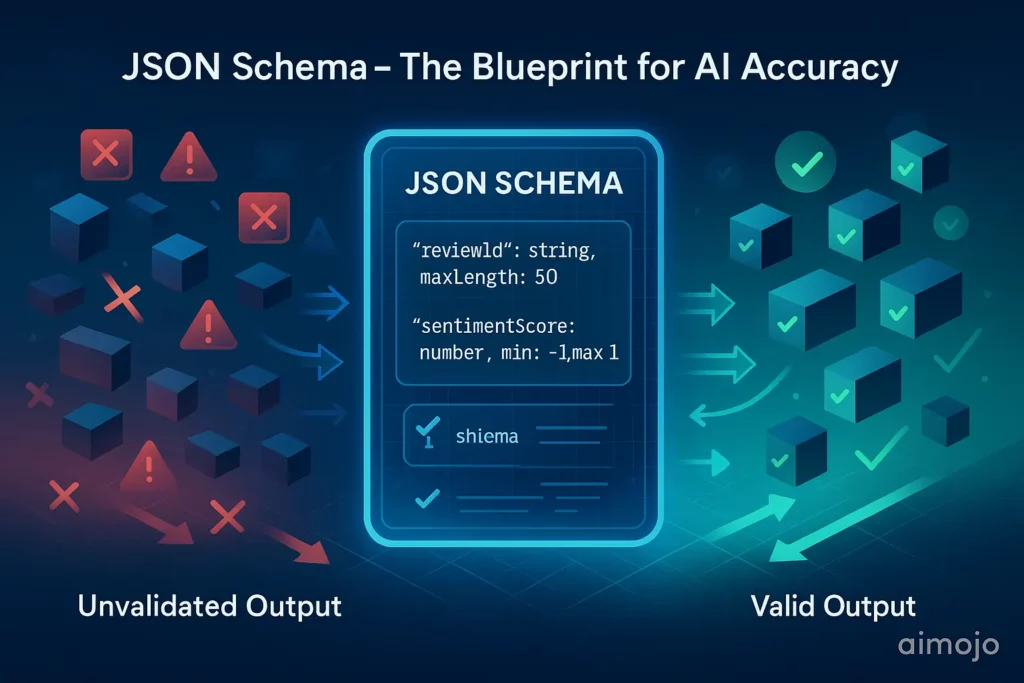
Per le applicazioni critiche in cui il formato di output deve essere perfetto, è possibile utilizzare uno schema JSON . Uno schema è un modello formale che definisce la struttura esatta, i tipi di dati e i vincoli per l'output JSON. Funge da validatore, garantendo che la risposta dell'IA aderisca rigorosamente alle regole definite.
Ad esempio, uno schema può imporre che un reviewId sia sempre una stringa con un massimo di 50 caratteri o che un punteggio di sentiment sia sempre un numero compreso tra -1 e 1. Ciò è essenziale per mantenere l'integrità dei dati durante l'alimentazione AI output in database o altri sistemi automatizzati.
Il futuro è strutturato, non vago
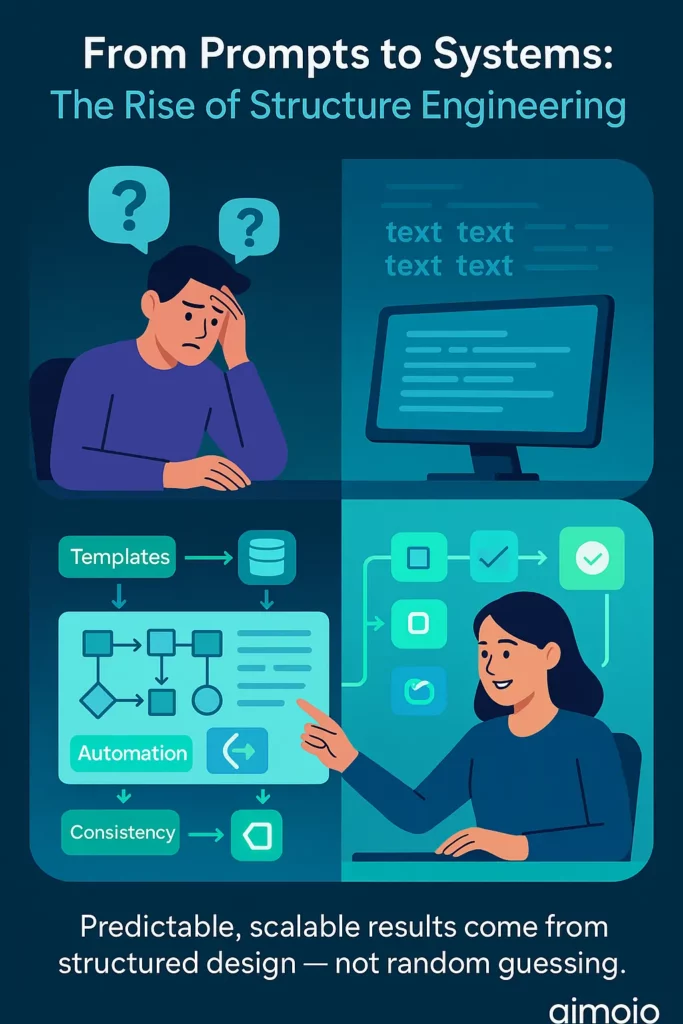
L'intero settore si sta spostando dalla "progettazione a richiesta" verso la " progettazione strutturale " .
Gli innovatori in questo settore non si limitano a scrivere istruzioni; progettano sistemi. Creano modelli riutilizzabili , basi di conoscenza strutturate e flussi di lavoro automatizzati che producono risultati professionali e coerenti.
Mentre altri sono ancora alle prese con paragrafi vaghi e sperano in un esito positivo, coloro che adottano la struttura ottengono un successo prevedibile e scalabile.
Migliori Una Parola Finale
L'adozione del prompting JSON non è un esercizio tecnico; è strategico. È un cambiamento di mentalità dall'ambiguità alla chiarezza, dal caos al controllo e dalle conversazioni una tantum a sistemi scalabiliIn un mondo in cui ogni azienda ha accesso allo stesso potente AI modelli, il vantaggio finale spetta a coloro che riescono a strutturare il proprio pensiero e a comunicare il proprio intento con precisione.
Inizia con un'attività ripetitiva che esegui regolarmente. Elenca i tuoi requisiti, strutturali in un semplice formato JSON ed eseguilo. La differenza nella qualità e nella coerenza dell'output parlerà da sola. Non stai solo ottenendo una risposta migliore: stai costruendo un processo migliore.


 BONUS: Ottieni i nostri 200$ "AI "Mastery Toolkit" GRATIS se ti registri!