

Augment Code Key Insights
What is Augment Code?
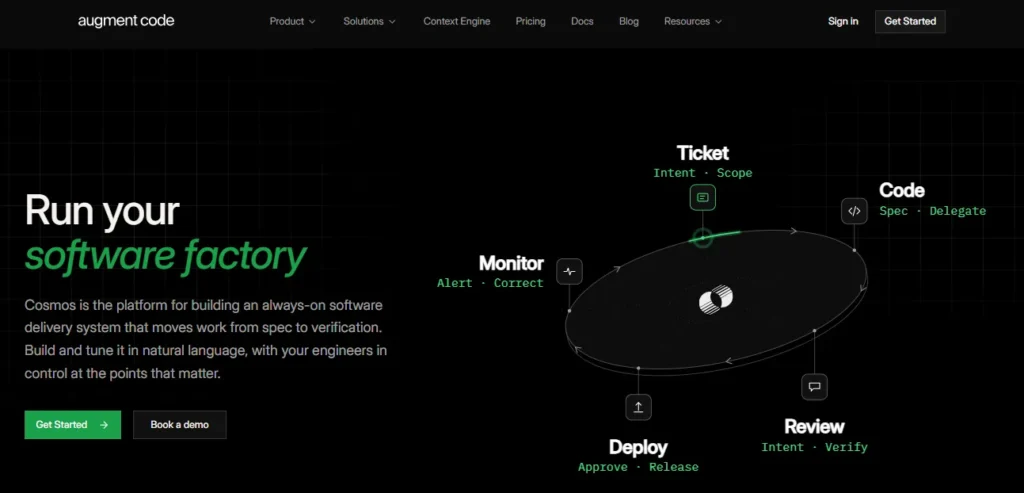
Kode Tambahan adalah AI coding platform for software teams that need an agent to understand more than the file currently open in an editor. Its main product advantage is the Context Engine, which retrieves relevant code, repository history, engineering patterns, and connected work data before an agent acts.
Augment Code features include IDE assistance, Auggie CLI, code review, MCP integrations, reusable rules, agent memory, and Cosmos for team automation. For a business, the practical value is less time spent explaining a codebase to each new AI sidang.
Engineers can move from a ticket or request to implementation, tests, review, and follow up work with more shared context. It sits between everyday developer alat produktivitas and a wider business automation layer for software delivery.
Context Engine is the feature that defines this Augment Code review. It searches for code that matters to the task instead of relying only on files attached to a prompt. It can use repository history, code patterns, and connected sources to recover engineering intent. On mature products, that reduces manual context packing across services, libraries, tests, and older architectural decisions. Large monorepos and linked repositories are where this feature has the clearest value.
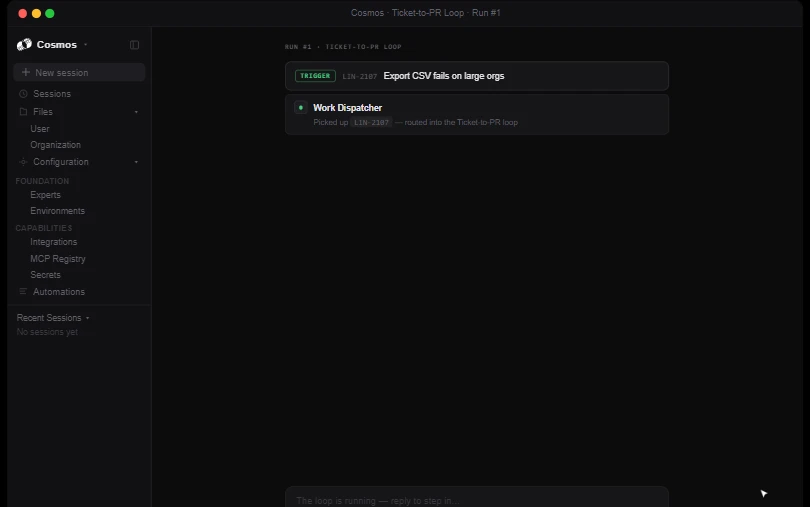
Cosmos moves Augment beyond one developer chatting with one agent. Teams can create Experts for pull request authoring, review, incident investigation, ticket dispatch, verification, and project planning. Experts can hand work to workers or subagents and respond to schedules, webhooks, tickets, or repository events. This gives teams a repeatable way to automate engineering work while keeping human checkpoints around risky actions.
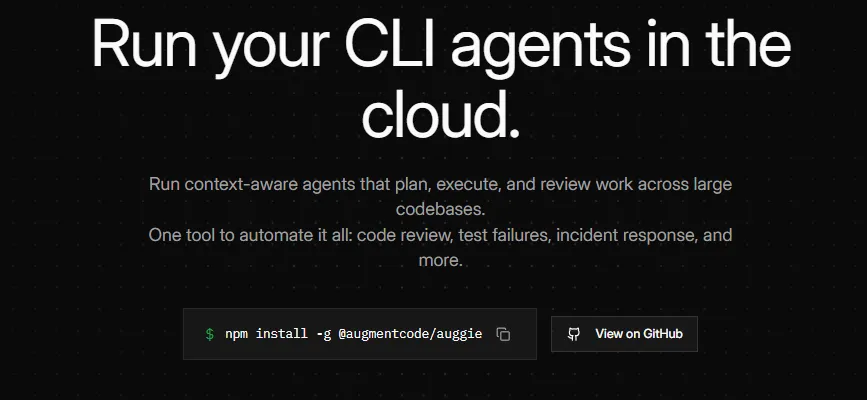
Auggie brings Augment into the terminal. It can index a workspace, analyse code, edit files, run tools, and support interactive or automated work. The CLI also supports subagents, rules, skills, MCP, hooks, custom commands, service accounts, and SDK access. VS Code and JetBrains get full agent and chat workflows. Vim and Neovim support chat and completions. Teams can keep familiar Git, testing, and editor habits instead of rebuilding the whole developer setup.
Augment supports server MCP plus native connections for common engineering tools. GitHub, GitLab, Jira, Linear, Confluence, Gagasan, Slack, Datadog, ClickUp, and other services can add work context to agent sessions. Context Engine can also be connected to compatible external coding agents through MCP. That means a team can keep another agent interface and still use Augment semantic retrieval as the code context layer.
Augment Code Review checks pull requests with codebase context rather than treating each diff as an isolated patch. Cosmos can combine risk analysis, line review, repair, verification, and human approval. Enterprise adds controls such as advanced analytics, user allowlists, richer MCP context, and wider repository coverage.
Agent Memory is also reviewable. Developers can approve, edit, or discard stored memories before they shape later sessions, which reduces the risk of bad project assumptions becoming persistent guidance.
Paid customer data is excluded from AI training. Augment publishes SOC 2 Type II coverage, while Enterprise adds identity and governance features such as SSO, OIDC, SCIM, customer managed encryption keys, security reports, and dedicated support. Cosmos can use hosted environments or self hosted daemon infrastructure. Secrets, access policy, audit records, and SIEM support give larger teams more control over where agents run and what they are allowed to do.
Augment Code Pricing Plans
Augment changed its pricing structure in 2026, so older Indie and credit based tables should not be used as the current reference. As of September 2026, the live public pricing focuses on Business and Enterprise.
| Rencana Nama | Biaya | Included Usage And Team Access |
|---|---|---|
| Standar | $ 20 / bulan | $20/mo of usage included,Top-ups, pay as you go,Up to 50 seats, Context Engine |
| Bisnis | $ 100 per bulan | $100 monthly usage pool, up to 50 seats, Cosmos, CLI, MCP, native tools, standard compute, up to 50 concurrent sessions |
| Enterprise | Kustom | Custom usage, unlimited users, custom compute, multi region options, enterprise identity, security controls, and dedicated support |
Business usage is shared across the team. Model inference is charged at the provider public API rate. Augment adds a 40 percent service fee to LLM usage, while compute is billed separately without that service fee.
If the included $100 is used, the account can buy top ups without changing plan. This pricing can be attractive for teams with many occasional users because the Business fee is not charged per seat. Heavy agent usage can still raise the total monthly bill, so usage analytics matter.
Getting Started with Augment Code
- Langkah 1: Buat Menambah account and choose the Business workspace or an Enterprise setup.
- Langkah 2: Install the VS Code or JetBrains extension, or install Auggie CLI for terminal work.
- Langkah 3: Open a repository and let Augment index the workspace, then add any extra repositories that belong to the same system.
- Langkah 4: Connect the engineering tools you need through native integrations or MCP, then add rules for coding standards and repository instructions.
- Langkah 5: Start with a bounded task, review the proposed changes and tests, then move repeatable work into Cosmos Experts or automations.
Why Context Engine Is The Augment Code Mojo
The main Augment advantage is not access to a rare model. Most serious coding products can call strong OpenAI, Anthropic, or Google models. The difference is how much useful engineering context reaches that model before it starts guessing.
Context Engine maintains searchable knowledge across code, dependencies, history, and linked work sources, then retrieves the pieces that fit the current task. That can reduce wasted search steps and repeated explanations on large systems.
Cursor, Claude Code, and GitHub Copilot all have capable agents, but Augment puts more product weight on persistent codebase retrieval as a shared service. For mature repositories, that context layer is the strongest reason to pay for Augment.
How Cosmos Changes Software Delivery Automation
Cosmos is most useful when a company wants agents to own repeatable engineering loops rather than isolated coding prompts. An Expert can be configured for a specific responsibility, given tools and environment access, then triggered by a schedule, webhook, pull request, ticket, or other event. This is closer to operational otomatisasi bisnis than standard autocomplete.
A team could route a ready Jira ticket to a PR Author, send the result through review and verification, and stop at a human approval point. The gain comes from repeatability. The risk comes from giving agents too much authority too early. Strong teams should start with reviewable tasks, measure error rates, and expand autonomy only when results stay stable.
Pro dan kontra
- Excellent large codebase context.
- Strong cross repository retrieval.
- Useful team agent orchestration.
- Mature MCP integration options.
- Reviewable persistent agent memory.
- Flat Business team pricing.
- Tidak ada paket gratis permanen.
- Usage can exceed base fee.
- Enterprise controls cost more.
- Vim feature depth is narrower.
Who Should Use Augment Code
Augment Code fits engineering teams with mature products, several repositories, or codebases where architecture knowledge is spread across history and connected tools. It also fits platform teams that want to turn stable engineering procedures into agent run workflows.
Smaller teams can still benefit, especially because Business includes up to 50 seats at one base subscription, but the product makes the most sense when context retrieval saves real engineering time. A solo developer building a small greenfield app may get enough value from a cheaper single agent tool. A company dealing with monorepos, migrations, code review queues, incidents, and shared standards has more room to benefit from the full Augment stack.
Pertanyaan Umum Demo Slot
Does Augment Code support large monorepos?
Yes. Context Engine is built to retrieve relevant code and relationships from large repositories instead of making users attach every file manually. Cosmos can also coordinate work that spans several connected repositories.
Can Augment Code work with another AI coding agent?
Yes. Context Engine MCP can provide semantic code retrieval to compatible external agents. This lets teams keep another coding agent while using Augment as the code context service.
Does Augment Code train on private customer code?
Paid plans state that customer data is not used for AI training. Enterprise also adds identity, security, and governance options for controlled company rollouts.
What is the difference between Auggie and Cosmos?
Auggie is the terminal coding agent. Cosmos is the wider orchestration product for Experts, environments, sessions, triggers, integrations, and repeatable engineering workflows.
How does Augment Code pricing work now?
Business costs $100 per month and includes a shared $100 usage pool for up to 50 seats. LLM usage follows provider list pricing with a 40 percent service fee. Enterprise pricing is custom.
Is Augment Code mainly an autocomplete tool?
No. Completions are included, but the current platform also covers coding agents, CLI workflows, code review, semantic retrieval, MCP, memory, self hosted execution, and Cosmos automation.
Best Augment Code Alternatives
| AI coding platform for production engineering | Context Method | Team Automation Focus |
|---|---|---|
| Kursor | Editor context plus repository search | Strong coding agent workflows inside its editor |
| Kode Claude | Terminal agent with session and repository context | Strong local task execution and terminal control |
| Kopilot GitHub | IDE and GitHub centred repository context | Strong integration with GitHub developer workflows |