

For new creative workflows, assets need to be flexible and versatile throughout projects and across production phases. Designers can use the flexible 3D environments created by easily-editable design blocks to avoid the need for duplication of design models.
Such modular components support quicker revisions, greater customization flexibility, and asset reuse. With Tripo 3D, this process is automated, and structured 3D assets are generated from visual references and descriptions. Scalable components help support quality and consistency throughout development as project requirements evolve.
What Are Editable Design Blocks?
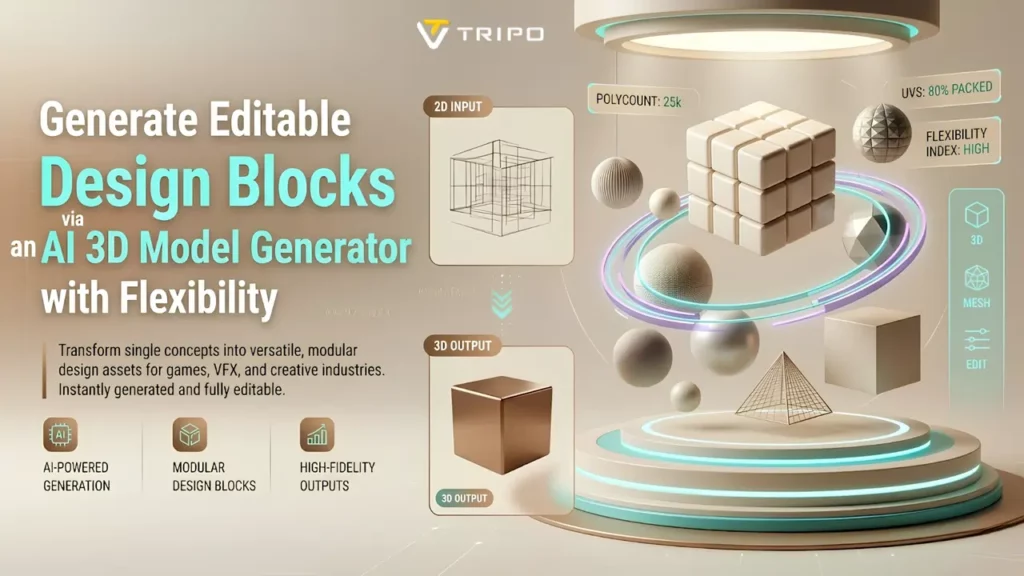
Editable design blocks are modular 3D elements that can be reused and modified. They function as building blocks that can be adapted to different scenes, products, and visual concepts. Flexibility is important because production requirements may change during development.
Reusable structures reduce rebuilding requirements and support efficient design iterations. Tripo 3D helps organize assets in a way that simplifies later modifications. These components can improve project scalability, allowing designers to add more scenes efficiently. They also improve creative flexibility by allowing individual parts to be changed without modifying the entire assembly.
Building Modular Asset Libraries with Tripo 3D
Tripo 3D's generation tools allow users to build collections of reusable assets efficiently. Designers can create components from prompts, sketches, or visual references and store them for reuse. The platform supports the efficient development of consistent modules for multiple projects.
An AI générateur de modèles 3D helps in the development of structured assets with organized geometry. Another advantage of image-based generation is that it provides an additional method for asset creation across workflows. Centralized assets improve management efficiency and simplify design updates across multiple productions.
Advantages of AI-Generated Editable Components
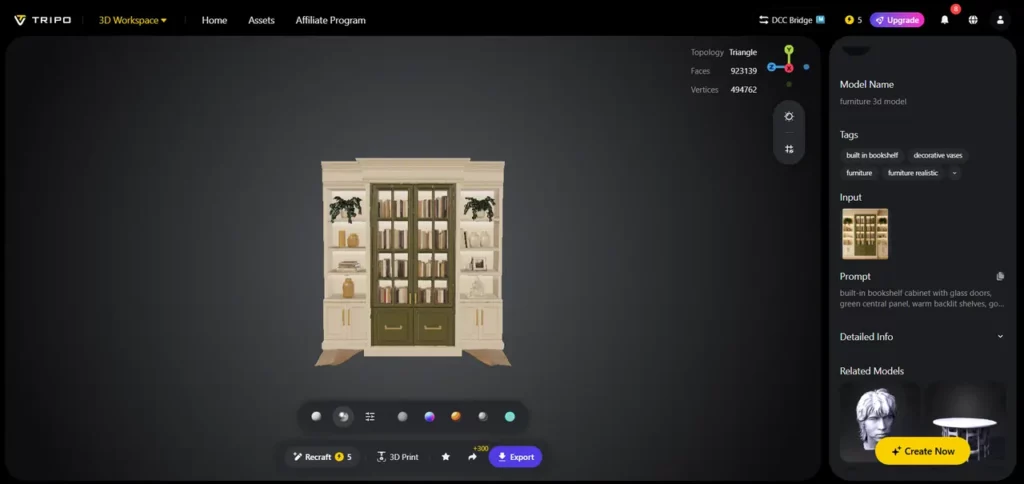
AI-generated components can streamline content creation while supporting consistent quality standards. Automated generation reduces repetitive modeling tasks, enabling quicker modifications and more efficient customization through structured geometry.
Teams can create multiple designs without rebuilding assets from scratch. It supports efficient image en 3D conversion that can be used as reusable components. Consistent mesh quality can support downstream workflows, while expanded customization options help teams adapt to changing requirements and creative goals.

Steps to generate editable design blocks via an AI 3D model generator for flexibility
Step 1: Import References for Modular Designs
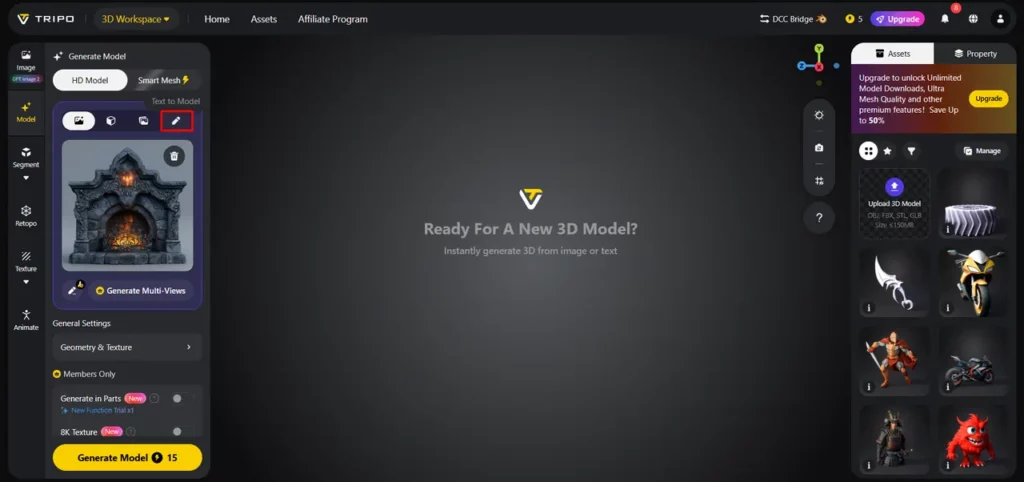
- Tout d'abord, vous devez accéder à Tripo 3D et vous inscrire. Ensuite, rendez-vous sur "Modèle" Onglet présent dans la barre de menu verticale gauche.
- Dans le menu, cliquez sur le « Modèle HD ». You can generate the model either using the text prompt or through image upload.
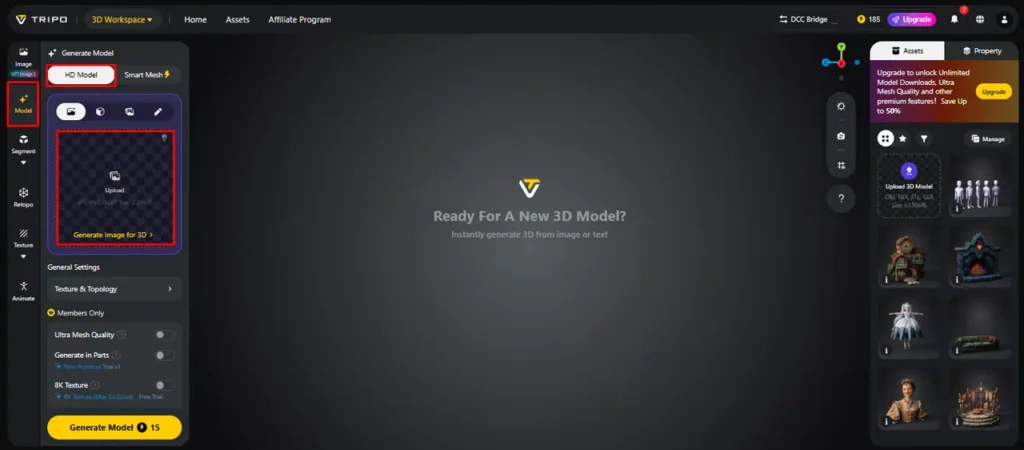
- Vous pouvez glisser-déposer l'image pour la télécharger, ou vous pouvez également la télécharger depuis un emplacement spécifique de votre appareil en utilisant le « Télécharger » languette.
- If you don't have an image, click on the “Text to model” tab to generate the model using a descriptive text prompt.
Step 2: Customize Structure for Easy Editing
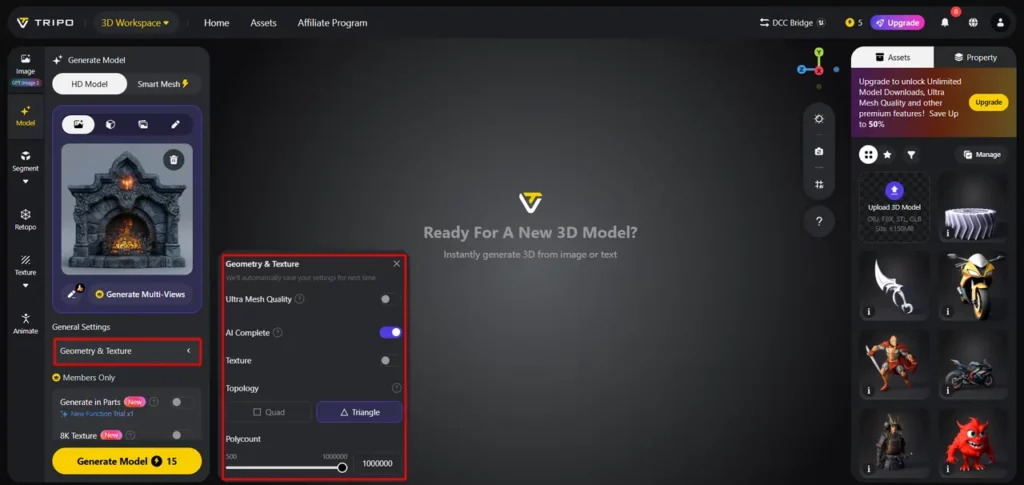
- En vertu des Normes sur l’information et les communications, les organismes doivent rendre leurs sites et applications Web accessibles. Ils y parviennent en conformant leurs sites Web au niveau AA des Web Content Accessibility Guidelines (WCAG). "Réglages généraux" tab, you can either allow the AI to completely generate on its own by switching "AI complete”Vous pouvez également activer la texture et sélectionner la personnalisation. « Qualité de la texture » comme la 2K, la 4K ou la 8K.
- Vous pouvez également activer « PBR » pour des propriétés réfléchissantes précises des matériaux.
- Pour de meilleures caractéristiques topologiques, sélectionnez soit "Quad" or "Triangle" topologie.
- Vous pouvez également définir un nombre de polygones personnalisé.
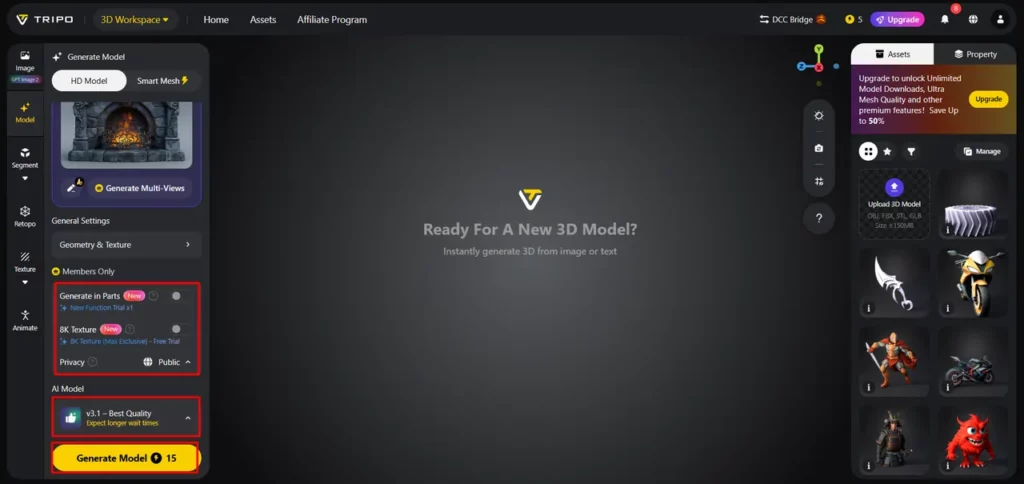
- Choisissez ensuite le modèle dans la liste, notamment v3.1 meilleure qualité, v3.0 rapide et équilibré, ou v2.5 ancien.
- Si vous êtes membre, alors vous pouvez choisir « Générer en plusieurs parties », « Texture 8K » et "Intimité" options.
- Enfin, cliquez sur le « Générer un modèle » pour commencer la génération.
Step 3: Review and Export Editable Assets
- Tripo 3D allows complete viewing of the model in styles such as « Solid View », « Style dessin animé », « Style croquis », « Style hologramme » et "Non éclairé" formulaire. Vous pouvez également "Affiner" the design right through the bottom menu.
- Vous pouvez également modifier le « Paramètres environnementaux » et les paramètres de l'appareil photo « Réinitialiser la caméra ».
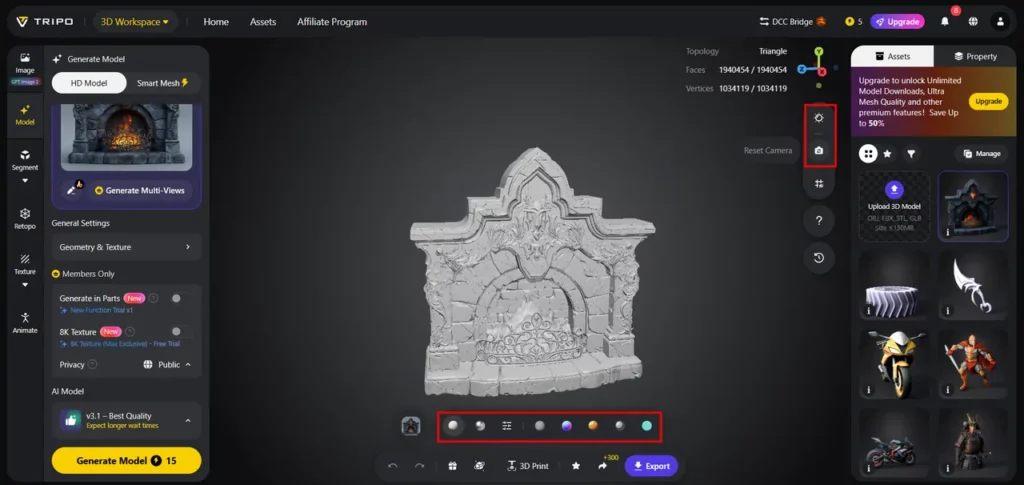
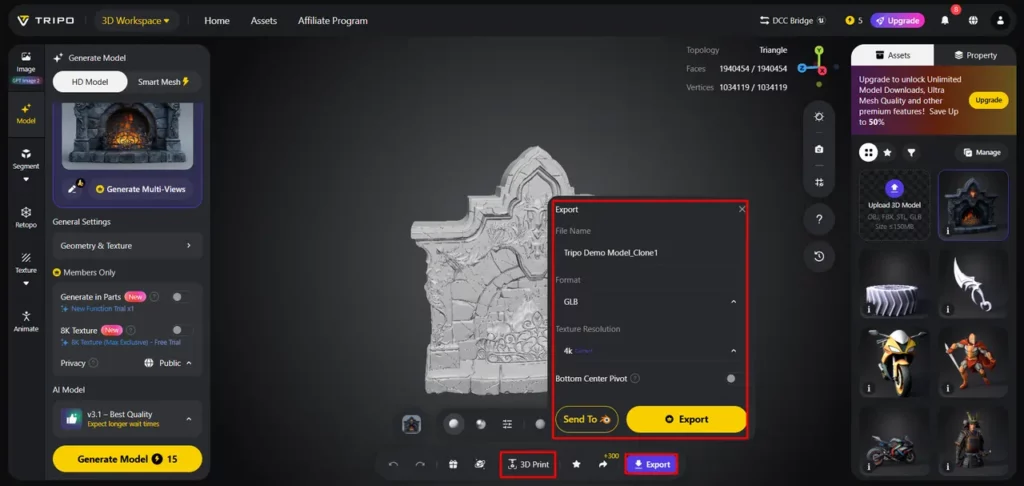
- If needed, you can 3D print the design or share it directly by clicking « Impression 3D ».
- À la fin, cliquez sur le "Exportation" tab from the bottom menu. Next, choose the resolution, format, and file name, and click again on "Exportation" to save the design to your local device.
Structuring Design Blocks for Maximum Reusability
Here are some good reusable asset libraries:
Maintaining Editability Through Clean Geometry
Maintaining clean geometry remains important for long-term asset flexibility and downstream workflows. Organized topology enables quicker changes and reduces issues during editing. Structured meshes help improve refinement processes and reduce technical issues during asset updates.
Models generated by Tripo 3D include structured geometry and topology for easier asset management. Well-organized asset structures can support animation and rigging workflows while improving compatibility with industry-standard software. Clean geometry helps keep assets reusable and adaptable across future project phases.
Tirer parti AI Texturing for Flexible Asset Adaptation
Quality texturing improves the reuse of design blocks across different applications. Tripo 3D includes an advanced texturing system for creating realistic materials and surface details. Flexible texture variations are especially useful when combined with a texte en modèle 3D flux de travail.
Different visual styles can be applied without rebuilding geometry. Multiple texture options simplify asset adaptation for different branding requirements, presentations, or artistic styles. This adaptability helps maintain consistency during development cycles and keeps projects relevant.
Integrating Editable Blocks into Production Pipelines
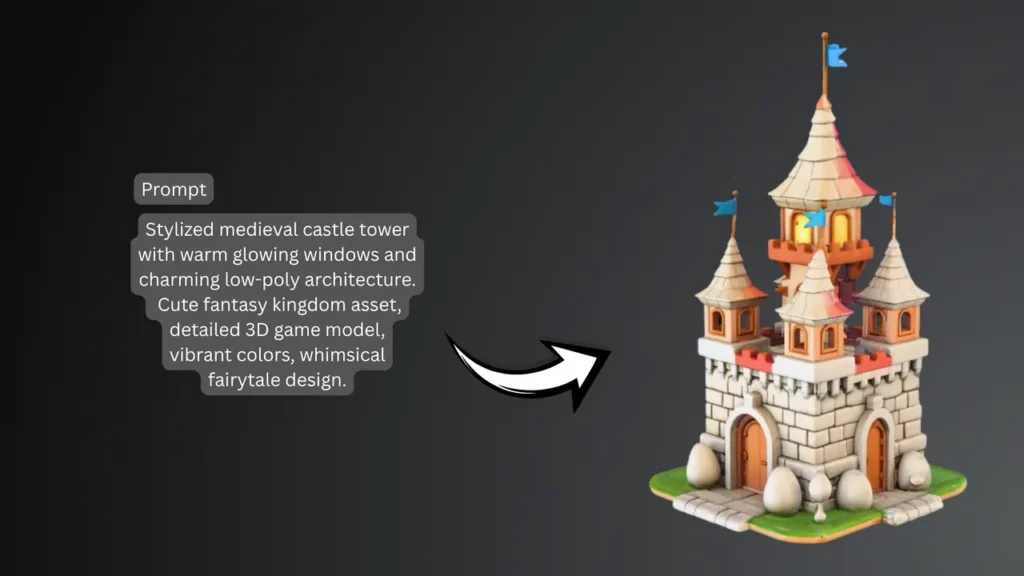
Editable design blocks are useful across many professional production environments. Reusable assets can accelerate level creation and environment development for gaming projects. This provides a flexible framework for product visualization workflows and simplifies concept presentation and iteration.
Architectural visualization projects often use modular elements to build layouts efficiently. By generating and adapting assets efficiently, creative professionals can maintain flexible workflows across different industries and applications.
Conclusion
Editable design blocks support scalable and adaptable 3D workflows. Reusable components can reduce repetitive tasks, support efficient revisions, and improve production consistency. Tripo 3D provides features such as intelligent generation, structured geometry, advanced texturing, and flexible export capabilities for creating modular assets.
These capabilities allow creators to develop assets for different projects and changing requirements. As AI technology evolves, flexible 3D content creation may become more efficient, accessible, and useful for modern digital production.



 BONUS: Obtenez notre 200 $ «AI « Boîte à outils de maîtrise » GRATUITE lors de votre inscription !